This article is published in Aerospace Daily & Defense Report part of Aviation Week Intelligence Network (AWIN), and is complimentary through Oct 31, 2026. For information on becoming an AWIN Member to access more content like this, click here.
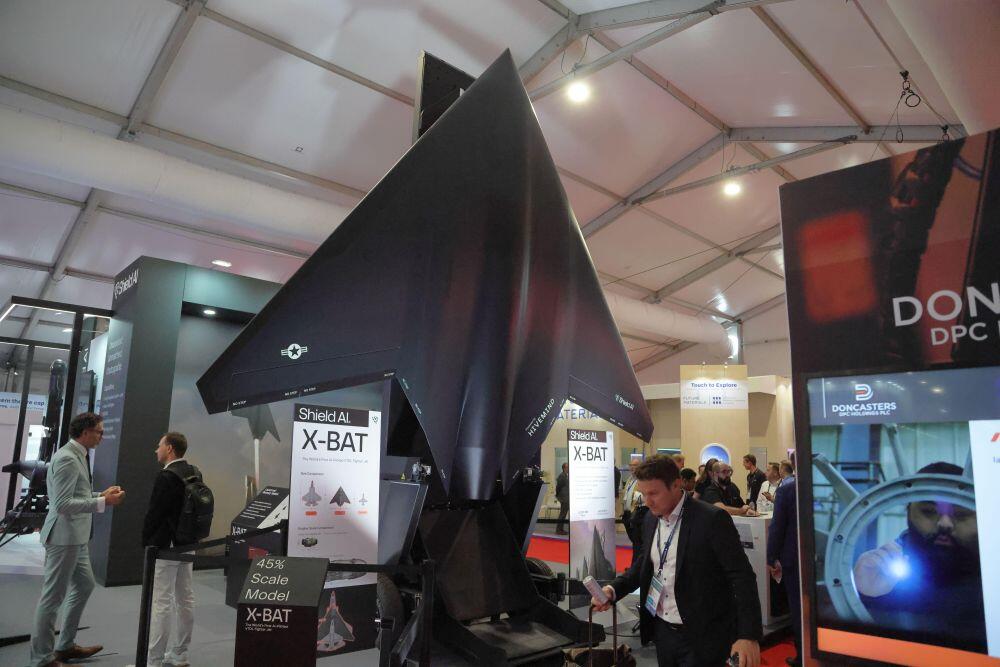
X-Bat
Shield AI plans to offer the X-Bat uncrewed aircraft system (UAS) to the U.S. Army as a replacement for the General Atomics Aeronautical Systems Inc. MQ-1C Gray Eagle, a top executive says.
The Army published a request for information (RFI) last December for a new short/vertical takeoff and landing UAS to replace the fixed-wing MQ-1C fleet.
The vertical takeoff and landing X-Bat concept has attracted funding from the U.S. Navy so far, but there is also interest from the Army, Armor Harris, Shield AI’s senior vice president for aircraft, tells Aviation Week.
“We think that this platform could be a great candidate for that program or other programs [within the Army],” Harris says.
The 22,000-lb. size of the X-Bat dwarfs the 3,600-lb. maximum takeoff weight of the MQ-1C, but Harris notes the Shield AI aircraft compares well to another Army aircraft that is often paired with the Gray Eagle: the Boeing AH-64 Apache.
“It’s actually about the same size as an Apache,” which is 23,000 lb., Harris says. “So, yes, we’ve gone and been doing a lot of work with the Army, showing that the logistics footprint is actually very similar to an Apache. And, yes, there has been quite a bit of interest in the Army as well.”
As a fixed-wing, tailless and large strike aircraft, the X-Bat’s profile typically fits inside the Air Force’s fleet for conducting operations over land. But Harris notes that the X-Bat’s vertical takeoff and landing capability aligns with the way the Army operates most combat aircraft. Moreover, he is not yet seeing the proposal igniting a roles-and-missions debate between the two services.
“I thought that was going to be a bigger holdup than it has been, but nobody has seemed to be too concerned about that so far,” Harris says.

Related Content