
This article is published in Business Aviation & AAM Report part of Aviation Week Intelligence Network (AWIN), and is complimentary through Oct 15, 2026. For information on becoming an AWIN Member to access more content like this, click here.
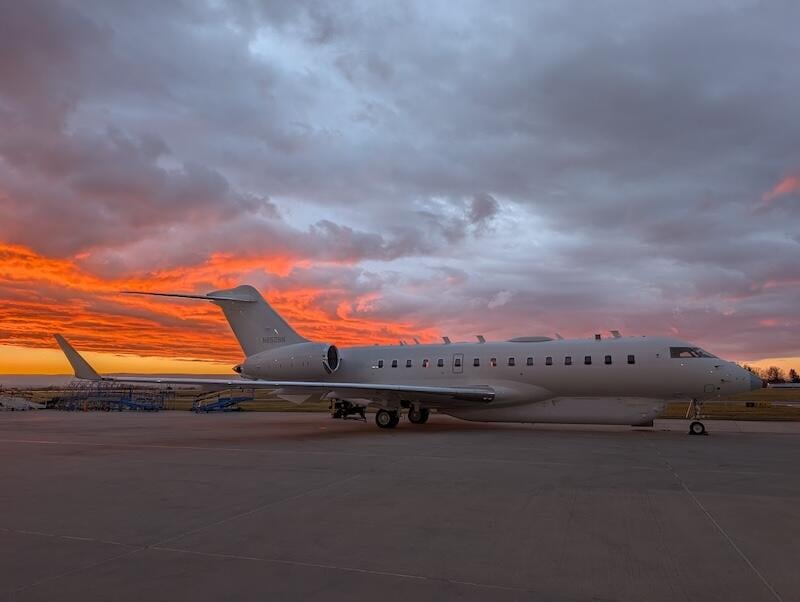
The U.S. Army plans to bring a fleet of contractor-owned aircraft in house to continue flying reconnaissance missions as it stands up its own fleet of business jets for the role, a new notice says.
The Army for years has collected intelligence through a unique fleet of contractor-owned, contractor-operated jets that also served to set the requirements for its new fleet of ME-11Bs. On Oct. 6, the Army announced a plan to issue three firm-fixed-price, sole-source contracts to the companies that built and are flying the aircraft—SNC, L3Harris Technologies and MAG Aerospace.
L3Harris built and is flying the Airborne Reconnaissance and Electronic Warfare System (ARES), a heavily modified Bombardier Global 6000/6500 series. Both MAG and SNC operate two 6500s each as Army Theater Level High Altitude Expeditionary Next Airborne ISR (Athena) prototypes. The aircraft have been deployed to Europe and the Pacific and have been providing intelligence, surveillance and reconnaissance (ISR) data to the military, though they are flown by the respective companies.
All of the prototypes, along with the Leidos Challenger 650-based Airborne Reconnaissance and Targeting Exploitation Multi-Mission Intelligence System (Artemis), served as precursors to what has become the ME-11B High Accuracy Detection and Exploitation System (HADES). SNC won the competition to build the fleet.
The Army in the notice says it “requires uninterrupted access to highly specialized airborne ISR platforms, integrated mission equipment ... and cleared personnel to ensure a seamless transition of legacy capabilities” to HADES.
The transition of the aircraft to government ownership comes amid uncertainty about the HADES program of record. The program initially called for 14 aircraft, though that was cut to six in 2025 as part of the Army Transformation Initiative. Program leaders said at the time that the fleet size could return to the original goal as aircraft are delivered and show their capability in real-world missions.

Related Content


Comments