
This article is published in Aviation Week & Space Technology and is free to read until Aug 09, 2026. If you want to read more articles from this publication, please click the link to subscribe.
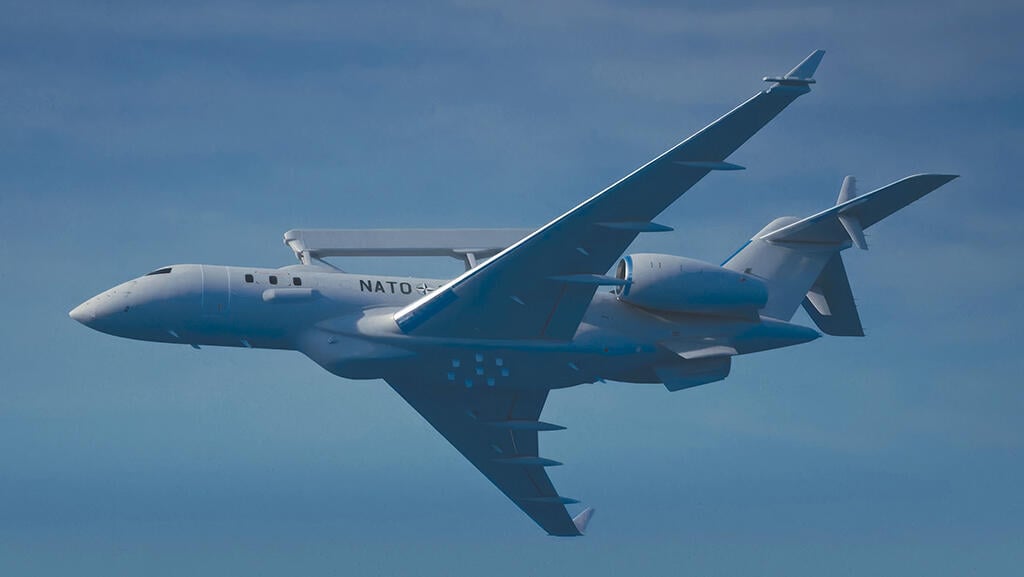
NATO plans to buy up to 10 Saab GlobalEyes to replace the aging Boeing E-3A fleet.
The U.S. has couched its retrenchment from NATO as a way to focus its military might on Asia. Somewhat ironically, Europe chose a capital city in Asia to make the case that it is ready to step up.
The Europeans, along with Canada, used the NATO Summit in Ankara, Turkey, on July 7-8 to make that point, committing to a raft of cooperative procurement and asset pooling initiatives to fill gaps created by Washington’s abrupt policy shifts.
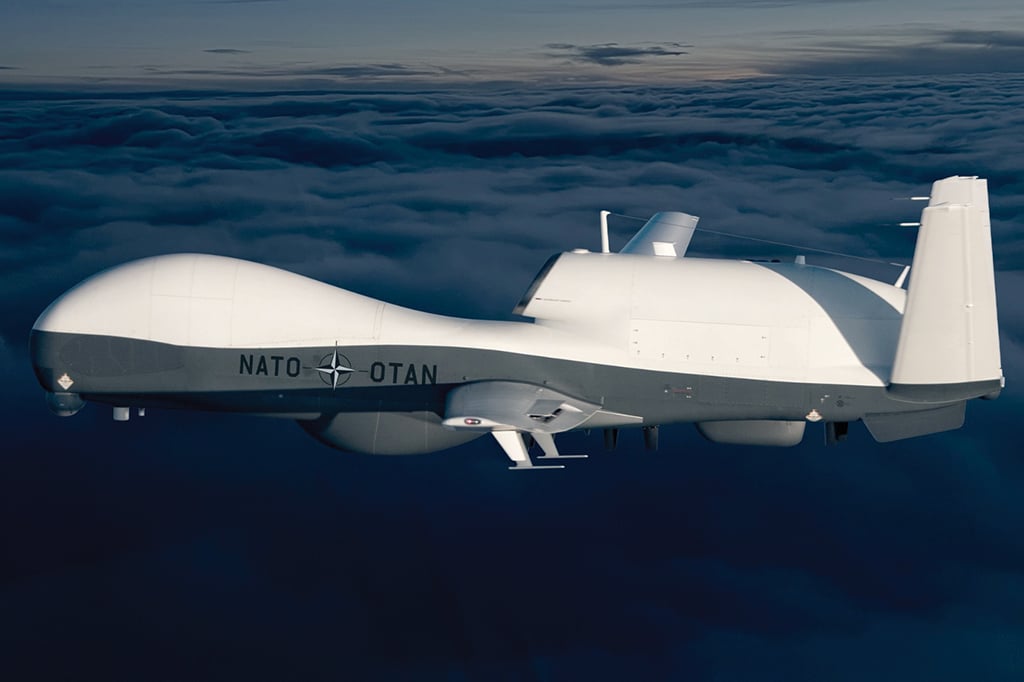
- The alliance plans to monitor the High North with the MQ-4C Triton
- Ukraine wants to license-produce Patriot interceptors
Few efforts illustrate that better than the decision around airborne early warning. For decades, the Boeing E-3A Airborne Warning and Control System (AWACS) fleet flying with multinational crews has been the symbol of the alliance. But like NATO, the AWACS are aging, and the fleet is in need of refreshing.
The alliance at one point planned to replace the E-3A with another U.S.-made product, the Boeing E-7. But Washington withdrew from the joint procurement, so NATO’s flagship aircraft will instead be a Swedish system based on a Canadian aircraft.
NATO Secretary General Mark Rutte said the alliance members would jointly buy up to 10 Saab GlobalEye systems based on the Bombardier Global 6500 business jet. The core members of the effort include Belgium, Canada, Denmark, Germany, Latvia, Lithuania, Luxembourg, the Netherlands, Norway, Romania and Sweden.
“This will ensure we keep NATO’s owned and operated surveillance and early warning capability strong and credible for decades to come,” Rutte said at the opening of the gathering.
Deliveries of the GlobalEyes to the alliance could start as early as 2030, Saab CEO Micael Johansson said, but that depends on whether NATO signs a contract quickly. He said the GlobalEye costs $400-450 million per aircraft.
Saab would have to expand its domestic capacity to produce the platform, Johansson added. That calls for additional output not only from existing facilities in the Swedish cities of Linkoping and Gothenburg, but also through a new industrial arrangement in Canada and with Sabena Technics in France.
The alliance announced spending totaling $50 billion on the opening day of the summit. Members pledged another €27 billion ($30.8 million) to modernize and expand NATO’s fuel storage and distribution infrastructure, including pipelines into Eastern Europe to feed air bases. Allies also agreed to spend $40 billion on counter-drone systems and drone training over the next five years.
Those efforts are underpinned by a sharp ramp-up in spending, particularly among NATO’s European members. When Turkey last hosted the summit in 2004, eight countries in the then-smaller alliance spent more than 2% of GDP on defense. NATO now says all members budget at least 2%, and five budget more than the 3.5% core defense target level set last year.
Rutte said allies are moving from “setting targets to delivering results” by speeding up production, breaking down barriers, increasing resilience and investing in innovation.
Recent decisions in Washington also have amplified Europe’s desire to introduce deep-strike systems. The war in Ukraine already fueled an appetite for such capabilities, but the Trump administration’s decision to reverse a Biden-era plan to deploy ground-launched, long-range systems to Europe has created a push for homegrown options.
The UK said it would spearhead a $50 billion, 10-year effort involving about a dozen countries to field systems with a range of at least 300-2,000 km (185-1,245 mi.).
Additionally, Denmark, France, Italy, Norway, Turkey and the UK are partnering in a Ground-Based Precision Strike Capabilities project involving new launchers and missiles. The goal is to “develop and deliver low-cost cruise and ballistic missiles at scale,” NATO Deputy Secretary General Radmila Šekerinska said July 7.
Host Turkey committed to acquiring a “significant number” of Roketsan Atmaca ground-based, long-range cruise missiles as part of wider efforts to build up weapon stocks across the alliance.
The U.S. also agreed to sell RTX Tomahawk cruise missiles to Germany after weeks of uncertainty over the potential deal, German Chancellor Friedrich Merz said. To help address Europe’s concern about local munitions production capacity, Lockheed Martin and Rheinmetall signed an agreement to move forward on a joint venture that would shift production of Atacms surface-to-surface missiles to Germany. The deal that has been in the works for about a year amid slow bureaucratic approvals now has backing from both governments, the companies said.
The war in Ukraine and lessons from the Iran conflict suffused the gathering, especially in terms of air defense. “NATO’s integrated air and missile defense is our first line of defense,” Šekerinska said.
Ukrainian President Volodymyr Zelenskyy used the summit to call for his country to be allowed to license-produce Patriot interceptors to try to stem the tide of Russian ballistic missile attacks, a plan that appeared to have secured a nod of approval from U.S. President Donald Trump. Russia has been taking advantage of a shortfall in Ukrainian stocks of the missiles—as well as a slowdown in deliveries of the weapons—by increasing ballistic missile attacks against the country’s cities and energy infrastructure.
“We all value the Patriot system, but today’s wars have shown that current Patriot production is not enough to meet the growing demand for protection against ballistic missiles,” Zelenskyy told the summiteers.
NATO—which has acquired RTX PAC-2 missiles in recent years through a collective purchasing mechanism—said it would buy more interceptors, with the NATO Support and Procurement Agency planning to buy another 700 PAC-2 and 200 PAC-3 missiles. The alliance later said it is buying “a large number” of GEM-T versions to supply Poland.
The alliance also highlighted at the gathering that it is plugging key logistical gaps in areas in which Europe long relied on the U.S. to provide. Belgium, Croatia, France, Poland, Spain, Turkey and the UK are supporting a collective fleet of Airbus A400Ms, Rutte said, although initially only through a pooling mechanism rather than by adding more transport aircraft.
Airbus said the shared fleet of A400Ms would provide Europe with specific capabilities comprising more than just air transport, like air-to-air refueling, disaster relief, medical evacuation and firefighting.
Finland also used the summit to join the multinational tanker fleet program formally. Denmark and Sweden this year joined Belgium, the Czech Republic, Germany, Luxembourg, the Netherlands and Norway in the collective use of Airbus A330 tankers.
NATO aims to acquire five Northrop Grumman MQ-4C Triton uncrewed platforms for Atlantic surveillance, too. They will be stationed at NAS Sigonella in Italy alongside the RQ-4 Global Hawks used for the Alliance Ground Surveillance mission. Additionally, Denmark announced it will buy two Boeing P-8A Poseidons to bolster its surveillance capabilities for Greenland and the Arctic region.
The alliance partners also spelled out efforts to collaborate further in other areas, including satellites and launch.
In the summit’s closing meeting, the leaders said, “We are building the future: a stronger Europe in a stronger NATO—a modernized alliance.”


Related Content
Comments