This article is published in Aviation Week & Space Technology and is free to read until Jun 14, 2026. If you want to read more articles from this publication, please click the link to subscribe.

Turkish Uncrewed Wingman Concepts Take Flight

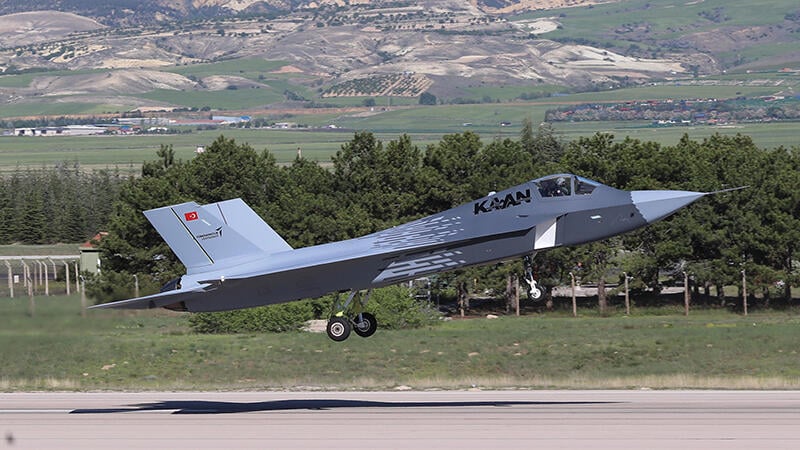
Kaan aircraft taking off

Turkish Aerospace wants to embed cooperation with autonomous collaborative platforms as a key building block of the Kaan combat aircraft.

Credit: Turkish Aerospace Industries

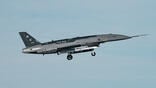
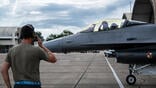
Turkish Aerospace Industries has demonstrated control of uncrewed aircraft systems from its Hurjet advanced jet trainer in a major building block in developing the indigenous Kaan combat aircraft.

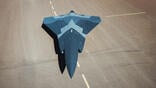
The trials involving the company’s Anka-3 uncrewed combat air vehicle (UCAV) place Turkey in a small club of countries able to demonstrate collaboration between crewed and uncrewed combat aircraft. Air forces around the world are exploring autonomous collaborative systems to provide affordable mass while improving survivability and combat effectiveness.

  • Anka-3 and Hurjet fly in crewed-uncrewed teaming trials
  • TAI is also testing smaller autonomous effectors

General Atomics funded a demonstration last year in which an MQ-20 Avenger was operated from a Lockheed Martin F-22 Raptor as part of Collaborative Combat Aircraft development work. In 2025, Boeing’s MQ-28 Ghost Bat also worked alongside an Australian Boeing E-7 Wedgetail and F/A-18 Super Hornets for firing an AIM-120 air-to-air missile.

Few details have been released about the extent and timeline of the trials or the level of control enabled by the system—known internally as OKU, a Turkish acronym for “autonomous wingman.” However, Turkish Aerospace Industries (TAI) CEO Mehmet Demiroglu confirmed that prototype Hurjets had acted as surrogates during the experiments because a representative Kaan prototype is not yet flying. He also confirmed that the Anka-3 was operated using Kaan avionics within a ground-based simulator.

“Kaan, or any manned platform, should be able to control one or multiple platforms from wherever they are,” Demiroglu told Aviation Week on the sidelines of the Saha Expo defense exhibition in Istanbul. “Hurjet is where we have started, but it will be applied to Kaan, and we will expand it to other manned platforms. . . . We are developing these systems now, so they are ready when Kaan enters service.”

Demiroglu said the focus is on integrating the capability with indigenous platforms, noting that the Baykar Kizilelma is also slated to operate alongside the Kaan eventually. There are no plans to integrate the system onto existing Turkish Air Force platforms such as the Lockheed Martin F-16. “That does not mean we cannot do that, but it is a matter of time and operational need,” he said.

TAI first publicly outlined the OKU concept in its in-house magazine two years ago, when an initial phase of the project had been completed. A second phase—identifying key technologies and developing a strategy and road map—was then underway, although few details emerged until last year’s Anatolian Eagle exercise, during which data was collected to support both Kaan and Kizilelma cooperative operations, Turkish Air Force officials said.

The concept also incorporates smaller autonomous effectors. TAI has been experimenting with its Super Simsek, an effector for missions such as deception, suppression of enemy air defenses and electronic warfare. These systems are designed to be launched from the Anka-3 and operate cooperatively with the UCAV.

The company has demonstrated the launch of the 200-kg (440-lb.) effector from the Anka-3, and a model displayed at the Saha Expo depicted the UCAV carrying two Super Simseks externally.

One scenario presented at the exhibition involved a Kaan acting as a mission commander, directing Anka-3s to deploy Super Simsek effectors to jam and attack air defenses before follow-on strikes.

Details of the trials have emerged as TAI prepares for the first flight of the fully representative Kaan prototype in the coming weeks. The aircraft, designated P1, was rolled out for senior Turkish defense officials in mid-February and is undergoing ground testing. Demiroglu declined to provide a firm date, although the milestone is widely expected before early summer. A second prototype, P2, is planned to fly by year-end, accelerating the flight-test campaign.

The 34-metric-ton twin-engine fighter is the centerpiece of Turkey’s ambition to become a major defense developer and exporter. Export interest is emerging, and Indonesia has signed up as a prospective customer.

During the Saha Expo, TAI also secured approval from Turkish defense industry agency SSB to proceed with production of 20 Block 10-standard aircraft.

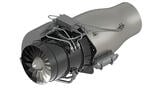
Meanwhile, work continues on an indigenous engine for the fighter. The TF35000 powerplant is being developed by TAI-owned Tusas Engine Industries and TRMotor. Prototypes and early-production aircraft, including the Block 10s, will use the GE Aerospace F110 until the domestic engine becomes available.

Defense officials at the exhibition said the TF35000 design has reached a “significant level of maturity” and that a contract covering final design work and prototype production is expected to be signed shortly.

Tony Osborne

Based in London, Tony covers European defense programs. Prior to joining Aviation Week in November 2012, Tony was at Shephard Media Group where he was deputy editor for Rotorhub and Defence Helicopter magazines.