This article is published in Business Aviation & AAM Report part of Aviation Week Intelligence Network (AWIN), and is complimentary through Aug 12, 2026. For information on becoming an AWIN Member to access more content like this, click here.

Airspeed Management Cited In Grand Caravan Crash

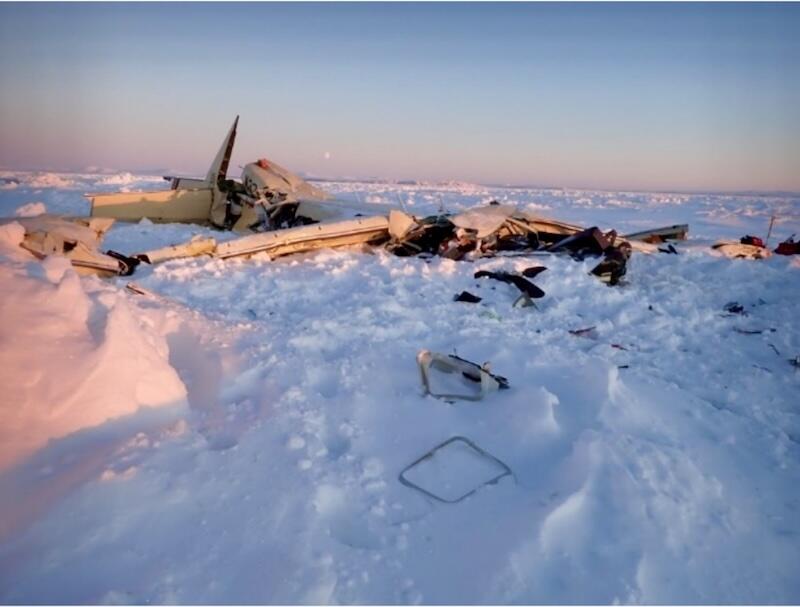
The crash site in Norton Sound on the western coast of Alaska.

The crash site in Norton Sound on the western coast of Alaska.

Credit: NTSB

Inadequate airspeed management during severe icing conditions, combined with an aircraft operating above its maximum gross weight, led to the February 2025 fatal crash of a Cessna 208B Grand Caravan in the Bering Sea off Nome, Alaska, the NTSB said July 30.

The pilot and nine passengers were killed when Bering Air Flight 445 crashed into pack ice on Feb. 6, 2025, while headed to Nome Airport on the final leg of a three-leg Part 135 scheduled commuter flight. The workload involved in managing the aircraft’s deicing process and the approach to the airport may have resulted in the pilot’s degraded situational awareness, inhibiting his ability to maintain adequate airspeed, the NTSB found.

Thirty-eight minutes after departing on the last leg, the flight encountered severe icing conditions, including supercooled large droplets (SLD). The single-engine turboprop had a TKS ice-protection system, which the pilot used during the encounter with icing conditions. Although the system was not approved for operation in SLD icing conditions, it functioned properly, the safety board said in its Aviation Investigation Report (AIR-26-05).

The aircraft’s airspeed decreased down to about 99 kt., which activated its low airspeed awareness system, resulting in the autopilot disengaging. “The airplane’s airspeed slowed to the point where it entered an aerodynamic stall, and the pilot likely did not recognize the low airspeed or the high angle of attack in enough time to prevent the stall,” the NTSB said.

The maximum gross takeoff weight (MGTOW) for the basic aircraft was 8,807 lb. It had been modified under FAA supplemental type certificate to provide for an increased MGTOW of 9,062 lb. However, for flight into known or forecast icing conditions, the pilot operating handbook supplement noted that the maximum allowable gross takeoff weight “was the same as that of the pre-modified airplane,” the safety board said.

An estimated weight-and-balance calculation for the accident flight performed during the NTSB investigation indicated that the gross takeoff weight of the Grand Caravan was about 9,798 lb. The aircraft’s operation above its maximum gross weight further reduced its stall margin, leaving less room for recovery, the safety board said.

Bering Air’s flight risk assessment and operational control procedures failed to prevent routine overweight operations, according to the NTSB. Safety investigators identified a pattern of underreported aircraft weights on company load manifests, with several flights operating above weight limitations.

As a result of the accident, the NTSB issued new safety recommendations to the FAA, including calling for most charter, air taxi and fractional ownership operators to provide pilots with training on how to prevent and recover from a loss of control in flight.

The board also reiterated previous recommendations calling for certificated dispatchers for most Part 135 operators, expanded use of flight data monitoring programs, broader load manifest requirements for Part 135 operations and crash-resistant flight recorder systems for certain aircraft.

“The tragedy of Flight 445 was not the result of a single failure, but a series of preventable breakdowns that eroded critical safety margins,” said NTSB Chairwoman Jennifer Homendy. “I’ve seen how Alaskan communities use aviation as a lifeline. Once implemented, our recommendations will make that lifeline safer and prevent other communities from experiencing similar heartbreak.”

Bill Carey

Bill covers business aviation and advanced air mobility for Aviation Week. A former newspaper reporter, he has also covered the airline industry, military aviation, commercial space and uncrewed aircraft systems. He is the author of 'Enter The Drones, The FAA and UAVs in America,' published in 2016.