This article is published in Business Aviation & AAM Report part of Aviation Week Intelligence Network (AWIN), and is complimentary through Nov 07, 2026. For information on becoming an AWIN Member to access more content like this, click here.

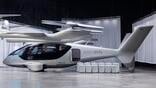
LAS VEGAS—Beta Technologies has secured the first FAA market survey authorization for an electric vertical-takeoff-and-landing (eVTOL) aircraft, clearing the way for demonstration flights with prospective customers onboard its Alia A250.
The authorization, announced Oct. 21 at NBAA-BACE, allows Beta to fly customers and other stakeholders aboard its A250 under a special airworthiness certificate. The approval does not permit commercial operations but does allow prospective operators to gain familiarity with eVTOL operations, infrastructure, procedures, and maintenance ahead of certification and entry into service.
The company completed its first flight under the certificate on Oct. 20, conducting a 34-nm trip from Plattsburgh, New York, to Burlington, Vermont, including complete transitions between vertical and forward flight.
In an interview with Aviation Week at NBAA-BACE, Beta’s CEO Kyle Clark said the company has logged “significantly more” than 50 hr. of flight testing in a stable configuration, which he described as the threshold for the market survey authorization.
“Flying 50 hours, 30 minutes at a time, or even 15 minutes—it’s a lot of flights,” Clark said. “There are days when I look at the charts, and we’ll have close to a dozen flights with two pilots in the airplane. I would be surprised if there’s anyone else in the industry doing that.”
Unlike rival eVTOL developers that are focused squarely on the air taxi market as a first application, Beta views its runway-based CX300 cargo aircraft as a stepping stone to the A250 VTOL variant as they share roughly 80% commonality. The two aircraft have the same flight controls, batteries, pusher motors, wings and other components, which Clark said will greatly simplify the path to certifying the VTOL aircraft, targeted roughly one year after the CTOL variant.
But Clark said that he views the VTOL segment as the larger long-term market opportunity, even while acknowledging that commercial CTOL operations will be simpler to certify and get to market first.
“Let’s face it, the biggest market here is to unlock vertical-takeoff-and-landing electric aircraft,” he said. “We’re still going to have the CTOL aircraft, which will be the workhorse aircraft of the 2030s. It’s lower cost, it’s reliable, it’s all-weather, and it’s an awesome aircraft.”
“But the fundamental market of flying relatively short ranges between small airports is not as big as potentially moving things between distribution centers, hospitals, urban air mobility, or military applications,” he added. “But the strategy is sound.”
Beta’s near-term operational priority is completing an initial series of FAA eVTOL Integration Pilot Program (eIPP) demonstrations with the CX300. Clark said five of seven planned launches have taken place, with New York-Vermont and Florida still to come. He said he wants to follow those demonstrations with Part 135 for-hire operations, add autonomous flying and then expand into VTOL missions.
“There’s a one-year split; everything we do in the VTOL happens about one year after the CTOL,” Clark said. “It’s just a matter of getting the product up to a maturity level where we’re comfortable flying into hospitals, flying into bases, flying from airports with the VTOL.”
In the meantime, certification of the runway-based CX300 continues to advance. Clark said a dispute over the FAA’s interpretation of continued-rotation requirements for the H500A pusher motor has been largely resolved, though he acknowledges that certification is taking longer than he initially expected. Beta has logged more than 90,000 hr. of operation on the H500A, including dynamometer and flight testing, he said.
Clark described a positive relationship with the FAA, adding that his biggest ask for the agency is “clarity and consistency.”
“I will always wish that the FAA was faster in their responses, but I will say that the partnership has never been better,” Clark said. “We don’t need a lower safety bar. We don’t need any cutting corners. What we need is for the goalposts not to move. We just need [the process] to be clear and consistent and not change.”
Alongside its aircraft programs, Beta is also rolling out a nationwide network of aircraft-agnostic charging units. Clark said that roughly 130 charging sites are operational or under development, adding that Beta recently sold 34 chargers for deployment in Florida. A redesign of its Mini Cube charger has reduced parts count and manufacturing costs, he said.
Beta also supplies aircraft components, including its pusher motor and fly-by-wire flight control computers, to other eVTOL developers, including Eve and Horizon Aircraft. Clark said those projects generate revenue while helping validate components Beta uses in its own aircraft.
Clark also outlined the company’s numerous plans for the year ahead, including motor certification, expanded eIPP operations, VTOL flight testing, manufacturing and defense.
“We’ve set some pretty aggressive goals, and we’re going after them,” he said.

Related Content