This article is published in Business Aviation & AAM Report part of Aviation Week Intelligence Network (AWIN), and is complimentary through Oct 23, 2026. For information on becoming an AWIN Member to access more content like this, click here.

LAS VEGAS—Honeywell Aerospace is projecting a stronger decade ahead for business aviation, forecasting 9,950 new business jet deliveries and 4,200 turboprop deliveries over the next 10 years, the company said in its just-released 35th Global Business Aviation Outlook for 2025-35.
Kevin Schwab, Honeywell strategic planning manager, was quick to note that this year’s figures aren’t directly comparable to past reports.
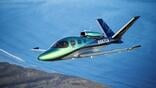
Honeywell has expanded the scope of its coverage to include turboprops and personal jets—mostly the Cirrus SF50 Vision Jet—for the first time, reflecting a push toward a more complete view of the market. “If we’re producing a market outlook, we should be looking at the entire market,” Schwab said.
When adjusted to match last year’s narrower scope, the new forecast represents a 4.4% increase over last year’s outlook—translating to roughly 31% growth in deliveries from 2025 through 2035.
Schwab attributed the upward revision to a broadly positive economic environment, even amid lingering concerns over trade policy, oil prices and interest rates.
To validate its forecasting models, Honeywell runs an annual Buyer Expectations Survey polling operators worldwide about firm aircraft orders and flying intentions.
This year, 28% of operators reported having at least one aircraft on firm order—slightly above prior years and a sign of sustained positive sentiment in the orderbook.
Respondents say they prioritize mission performance above all other considerations when buying an aircraft, with range, payload, speed and field performance remaining primary factors. They also put a “strong emphasis” on cabin experience, cost and customer support.
Honeywell’s projections predict 29% fleet growth over the next 10 years, exceeding the growth seen over the past decade from converging trends of higher deliveries and slightly lower retirements.
“This inflection point,” Schwab said, benefits the entire support ecosystem—retrofits, modifications, MRO services, FBOs and fuel suppliers—all of which stand to gain from a larger, faster-growing fleet.
Utilization is improving too. Fractional ownership and, to a lesser extent, charter models are making aircraft usage more efficient, pushing projected flight-hour growth to 34%, outpacing the 29% fleet growth.
Zooming in on current performance, Schwab noted that business jet flight hours are already up more than 4% in 2026.
Midsize and super-midsize jets are leading the way, up about 7% year over year, while large-cabin jets have grown roughly 5%.
Roughly 30% of the surveyed operators say they expect to fly more next year than this year. For Schwab, that signals continued tailwinds.
“Business is good, and so they’re expecting to fly more,” he said, adding that a drop in that figure would prompt closer scrutiny—but for now, sentiment remains strongly positive.

Related Content