This article is published in Business Aviation & AAM Report part of Aviation Week Intelligence Network (AWIN), and is complimentary through Nov 07, 2026. For information on becoming an AWIN Member to access more content like this, click here.
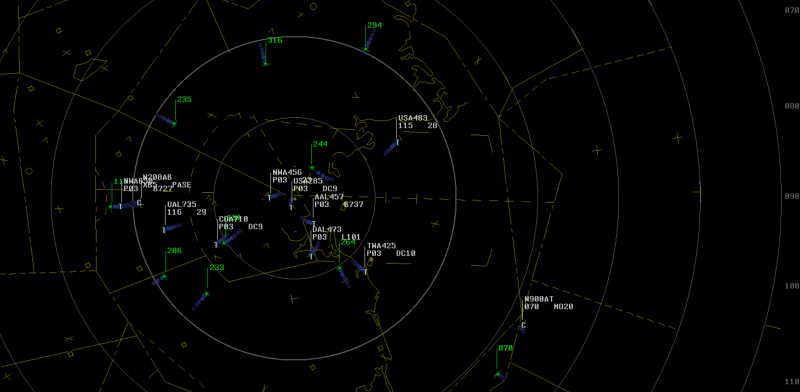
The Tower MicroELITE display system is designed for airports with federal contract and privately operated ATC towers.
RTX Collins Aerospace is unveiling a new digital display and surveillance system designed to improve air traffic controller (ATC) situational awareness at federal contract towers and privately operated ATC facilities.
The Tower MicroELITE (TME) display integrates Automatic Dependent Surveillance-Broadcast (ADS-B) and radar surveillance data in a compact, enterprise-grade system that can be deployed across regional and general aviation reliever airports, business aviation terminals and heliports, RTX Collins says.
TME recently received system design approval from the FAA as an Airborne Position Reference Tool (APRT), making it available to eligible FAA Contract Tower airports and private ATC facilities. The FAA lists 265 contract towers.
San Bernardino International Airport (SBD) in California, which has a federal contract tower, is the first airport to install the system.
“As air traffic continues to grow, airports need solutions that give controllers a clear and reliable view of what’s happening in their airspace,” says Nicole White, RTX Collins vice president and general manager of Connected Aviation. “Tower MicroELITE delivers that clarity with an FAA-approved solution that’s easy to integrate and scalable so operators can manage traffic demands with confidence.”
The TME system is derived from RTX Collins’ Standard Terminal Automation Replacement System (STARS), providing controllers with an industry-standard interface to monitor and manage complex aircraft sequencing. STARS integrates aircraft surveillance and flight-plan data and presents the information to controllers in terminal radar approach control (tracon) facilities on high-resolution color displays.
RTX Collins (West Hall—2544) says STARS manages 80% of U.S. air traffic.
“One of the things we’re excited about with TME is that it’s customizable,” says White. “Depending on the location, you can look at track history, look at predicted track lines. It does some customizable overlays that can provide clarity for controllers’ decision making. It shows aircraft speed and altitude and identification. All that software is built off our foundational STARS software.”
RTX Collins is among companies vying to build the Common Automation Platform (CAP)—a common surveillance system controllers would use across terminal, enroute and oceanic airspace domains. The estimated $6-10 billion CAP is a key component of the FAA’s Brand New Air Traffic Control System (Bnatcs) modernization effort. The RTX business is also supplying new primary and secondary surveillance radar systems under Bnatcs.
The TME platform will benefit from the company’s ongoing technological development and innovation.
“We’re already talking about what’s next for TME,” White says. “We’re actively thinking about future enhancements for the system building on this existing FAA certification we have. Some of those additional features are things like conflict detection that we’d like to get approval for in the second half of 2027.”

Related Content