This article is published in Business Aviation & AAM Report part of Aviation Week Intelligence Network (AWIN), and is complimentary through Nov 07, 2026. For information on becoming an AWIN Member to access more content like this, click here.
Japanese electric vertical-takeoff-and-landing (eVTOL) startup SkyDrive is seeking to expand its commercial footprint beyond its home market as it advances flight testing and certification of its compact SD-05 multicopter.
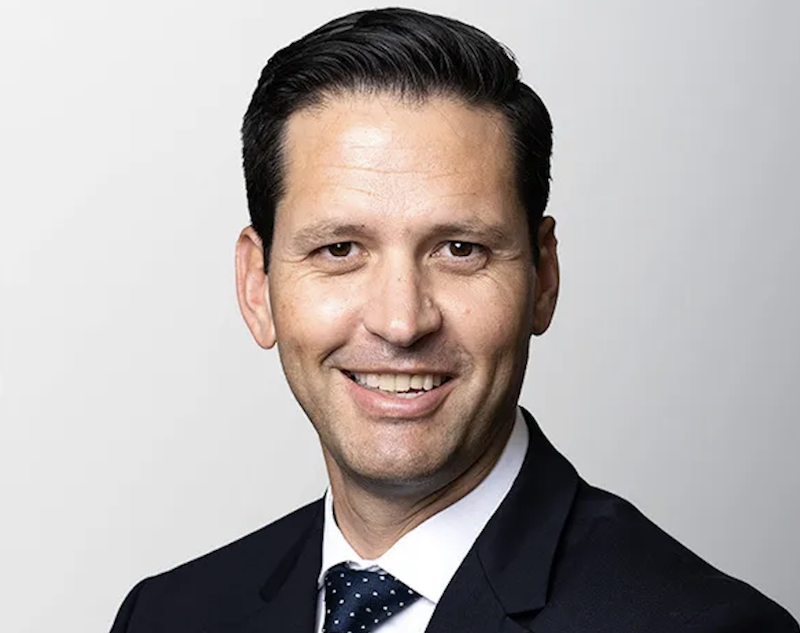
Gonzalo Ramos, who joined SkyDrive in September as global commercial officer following previous roles at Airbus, Supernal and Overair, is leading the company’s international commercial expansion. He sat down with Aviation Week’s Ben Goldstein at NBAA-BACE in Las Vegas to discuss SkyDrive’s approach to aircraft design, its search for operating partners and the outlook for commercial eVTOL operations.
Aviation Week: What attracted you to SkyDrive after working at Supernal and Overair, both of which pursued larger, more complex aircraft configurations?
Ramos: One of the difficulties with some of these other companies is that their design was very complex, and complexity brings a couple of issues. One is that it’s very difficult to certify because you have all these moving parts and failure scenarios. It also becomes expensive to develop and maintain.
What I really liked about SkyDrive is the simplicity of the design. They’ve gone for the most simple flying electric vehicle that you can really design, which is a multicopter. I think that’s the key advantage SkyDrive brings to the market: the simplest vehicle design that really unlocks urban air mobility.
Aviation Week: Multicopters sacrifice some cruise efficiency compared with winged aircraft. Why is that an acceptable trade-off?
Ramos: We’re not targeting those longer routes. We’re targeting routes that are 30 km (19 mi.) and under. At the end of the day, there’s a balance in what you’re optimizing for. If you optimize for range and want a wing, you’re inherently increasing the weight of your aircraft significantly because you have all this additional structure, which on short hops is just dead weight in many cases.
The path we’ve taken is that we might take a slight hit on cruise performance, but in exchange, we don’t carry all that weight. We think we can be more efficient on short hops.
You also don’t have the transition between hover and cruise, which simplifies certification and pilot training.
Aviation Week: Why does SkyDrive see tourism and sightseeing as promising initial markets?
Ramos: We want to focus first on more experiential flights. That could be going from one place to another, but it could also be sightseeing and tourism, which is a much simpler operation to implement initially.
You can fly from point A back to point A. You don’t have to navigate through complex airspace. You can choose to fly along Miami Beach, for example, over the water.
We think entry into some of these markets is through tourism and sightseeing. Once you’ve demonstrated maturity, safety and economics, you can implement point-to-point operations and more challenging routes, which is where some of our competitors are trying to go straight away. But it’s incredibly difficult.
Aviation Week: When do you expect meaningful commercial scale, both for SkyDrive and the broader eVTOL industry?
Ramos: It’s hard to tell when that hockey stick will happen. What we’re working toward is certifying the aircraft at the end of 2028, initially with the Japan Civil Aviation Bureau, and validating that certificate with the FAA soon thereafter.
Realistically, we could potentially start operations under the FAA in 2029, but that’s just the beginning. It’s still going to take some years to scale. To me, it’s the early-to-mid-2030s when things start to scale.
We have to go to the points of least friction, where demand is high but there’s also political support. Florida is one market we’re looking at. Infrastructure will be critical, especially as we move toward more intricate point-to-point networks.
Aviation Week: What makes an ideal commercial partner, and how do you persuade helicopter operators to adopt electric aircraft?
Ramos: We’re looking for an operator that knows how to operate an aircraft, maintain it and train people. We align more closely with helicopter operators than business jet operators because of what we do. If they already have tourism routes, helipads or other infrastructure, that’s a benefit. Financial strength and a long-term vision are also important.
Our value proposition versus helicopters is that we’re much quieter, which unlocks opportunities in certain cities. We also believe operating costs will be significantly lower because electricity costs less than fuel and the aircraft is simpler to maintain.
That gives helicopter operators an opportunity to offer a lower price point to customers or increase their margins. They can potentially open their services to a larger segment of the population.

Related Content