Jerome Cadier on stage at Routes Americas 2026.
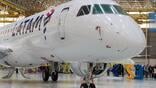
LATAM Airlines Brazil is preparing to take delivery of the first Embraer E2 aircraft at the end of this year as it recalibrates domestic capacity and adjusts its network strategy in a more disciplined Brazilian market.
Speaking at Routes Americas 2026 in Rio de Janeiro, CEO Jerome Cadier said the first aircraft is expected to arrive in the last quarter of this year, with between 12 and 14 E2s slated for delivery through 2027.
The aircraft will initially be deployed within Brazil, where Cadier sees the greatest opportunity to right-size capacity. “In the beginning, it’s mainly domestic,” he said, adding that the aircraft “fits perfectly in Brazil.”
The smaller-gauge E2 is intended to give LATAM greater flexibility to add frequencies and develop thinner routes that may not sustain Airbus A320-family capacity. The group ordered 24 E2s in September 2025 and has indicated they will be based at São Paulo Guarulhos, Brasilia and Fortaleza—key strongholds in its Brazilian network.
The fleet move comes as LATAM maintains annual growth of roughly 8%-10%, a pace Cadier said is aligned with demand rather than competitive pressure. “We have to make sure that growth is a profitable one,” he said.
More News And Analysis From Routes Americas 2026
Brazil’s domestic sector, which in previous cycles saw sharp swings in capacity, has entered a steadier phase. “The main characteristic of the Brazilian market is a more rational capacity,” Cadier said, following a restructuring process carried out by LATAM, GOL and Azul in recent years.
“After everybody tastes what Chapter 11 feels like, you become a bit more rational and cautious around overcommitting to growth,” he said.
Beyond domestic adjustments, LATAM continues to strengthen São Paulo Guarulhos as its primary international gateway, concentrating domestic-international connections to reinforce its South American network. In November, the carrier announced seven new routes for 2026 including intercontinental services to Amsterdam, Brussels and Cape Town, alongside four new domestic destinations to Caldas Novas, Campina Grande, Juiz de Fora and Uberaba.
However, structural constraints could temper demand growth. Cadier highlighted taxation as a key barrier, warning of the potential consequences of proposed federal tax reform. Industry groups such as IATA have previously cautioned that higher levies on airline tickets—part of broader fiscal reforms under debate in Brasilia—could reduce Brazil’s air travel demand by up to 30% by making flying significantly more expensive for passengers. The risk, Cadier said, is that “when we tax the ticket, we make the trip less likely.”

Related Content