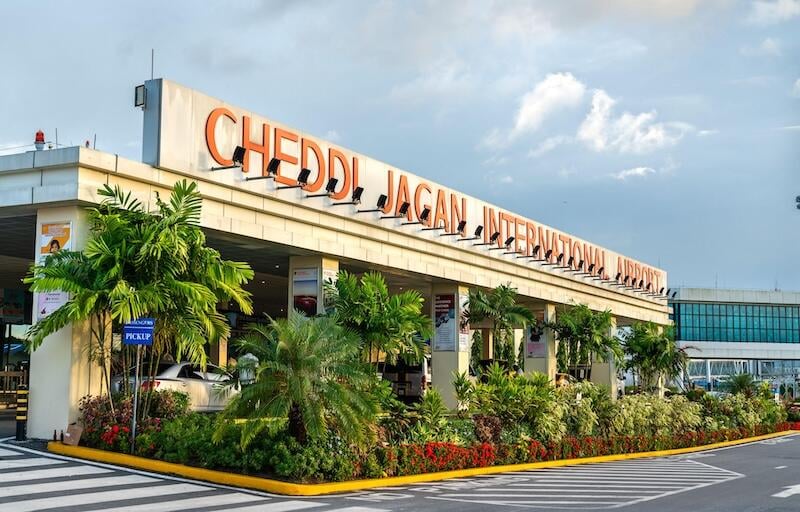
Georgetown’s Cheddi Jagan International Airport.
Guyana is developing its aviation sector with the aim of supporting future hub operations, as traffic rises and new routes and infrastructure come online.
The South American nation has seen a rise in airline activity in recent years, driven largely by its fast-growing oil and gas sector and increasing international business links. “We have seen a phenomenal growth … from four airlines in 2020 to 16 airlines and 17 new destinations,” Ramesh Ghir, CEO of Georgetown’s Cheddi Jagan International Airport (GEO), told Routes at Routes Americas 2026 in Rio de Janeiro.
Capacity has expanded from about 300,000 seats to 1.7 million over the same period, with passenger growth continuing into 2026. KLM launched a 3X-weekly Amsterdam-Bridgetown-Georgetown service in October using Boeing 787-9 aircraft, while Air Transat added 2X-weekly Toronto Pearson-Georgetown flights in December using Airbus A321LR equipment.
Officials highlighted KLM’s Amsterdam service as particularly significant, providing access to Europe via a hub that does not require transit visas.
Traffic flows are also shifting. “With the oil and gas strength, we have seen more premium passengers and more passengers from Europe, Asia and the Middle East,” Ghir said, highlighting growing long-haul demand beyond traditional North American VFR markets.
Government policy is now focused on leveraging that demand into a broader hub strategy. “We were mandated to make Guyana [an] aviation hub,” said Deodat Indar, minister of public works. He added the country’s location on South America’s Atlantic coast is seen as enabling potential north-south and transatlantic connectivity, with officials targeting new long-haul links to the Middle East and Asia alongside stronger regional ties within South America and the Caribbean.
To support this, GEO is expanding infrastructure. Construction of a new 156,000-ft.2 arrivals terminal—featuring lounges, expanded retail and improved passenger processing—is planned, with completion targeted within about 18 months.
Air service incentives are also playing a key role. “We have reductions and waivers while routes are developed,” said Sanjeev Datadin, a board director at GEO, explaining that lower airport charges and increased fuel competition are designed to reduce operating costs and stimulate new routes.

Related Content