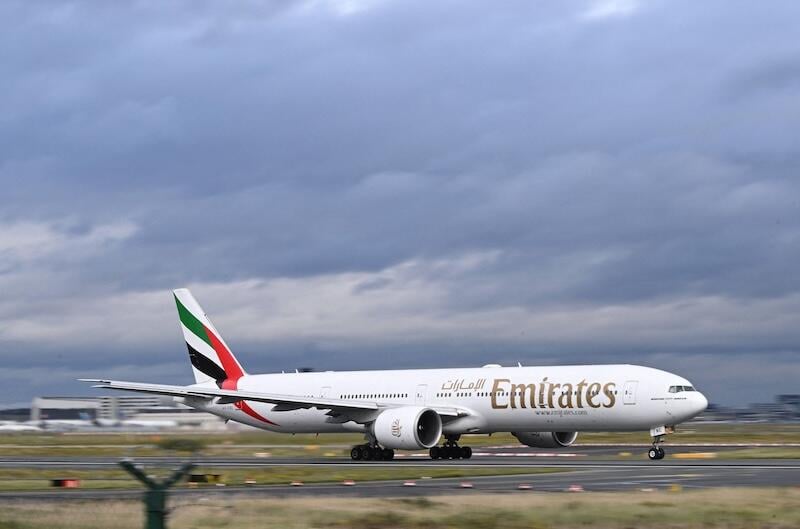
Emirates has confirmed plans to end service to Algeria in early 2027 after Algiers formally moved to terminate its bilateral air services agreement with the United Arab Emirates (UAE), marking a further deterioration in diplomatic ties between the two countries.
In a statement, the Dubai-based carrier said operations remain unchanged for now. “Emirates confirms that flights to and from Algeria are operating as scheduled, and services remain unaffected at this time,” the airline said.
However, the carrier confirmed that flights from Algiers are set to end next February. “We can also confirm that currently, our last scheduled flight, EK757, will depart from Algiers on Feb. 3, 2027,” Emirates added.
Algeria recently triggered Article 22 of the 2013 UAE-Algeria air services agreement, formally initiating procedures to withdraw from the accord through diplomatic channels. The move effectively sets a countdown to the suspension of traffic rights between the two countries unless a new framework is negotiated.
Emirates currently operates 6X-weekly flights between Dubai and Algiers using Boeing 777-300ER aircraft, while Air Algerie provides daily service on the route with Airbus A330-900neos. According to OAG Schedules Analyser data, the two airlines together offer about 8,250 two-way weekly seats, with Emirates accounting for approximately 52% of total capacity.
Sabre Market Intelligence data shows that O&D traffic between the UAE and Algeria totaled about 351,500 two-way passengers in the 12 months to June 2025, down 12% year on year. Roughly 78% of passengers traveled nonstop, while Istanbul, Jeddah and Doha were the leading one-stop connecting hubs.
The termination of the bilateral agreement reflects broader political tensions between Algiers and Abu Dhabi that have intensified in recent months, with Algerian officials accusing the UAE of interference in regional affairs and pointing to diverging positions on conflicts in North Africa and the Sahel.
For Emirates, the planned withdrawal represents the loss of a North African market that has been part of its network for more than a decade. For Algeria, it reduces connectivity to the Gulf and may shift traffic flows toward competing hubs such as Istanbul and Doha.
Emirates said it “will fully comply with any instructions or directives issued by government authorities and will provide timely updates to its customers, employees and partners should circumstances change.”

Related Content