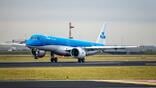
Aircraft leasing company TrueNoord is accelerating its expansion across Africa, even as structural challenges continue to weigh on the continent’s aviation sector.
The Dutch company currently owns a fleet of more than 100 modern turboprop, regional jet and crossover aircraft, leased to over 30 operators in 24 countries. These smaller aircraft play a critical role connecting underserved regions to major hubs, particularly in markets where passenger demand is fragmented and infrastructure gaps persist.
“Regional aircraft link remote locations to larger urban areas, providing a feeder service to major hubs, and fulfill carriers’ lower-demand, off-peak services in the growing global market,” Basil Gygax, sales director for Africa, the Middle East and CIS at TrueNoord told Aviation Week.
He added that Africa has become a key focus within that strategy. The company has 10 aircraft on lease to five operators across the continent.
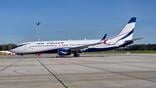
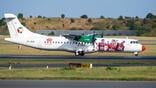
Among its customers, Ethiopian Airlines operates three De Havilland Canada Dash 8-400 turboprops, leased from TrueNoord to support domestic connectivity through its Addis Ababa hub. Meanwhile, Cabo Verde Airlines deploys ATR 72-600 aircraft for essential inter-island services. In southern Africa, CemAir utilizes Mitsubishi (formerly Bombardier) CRJ900 jets for ACMI operations, currently flying for both LAM Mozambique Airlines and United Nigeria Airlines. Regional operator Airlink is also among its clients.
Expansion continued in 2025, when TrueNoord delivered a new ATR 42-600 to Afrijet Business Service. Cabo Verde Airlines was also added as a new customer during the year.
Despite these gains, Gygax said access to financing remains uneven across Africa’s aviation sector.
“Leading flag carriers, including Ethiopian Airlines, Egyptair and Royal Air Maroc attract high volumes of competitively priced capital on par with leading global airlines,” he said. “Unfortunately, many larger financial institutions and lessors limit their scope to these marquee credits, leaving many of the 230 airlines in Africa overlooked and underserved.”
Gygax said TrueNoord aims to differentiate itself by working with a broader range of carriers, focusing on operational strength rather than scale.
“A significant portion of African airlines remain effectively excluded from international leasing markets,” he said. “Factors such as aging fleets, macroeconomic instability and geopolitical risks continue to deter investors. In such cases, airlines often rely on local banks for financing.”
Gygax adds that risk management is central to TrueNoord’s approach. The company conducts detailed assessments of legal frameworks, including whether countries have adopted international agreements such as the Cape Town Convention, which governs aircraft repossession rights.
“From a jurisdictional standpoint, it rigorously assesses legal and practical issues around aircraft repossession,” Gygax said, adding that tools like the Aviation Working Group’s compliance index are also consulted.
“Limited access to foreign currency, particularly U.S. dollars, can complicate revenue flows, while restrictions on repatriating funds pose additional challenges,” Gygax added. “Airlines must also demonstrate resilience to geopolitical shocks and the ability to adapt networks accordingly.”
Taxation is another hurdle. Of Africa’s 54 countries, only a handful have comprehensive tax treaties with Ireland, where many leasing companies are based, adding complexity to cross-border transactions.
Despite these obstacles, Gygax maintains that Africa’s regional aviation market is “stronger than often perceived.”
“For context, Africa is the only continent where the Airbus and Boeing duopoly is contested, with Embraer commanding the position as the second-largest OEM, reflecting a more diverse fleet mix tilted toward regional aircraft,” he said. “This is further reflected in Africa’s average seat gauge, which has remained between 123 and 130 seats from 2010–2025, the lowest of any continent. The modest 5.7% increase over that period—the lowest increase of any continent aside from APAC—demonstrates capacity discipline in favor of regional jets and small narrowbodies.”
Looking ahead, TrueNoord is doubling down on its African ambitions. The company has scaled its leasing platform within the 50–150 seat segment and is preparing to support fleet modernization across the region.
TrueNoord’s firm order for 20 Embraer E2 aircraft, announced in October 2025, is expected to play a central role in that effort.

Related Content