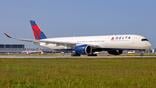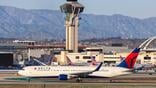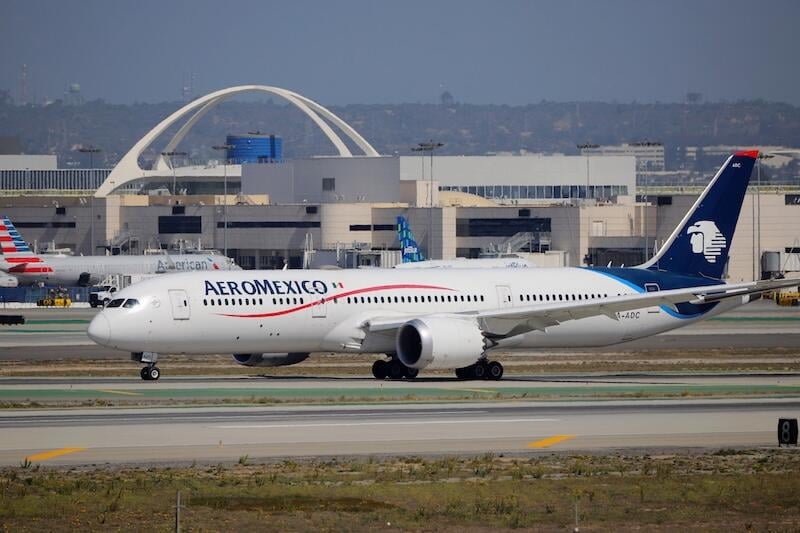
Aeromexico, Delta Air Lines and Turkish Airlines are expanding their long-haul networks with new services to Italy, Japan and China, respectively, strengthening their presence in markets they already serve.
Mexico City-Milan Malpensa
Aeromexico will launch nonstop flights between Mexico City International Airport (MEX) and Milan Malpensa Airport (MXP) on March 30, 2027, adding its second Italian destination and expanding its European network to 10 destinations.
The route will operate 4X-weekly, primarily using Boeing 787-9 aircraft, with selected flights operated by 787-8s. Departures from Mexico City are scheduled on Tuesdays, Thursdays, Saturdays and Sundays, with return flights the following day.
OAG Schedules Analyser data shows that Mexico City-Milan is currently unserved nonstop. However, Neos already connects Milan Malpensa with Cancun, providing an existing nonstop option between Mexico and northern Italy.
Sabre Market Intelligence data shows that approximately 136,100 two-way O&D passengers traveled between Mexico and Milan in 2025, up 2.7% year over year. Milan was Mexico’s ninth-largest European city market and its second-largest Italian market behind Rome, which generated about 237,200 passengers.
The wider Mexico-Italy market totaled approximately 526,000 passengers during 2025, broadly unchanged from 2024. Milan’s increase contrasted with an 11.7% decline in Mexico-Rome traffic. The figures cover demand from across Mexico rather than the proposed Mexico City route alone.
Aeromexico is already the largest nonstop operator between Mexico and Italy. OAG data shows approximately 128,200 two-way seats during summer 2026, down 2.8% year over year. Aeromexico accounts for 80.5% through its Mexico City-Rome Fiumicino service, with Neos providing the remainder on Cancun routes to Rome and Milan.
The Milan launch will give Aeromexico direct access to northern Italy, complementing its Rome service and reciprocal codeshare with ITA Airways, which provides onward connections from the Italian capital.
Seattle-Tokyo Narita
Delta Air Lines will return to Tokyo Narita Airport (NRT) in March 2027, adding a second Tokyo route from Seattle as Alaska Airlines expands its long-haul presence at the Pacific Northwest gateway.
The daily service from Seattle-Tacoma International Airport (SEA) will begin March 27 using Airbus A330-900neo aircraft. Delta will retain its existing Tokyo Haneda Airport (HND) service, giving it two daily flights between Seattle and the Japanese capital.
The launch marks Delta’s return to Narita after a seven-year absence. The carrier moved its Seattle service to Haneda in March 2020, when it also ended its longstanding NRT hub operation.
Sabre Market Intelligence data shows that the Seattle-Tokyo market generated approximately 243,100 two-way O&D passengers in 2025, up 8.8% from about 223,400 a year earlier. Tokyo accounted for 71.2% of Seattle’s total Japan demand.
More News And Analysis From Routes World 2026
The wider Seattle-Japan market grew faster, increasing 23.1% to approximately 341,300 passengers. Osaka was the second-largest city market with about 31,300 passengers, up 47.7%, followed by Okinawa with 15,700 and Fukuoka with 9,800. Sapporo demand more than doubled to approximately 8,600 passengers.
Delta’s new service will compete directly with Alaska and Japan Airlines at NRT, while All Nippon Airways serves HND alongside Delta. Assuming existing services remain unchanged, the addition would increase Seattle-Tokyo operations to five daily departures—three to NRT and two to HND.
Alaska launched Seattle-Narita in May 2025 with a Hawaiian-branded Airbus A330-200, switching to Boeing 787-9 equipment in January 2026. Tokyo was the first destination in its Seattle long-haul expansion following the acquisition of Hawaiian Airlines.
Istanbul-Chengdu
Turkish Airlines will add Chengdu to its network in November, entering an established nonstop market and expanding its mainland China footprint to four destinations.
The Star Alliance member will launch flights between Istanbul Airport (IST) and Chengdu Tianfu International Airport (TFU) on Nov. 11, operating 3X-weekly using Boeing 787-9 aircraft. Departures from Istanbul will operate on Wednesdays, Fridays and Sundays, with return flights on Mondays, Thursdays and Saturdays.
Chengdu will join Beijing, Shanghai and Guangzhou in Turkish’s mainland China network, extending its reach into southwestern China. The route will compete with Sichuan Airlines, which already connects Tianfu and Istanbul.
OAG Schedules Analyser data shows Sichuan offering approximately 16,200 two-way seats on the route in October 2026, up 57.1% from about 10,300 a year earlier.
Sabre Market Intelligence data reveals approximately 56,900 two-way O&D passengers traveled between Turkey and Chengdu’s two airports in 2025, down 19.1% from about 70,300 in 2024. TFU accounted for approximately 52,100 passengers, with the remaining 4,800 using Chengdu Shuangliu International Airport.
Despite that decline, Chengdu remained Turkey’s fourth-largest Chinese city market, behind Shanghai, Beijing and Guangzhou. The wider Turkey-China market grew 16.6% to approximately 647,300 passengers during 2025.
The figures suggest Turkish’s opportunity extends beyond local traffic. Its Istanbul hub will provide another connecting option for Chengdu passengers traveling to Europe and other markets, alongside Sichuan’s existing nonstop European services.
OAG data shows approximately 125,300 two-way seats scheduled between Tianfu and European airports, including Istanbul and Russian destinations, in October 2026. That represents a 32.9% increase year over year, with the number of airport pairs rising from 10 to 12.
Turkish’s launch also forms part of a broader shift toward Asia. The airline said it increased Asian capacity beyond its original second-quarter plan as some passengers moved away from Gulf routings following conflict in the Middle East. Chengdu gives Turkish another market from which to capture those connecting flows.

Related Content