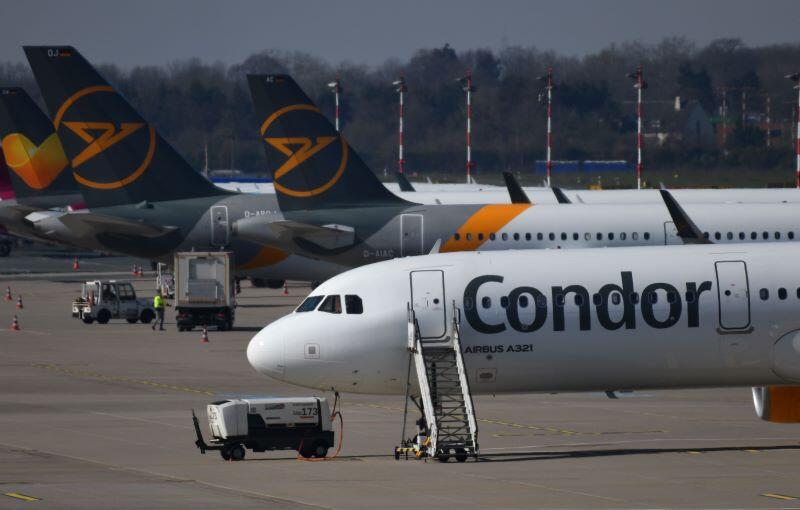
FRANKFURT—Condor Airlines CEO Peter Gerber said he was very satisfied with the German carrier’s summer performance, and winter bookings were holding up although the Middle East crisis had weakened demand for travel to the Gulf.
“This year, [Middle East demand] of course has changed quite a bit,” Gerber said during a keynote interview at Routes World 2026 in Frankfurt. “There is less demand, and people—especially from Europe—don’t feel so safe at this very moment in Dubai. On the other hand, as you know, people also have short memories.”
Gerber still sees scope for Condor to grow its leisure business, in partnership with tour operators. “Of course, we want to expand there,” he said. “Especially on the long-haul side, especially in the winter time, it works very, very well, and there’s still room for expansion for us.”
However, growth in Condor’s newly created European feeder network may be limited by the airline’s ability to pass through Germany’s high operating costs and spiraling fuel costs. “We are reaching price barriers,” he said. “It will be more expensive to fly.”
German aviation taxes, security fees and ATC costs make it seven times more expensive than Spain, Gerber said, and this “ridiculous” “anti-aviation” stance is causing Germany to be at 85% of pre-COVID-19 pandemic traffic, compared to other countries at 150%.
“We just want to move them to the European average level. Then Germany would be back to growth, and we could compete,” he said. “It’s really catastrophic.”
Condor has fuel hedges in place and, while supply is remaining stable, the hedges will reduce over time. “Then it starts to get difficult, and we have to see month-by-month how it works out,” he said.
If nothing changes, Gerber anticipates that airlines will have to start cutting capacity by late winter. Condor is already rolling out a cost-saving initiative, with union buy-in, paving the way for continued growth. The transformation plan is “well underway,” and two-thirds of the planned savings will come from contract management and efficiency gains.
“Condor wants to expand in the next three years quite heavily,” Gerber said. This will see Condor grow by around 20%, with four more A330neos and “quite a lot of A320s and A321s” set to join the fleet. Condor has 18 A330neos in service and seven more on order, taking the fleet to 25 by 2031.
One of Condor’s upcoming destinations is Chicago, which is set to launch next summer. South America—particularly Brazil—East Asia and China are white spots that Gerber will be looking to fill, depending on securing the right partner feed.
More News And Analysis From Routes World 2026
“We start the first steps [for China], but of course we need to do a little bit more to be a serious contender there. We have traffic rights,” he said, adding that there are still slots available for short-haul routes “here and there.”
Condor will be closely monitoring how Lufthansa’s acquisition of a stake in TAP Air Portugal is structured, along with any potential competition remedies, given TAP’s strong Latin American network. “Of course, we will look into this in detail,” he said.
During the interview Gerber was asked what initiatives he would roll out if he had time, and setting up a loyalty program is one of them. “There are a lot of things, smaller things,” he replied.
Gerber said alliance membership and consolidating into a larger airline group could be future options for Condor. A planned change of ownership, which is expected to be completed in August next year, “hasn’t changed a thing” for Condor.
Attestor currently owns 51% of Condor and has exercised its option to acquire the remaining 49%, held by SG Luftfahrtgesellschaft on behalf of Germany’s federal government and the state of Hesse. Completion is scheduled for Aug. 31, 2027. The investor has also been considering bringing in a strategic minority shareholder that could offer commercial and cost benefits alongside capital.
Condor’s network transformation followed Lufthansa’s termination of a long-standing special prorate agreement that provided favorable terms for feeder passengers connecting onto Condor’s long-haul flights. A standard interline agreement remained, but the loss of preferential pricing and seat access prompted Condor to develop its own European feeder network from March 2025.

Related Content