This article is published in Air Transport World part of Aviation Week Intelligence Network (AWIN), and is complimentary through Jun 13, 2026. For information on becoming an AWIN Member to access more content like this, click here.
“ITA needs a strong partner,” ITA Airways CEO Joerg Eberhart told ATW. “It’s the only way for a standalone airline.”
Consolidation benefits are beginning to flow to ITA’s bottom line. For example, by joining Lufthansa’s global distribution service (GDS) contract, the Italian carrier is saving €4 million ($4.7 million) a month. ITA was also able to tap Lufthansa’s slot pool to resume Heathrow flights, swapping them for Milan Linate slots that were previously used for unprofitable routes.
“Before, as competitors between Italy, Germany, Switzerland and Austria, we flew wing-to-wing,” Eberhart said. “Now, we are now avoiding overnights, which cost a 4-5% margin on short-range flights.” This short-haul rationalization has also freed up around two ITA aircraft for deployment elsewhere.
Despite these early gains, Eberhart said the integration is only a third complete. Two critical next steps will be Lufthansa increasing its ITA stake from 41% to 90% and ITA securing US clearance to join the Star Alliance A++ transatlantic joint venture alongside Air Canada, Lufthansa and United Airlines.
“There are a lot of things we can only do when there’s a majority shareholding of Lufthansa, and that depends on antitrust immunity that we don’t have yet from the US side,” Eberhart said. Until then, ITA and Lufthansa must firewall their transatlantic businesses.
In a major integration step, ITA formally joined Star Alliance on April 1, completing the process in a record eight months. To join Star, ITA had to pass 50 separate requirements. Star Alliance auditors visited Rome to perform a pre-joining audit in early March, followed by a vote among Star Alliance members. ITA’s joining Star was sponsored by Lufthansa and easily exceeded the 60% voting threshold.
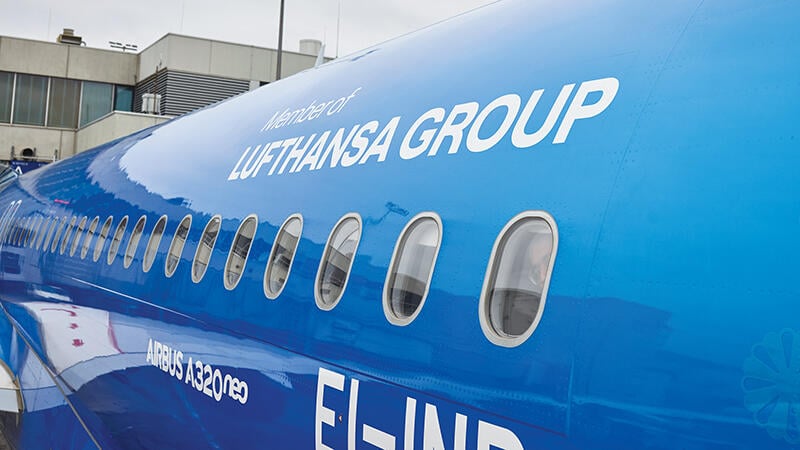
In tandem with the Star join, ITA moved from its own Volare frequent flyer program to Lufthansa’s Miles & More and switched to Lufthansa’s website and app platforms. Lufthansa Group CCO Dieter Vranckx said ITA’s integration into Lufthansa Group was also on track to be the fastest ever, taking just 18 months.
“We started with SWISS 15 years ago. It took us 10 years,” Vranckx said. “Then we got better. Austrian took us only seven years. Now we are at 18 months, so we’re looking forward to even more family members joining the group with this track record.” He may have been hinting at Lufthansa’s interest in TAP, for which a stake is up for bids.
Lufthansa Group ITA implementation officer Michael Trestl said all these previous experiences mean ITA was benefiting from an “advanced integration model.” Even so, the process involves 63 projects spanning four major streams: commercial, operations, corporate and IT & digital.
Trestl said a major milestone was completed in Q4 2025, when ITA’s revenue management booking classes and fare classes were harmonized with Lufthansa’s. This marked a big shift from ITA’s former SkyTeam protocols, meaning both systems and staff could start “speaking the same language.” Distribution—including ITA’s transition to New Distribution Capability (NDC)—is among the next items to tackle.
“As we move into the second half of the year, a lot [of focus] will be around the organizational integration of ITA into the Lufthansa family,” Trestl said. “It’s never over, but we will have the vast majority of customer-, market- and competition-facing milestones achieved in August this year. And, with that, I would say a big chunk of the integration work can be considered as completed.”