This article is published in Air Transport World part of Aviation Week Intelligence Network (AWIN), and is complimentary through Jun 14, 2026. For information on becoming an AWIN Member to access more content like this, click here.

European Carriers Look To Reset Long-haul Networks Against Geopolitical Disruption
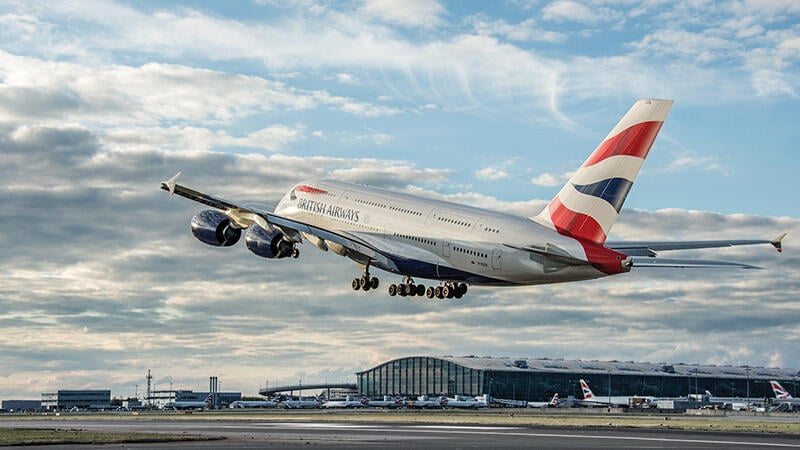
British Airways aircraft

British Airways and other European airlines have suspended some routes to China and North Asia because airspace closures make flights longer and more expensive.

Credit: HAL

The shift in Europe-Asia traffic has been gradual, but structural. Some retrenchment predates the rise of the Gulf hubs: British Airways (BA) withdrew from Manila and Jakarta and KLM suspended Kolkata and Sapporo routes at the turn of the century as part of a broader restructuring following the Asian financial crisis and the shock of 9/11.

At the time, those decisions were cyclical responses to weak demand and financial pressure. But they also marked the early stages of a deeper shift. The rapid expansion of Gulf carriers in the following decade meant that many of these thinner routes were never reinstated. Markets once served by European carriers became part of one-stop networks via Dubai, Doha and Abu Dhabi operated by the major Gulf airlines.

This shift was not driven by market forces alone. It was supported by the gradual liberalization of air service agreements between the European Union (EU) and Gulf countries, which gave Gulf carriers broader traffic rights and fewer limits on capacity.

Lufthansa Aircraft
Credit: Lufthansa Group

“I’m going to be realistic here. I don’t think we’re going to see the short-term change in bilateral agreements,” Air France-KLM CEO Ben Smith said.

ASIAN ROUTE EXITS

From around 2008, the shift accelerated. The global financial crisis sharpened the focus on long-haul profitability, prompting European airlines to prioritize core routes and exit marginal markets already under pressure from one-stop competition. Lufthansa exited Manila in 2008, while BA suspended Kolkata, India, and Dhaka, Bangladesh, in 2009. KLM withdrew its Amsterdam–Hyderabad, India, route the same year, only returning in 2025.

The pattern continued through the 2010s. Air France withdrew from Kuala Lumpur and Jakarta, Lufthansa exited Kuala Lumpur, KLM left Fukuoka, Japan, and BA suspended its Colombo, Sri Lanka, and Chengdu, China, routes. On their own, these were individual route decisions. Taken together, they amounted to a steady narrowing of European carriers’ Asia networks, particularly beyond the main gateways.

The impact is evident in traffic flows. Between 2010 and 2019, ATW analysis of Sabre Market Intelligence data shows the share of Europe–Asia-Pacific traffic routed via Middle Eastern hubs rising from 16.9% to 26.1%, as total origin-and-destination (O&D) passenger volumes grew from 51.9 million to 87.7 million. In absolute terms, traffic between the regions via Middle Eastern hubs increased from fewer than 9 million passengers in 2010 to almost 23 million by 2019, an expansion of around 14 million travellers.

ITA Airways Aircraft
ITA Airways is seeing flights to Southeast and East Asia doing well because there is no Gulf stopover. Credit: Lufthansa Group

By 2025, that share had risen further to approximately 29.1%, with total traffic reaching about 95.2 million. This equates to roughly 27 million O&D passengers annually travelling between Europe and Asia-Pacific via Gulf hubs. Dependence has therefore increased both in relative terms and in the absolute number of passengers relying on these hub connections.

RUSSIAN AIRSPACE

Since the pandemic, geopolitics has only reinforced these trends. As ASM consulting director Edmond Rose points out, the closure of Russian airspace has made Asia routes longer and more expensive for European carriers, prompting further cuts, especially in China and North Asia. BA has suspended Beijing Daxing, while Air France has dropped cities such as Tianjin and Wuhan in China. The impact has been particularly acute for Finnair, which has built its Helsinki hub around short routings between Asia and Europe over Russia.

“[Lufthansa Group CEO Carsten] Spohr is less worried about Russian overflight than Gulf carrier competition,” Rose said. “The Russian overflight issue will disappear, hopefully one day, when there’s peace in Ukraine. Other things will not disappear. I think [Ukraine] is unfortunate, but I’m more worried about things which will be there forever.”

Europe has restricted or banned European carriers from overflying Russia, but there are no restrictions on non-European carriers.

This means Gulf carriers, and increasingly Chinese airlines, have been able to step in and absorb displaced demand. That advantage is reflected in market share. According to Rose, Gulf carriers now account for close to 30% of Europe–Asia passenger flows, compared with around 16% for European airlines.

“The Europeans have held broadly steady, or reduced their flights, while the Middle East carriers have continued to grow,” he said. “The Ukraine war and conflict in the Gulf have combined to form a perfect geopolitical storm, exposing air markets to a new reality of supply challenges and inter-dependence.”

WAR

This year’s US-Israel war with Iran has brought those structural dynamics into sharper focus. Within a month into the conflict, Emirates was operating around 40% fewer flights than previously planned, while Qatar Airways was operating only about one-fifth of its schedule, with its network shrinking from roughly 150 destinations to fewer than 50.

European carriers responded tactically rather than structurally, reducing exposure to the Middle East, while adding limited capacity to Asia, particularly on routes such as Singapore and Bangkok. At the same time, Asian carriers, including Singapore Airlines, Air India and Cathay Pacific, increased frequencies to Europe.

“Our flights to Southeast Asia, East Asia, Japan, Bangkok, Delhi are much better booked than before, because there is no stopover in the Gulf,” ITA Airways CEO Joerg Eberhart said.

However, these additions remained small relative to the scale of connectivity typically provided via Gulf hubs. Those hubs connect hundreds of city pairs through tightly coordinated waves of widebody flights—capacity that simply cannot be replaced given constraints on aircraft, slots and crew.

“As and when the situation stabilizes, we can expect the Gulf carriers to work on attracting connecting passengers back to their hubs with low fares,” Rose said. “The short-term opportunities for European carriers flying to Asia may be good, but in the longer term it’s unlikely they’ll add significantly to their Asia networks as a significant chunk of the traffic goes back to connecting in the Gulf.”

The result is European networks optimized for efficiency but lacking resilience, leaving Europe increasingly reliant on Gulf hubs with limited ability for its own carriers to absorb demand when geopolitical disruptions constrain those flows.

David Casey

David Casey is Editor in Chief of Routes, the global route development community's trusted source for news and information.