This article is published in Air Transport World part of Aviation Week Intelligence Network (AWIN), and is complimentary through Jun 21, 2026. For information on becoming an AWIN Member to access more content like this, click here.

One-Stop Routes Highlight Intermediate Hub Connections

Melbourne

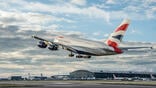
British Airways’ return to Melbourne signals its second Aussie destination, alongside Sydney.

Credit: Paul Rovere/Getty Images

New one-stop routes from British Airways, VietJet and AirAsia X highlight how airlines are using intermediate hubs to connect Europe with Asia-Pacific destinations.

LONDON HEATHROW-MELBOURNE

British Airways (BA) is set to return to Melbourne after more than 20 years, expanding its long-haul network and re-entering one of the largest Europe-Australia markets.

The airline will launch daily flights between London Heathrow Airport (LHR) and Melbourne Airport (MEL) on Jan. 9, 2027, operating via Kuala Lumpur using Boeing 787-9s. The one-stop service will restore BA’s presence in the Victoria state capital for the first time since March 2006 and will make the city the carrier’s second destination in Australia alongside Sydney.

The route comes at a time when traditional one-stop routings between Europe and Australia via the Gulf are facing disruption due to geopolitical instability and airspace restrictions across parts of the Middle East. BA has suspended several Middle East routes and redeployed capacity toward Asia, including additional flights to Bangkok and Singapore, targeting passengers who would normally connect through the Gulf.

Traffic data suggests there is a significant base of demand for the Melbourne route. Sabre Market Intelligence figures show that about 407,000 two-way passengers traveled between the UK and Melbourne in 2025, with roughly a quarter connecting via Dubai, while Doha and Abu Dhabi were also major transfer points.

BA will compete with a growing number of carriers targeting the Europe-Melbourne market via Asia. Turkish Airlines launched Melbourne service via Singapore in 2024, while Finnair is set to begin flights from Helsinki via Bangkok in October.

Data
*Between LHR-MEL; **Between HAN-PRG; ***Between KUL-LGW.  Data provided by Sabre Market Intelligence

In South Asia, BA will also re-enter the Colombo market with 3X-weekly winter-season flights from London Gatwick starting Oct. 23. The airline last served Sri Lanka in 2015. The two network additions come as the airline targets a 9% year-on-year capacity increase in its long-haul network during the 2026-27 winter season.

HANOI-PRAGUE

VietJet plans to enter the Central European market using Kazakhstan as an intermediate stop, marking another step in the airline’s long-haul expansion strategy.

The Vietnamese LCC intends to launch flights connecting Hanoi’s Noi Bai International Airport (HAN) and Prague’s Vaclav Havel Airport (PRG), operating via Almaty International Airport (ALA). Service was initially scheduled to start on July 11 with two flights per week using Airbus A330s but has now been pushed back until October.

The route will operate under Kazakhstan’s open skies regime, allowing VietJet to carry passengers not only between Vietnam and the Czech Republic but also on the Almaty-Prague sector using fifth-freedom rights.

The flights will target a market with strong VFR demand. The Czech Republic has one of the largest Vietnamese communities in Europe, and Sabre Market Intelligence data shows that O&D traffic between the Czech Republic and Vietnam totaled about 89,300 two-way passengers in 2025. Prague-Hanoi accounted for roughly 72% of that traffic, with Doha, Dubai and Istanbul the main connecting hubs currently used by passengers.

The routing via Almaty also reflects VietJet’s broader strategy in Kazakhstan, where it is involved in joint venture carrier VietJet Qazaqstan. Using Almaty as a transit point allows the airline to enter the Europe market without immediately committing to long-range nonstop operations, while also creating an additional revenue stream on the Central Asia-Europe sector.

From a network planning perspective, Almaty is well positioned geographically between Southeast Asia and Central Europe, making it a logical intermediate hub for one-stop services. The Hanoi-Almaty and Almaty- Prague sectors are both currently unserved nonstop, meaning VietJet would face no direct competition on either segment if the route launches as planned.

KUALA LUMPUR-LONDON GATWICK

AirAsia X is set to reenter the London market in June with a one-stop Kuala Lumpur (KUL)–London Gatwick (LGW) service via Bahrain, marking its return to Europe more than a decade after withdrawing from the UK.

Flights are scheduled to begin June 26, operating daily using Airbus A330s. The service will be the first link between London Gatwick and Kuala Lumpur since 2012 and positions Bahrain as an intermediate hub in AirAsia X’s developing network strategy linking Southeast Asia, the Middle East and Europe.

Although the route launch now comes against a backdrop of geopolitical instability in the Middle East—which has led to airspace disruptions in the region, including temporary airspace closures in Bahrain—the route remains on sale at the time of writing.

AirAsia X first entered the London market in 2009 with service to London Stansted before switching to LGW in 2011. However, it exited the UK and wider European market the following year, citing high fuel prices, rising UK taxes and weak yields, despite reporting load factors above 80% on its London and Paris routes, operated using A340-300s.

The latest move would represent AirAsia X’s second step back into Europe following the resumption of Kuala Lumpur-Istanbul Sabiha Gökçen service in late 2025. It also reflects a broader partnership strategy with Bahrain, where the airline has signed a letter of intent with the country’s Ministry of Transportation and Telecommunications to develop the Gulf state as a connecting hub.

Traffic figures suggest there is a sizeable market opportunity. Sabre data shows O&D traffic between the UK and Malaysia totaled about 481,000 two-way passengers in the 12 months to June 2025, although only about 27% traveled nonstop. Dubai, Doha and Singapore were the largest one-stop markets.

The LCC will compete indirectly with full-service carriers operating nonstop flights between Kuala Lumpur and London Heathrow, including British Airways and Malaysia Airlines, but AirAsia X’s lower-cost model and LGW operation may allow it to target price-sensitive leisure and VFR traffic.

David Casey

David Casey is Editor in Chief of Routes, the global route development community's trusted source for news and information.