This article is published in Air Transport World part of Aviation Week Intelligence Network (AWIN), and is complimentary through Jun 19, 2026. For information on becoming an AWIN Member to access more content like this, click here.

Interview: Ryanair CEO Michael O’Leary

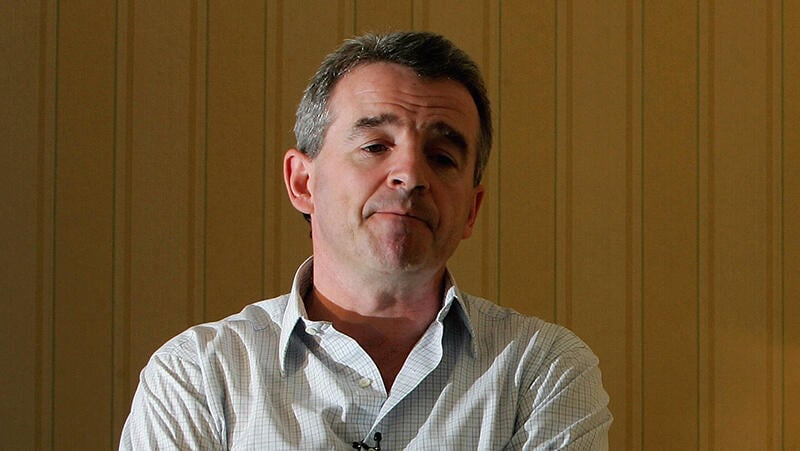
Ryanair Group CEO Michael O’Leary
Credit: Daniel Berehulak/Getty Images

Talking with ATW while in Vienna in April, Ryanair Group CEO Michael O’Leary expressed cautious optimism for the war in Iran to end and the Strait of Hormuz to reopen, reducing the impact on jet fuel prices and supply. But he warned the situation in the Middle East needed to end soon for that to be the case. He also strongly criticized Vienna’s aviation taxation policy, saying that it has prompted the Irish LCC to focus growth on nearby, fee-friendly markets such as those in Albania and Slovakia. And he commented on his confidence that the new Boeing 737 MAX-10, for which Ryanair has placed an order for 300 aircraft, will be ready to begin on-schedule deliveries in 2027.

The war in Iran and closure of the Strait of Hormuz, an important maritime corridor for oil transportation, has raised concerns about a shortage of jet fuel, particularly in Europe. What are your thoughts? At the moment, the suppliers are telling us that they can guarantee supplies through to the end of May. Nobody’s really sure what happens in June. But generally, across Europe, most of the Jet A-1 fuel is supplied is from North America, West Africa and Norway, so we are growing more confident that there won’t be a fuel supply disruption.

The big challenge we face here in Vienna, though, is this crazy €12 ($14) aviation tax. Vienna airport will, for the first month in April, report a 10% decline in traffic while nearby Bratislava [in Slovakia] is growing by 160%, so Vienna and Austria are failing with their aviation strategy. They’re sending all the traffic next door to Slovakia, and it’s time to win that traffic back.

So where are your growth markets? The fastest growing markets in summer 2026 will be Albania. We’ve opened a new four-aircraft base in Tirana [Albania] and Slovakia, where we’ve increased the base from two to five aircraft in Bratislava and the Slovakians have really shown the way forward. They’ve abolished aviation tax. Bratislava Airport has also introduced a very imaginative growth incentive scheme for all airlines who want to grow, which is why they’re growing so rapidly at a time when Vienna next door is declining.

Turning to your fleet. You have taken delivery of 29 Boeing 737 MAX-8s this year? Yes.

And then you expect to take delivery of the 737 MAX-10 from 2027 onwards. How do you see that delivery stream going? Boeing are growing increasingly confident that they will get the MAX-10 certified in about the third quarter of 2026. Our first 15 deliveries are due in January, February and March of 2027 so we’re pretty hopeful now that those aircraft will be delivered on time, and that will give us a small amount of growth for the summer of 2027. But it’s the start of a 300-aircraft order and it will enable Ryanair to deliver rapid growth across Europe from 200 million passengers last year to 300 million passengers annually by 2034.

You will also need maintenance support. You told me you will establish your own MROs for engines. Which locations will you select? We’re looking at five or six locations at the moment. Spain, Italy, Poland, Morocco, the Baltic states and Northern Ireland are the most likely locations. We expect to make the final decision on the first location probably in the next couple of months.

Back to fuel. Do you think that jet fuel supply will be a challenge for remote locations? At the moment, no. None of us know what’s going to happen in the Middle East. The sooner the war in the Middle East ends and the Strait of Hormuz reopens, the better for everybody. But at the moment, we are cautiously optimistic that there won’t be fuel supply disruptions across Europe, certainly through May, June and July. But if the war goes on longer than that, if the Strait of Hormuz remains closed for longer than that, then none of us really knows what will happen.

Kurt Hofmann

Based in Austria, Kurt covers European air transport for ATW.