Brazil’s Azul is reshaping its fleet and network strategy following its exit from Chapter 11, prioritizing Embraer E195-E2 growth and widebody connectivity while stepping away from Airbus A321XLR plans.
Speaking at Routes Americas 2026 in Rio de Janeiro, Azul CEO John Rodgerson said the airline reviewed the economics of the A321XLR but concluded the aircraft was not essential to its strategy. The carrier had a previously undisclosed obligation to purchase the variant, according to a motion filed as part of its Chapter 11 restructuring.
“I still think it’s a phenomenal aircraft, but what’s going to be the cost of the aircraft?” Rodgerson said. “When we looked at it, we were seeing prices that were bumping up against a widebody.”
Instead, Azul continues to rely on its widebody fleet to support long-haul connectivity between Brazil and key international markets. The airline currently operates five A330-200s, five A330-900s, two Boeing 767-300ERs and one 777-200ER.
Those aircraft underpin Azul’s long-haul strategy of linking its domestic network of roughly 130 Brazilian destinations to international gateways.
“When you serve 130 destinations in Brazil, it’s natural that those people want to go beyond Brazil to what I call ‘other’ Brazilian cities,” Rodgerson said. “Fort Lauderdale, Orlando, Lisbon, Porto—those are just Brazilian cities up north.”
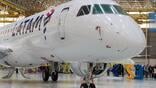
While widebodies support the airline’s international network, Azul’s domestic and regional expansion is increasingly centered on the E195-E2, which Rodgerson described as the most important aircraft in the carrier’s future fleet. CAPA Fleet Database shows Azul has 34 E2s in operation, three inactive and 25 on order.
“I think what I’m probably the most excited about are the E2s,” he said. “When you look at the fuel burn on those E2s compared to the E1s that we’re flying today, we’re getting 18 more seats and about 20% less fuel burn.”
More News And Analysis From Routes Americas 2026
The improved economics of the E2 are enabling Azul to expand into longer routes and thinner markets that were previously difficult to serve profitably with earlier-generation regional jets.
“We launched a route today from Confins to Montevideo—a perfect E2 route,” Rodgerson said. “Those are opportunities to do more things where you wouldn’t have done that in the past.”
The aircraft is also giving the airline greater flexibility to bypass traditional hub connections and operate more point-to-point routes. “We’ll look at Recife to Porto Alegre overflying the hubs with the E2s,” Rodgerson said.
Beyond network expansion, the aircraft have also become central to Azul’s financing strategy following its restructuring. Rodgerson said investor interest in financing the jets surged after the airline published its restructuring plan.
“In the fourth quarter, we had five offers to finance the E2s,” he said. “In January, we went from five offers to 27 offers to finance the E2s.”
More broadly, Azul’s fleet strategy relies on deploying different aircraft types as markets mature—starting with smaller turboprops and scaling up as demand grows. “I think every aircraft has a purpose, and every aircraft has a market that works for it,” Rodgerson said. “We’ve started with a Cessna Caravan, moved it to an ATR, then to an E-Jet and then to an A320.”
That progression has allowed Azul to develop new markets across Brazil’s interior while feeding larger bases such as Campinas, Belo Horizonte and Recife.
Rodgerson said the airline’s restructuring has also allowed Azul to build greater flexibility into its fleet plan, including the ability to adjust aircraft deliveries depending on market conditions.
“The world is an uncertain place right now,” he said. “Our business plan was all about de-risk, de-risk, de-risk.”

Related Content