Flight Friday: E195-E2 Outpaces Legacy Fleet With Higher Utilization Rates
aircraft
Credit: Joe Pries

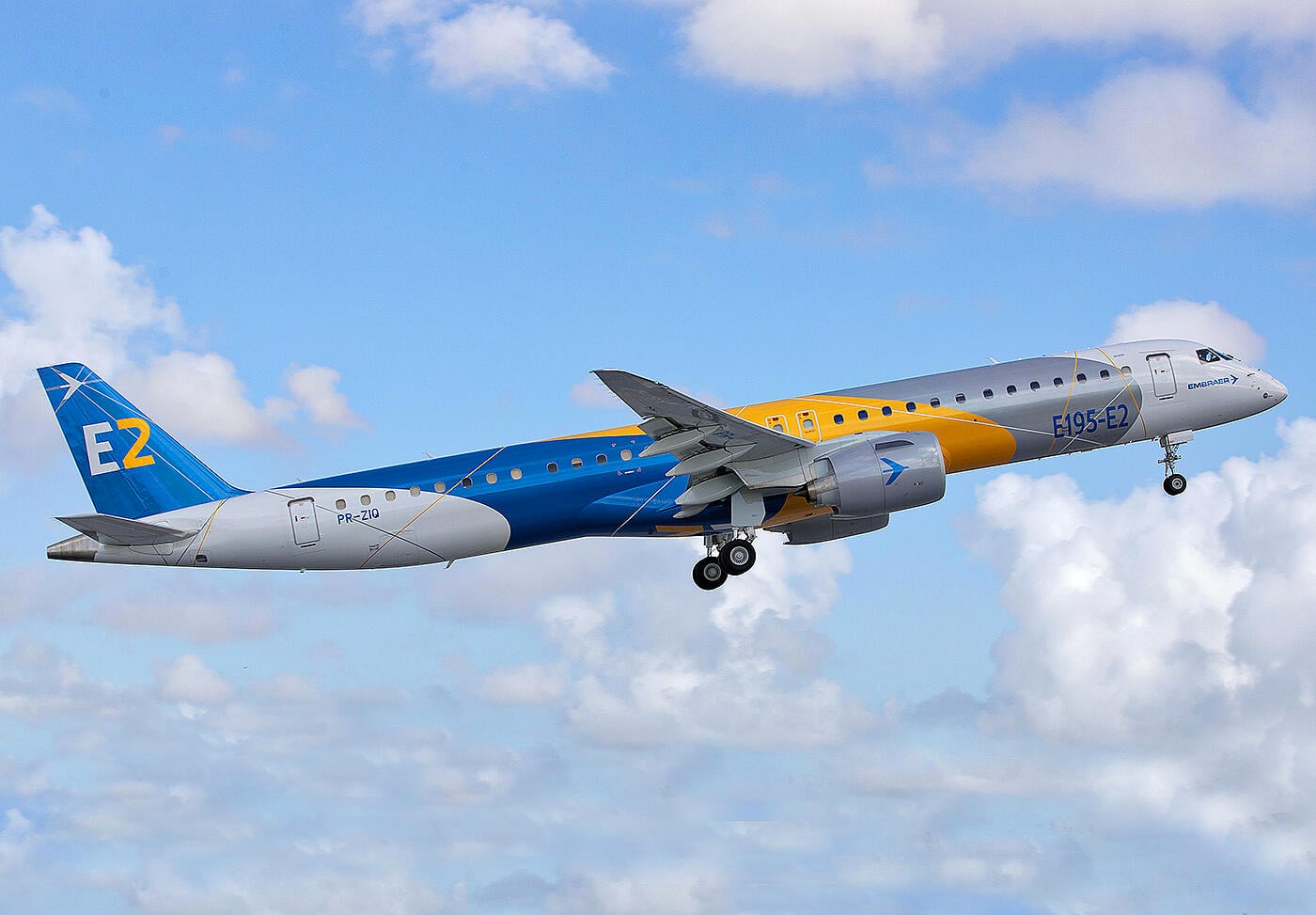
With Embraer making headlines recently for new E2 aircraft orders, this week’s Flight Friday examines how the current E195-E2 fleet performs compared to its legacy E195 predecessor and the Airbus A220.

The 120-150 seat market primarily consists of the legacy E195, its successor E195-E2, and the former Bombardier C-Series aircraft, now under Airbus as the A220-100 and A220-300.

Nearly two decades after its first delivery and with over 170 aircraft produced, the legacy E195 maintains impressive staying power with 80% still in service. These aircraft average 160 flight hours monthly—slightly over five hours daily.

The Pratt & Whitney-powered E195-E2, featuring increased capacity and extended range, demonstrates significantly higher utilization rates, averaging over 220 hours monthly during the northern hemisphere summer schedule. This translates to more than seven daily flight hours, highlighting the aircraft’s capability to operate longer routes profitably.

The A220 family performs competitively, with both the A220-100 and A220-300 averaging approximately 200 monthly flight hours—just under seven hours daily. The A220-100 offers slightly smaller capacity than the E195-E2, while the A220-300 provides more seating, giving operators flexibility to select aircraft tailored to their specific requirements.

Both the E2 and A220 fleets continue experiencing durability challenges related to Pratt & Whitney’s PW1000G (GTF) engines. According to Aviation Week’s upcoming 2026 Commercial Fleet & MRO Forecast, launching in October 2025, these issues will persist for several years.

This data was put together using Aviation Week’s Tracked Aircraft Utilization database.

Daniel Williams

Based in the UK, Daniel is Director of Fleet Data Services for Aviation Week Network. Prior to joining Aviation Week in 2017, Daniel held a number of industry positions analyzing fleet data.

FlightFriday

Flight Friday is compiled using data from Aviation Week Intelligence Network’s (AWIN) Tracked Aircraft Utilization module, the most comprehensive and accurate solution for global tracking of aircraft utilization. 

Based on recorded flight movements from ADS-B data, combined with AWIN’s robust fleet intelligence, users gain insight into the aircraft’s actual versus reported movement, down to the tail number. This unique solution provides users a more up-to-date and comprehensive analysis of aircraft utilization.