Flight Friday: The Engines Powering Asia-Pacific Carriers’ Narrowbodies
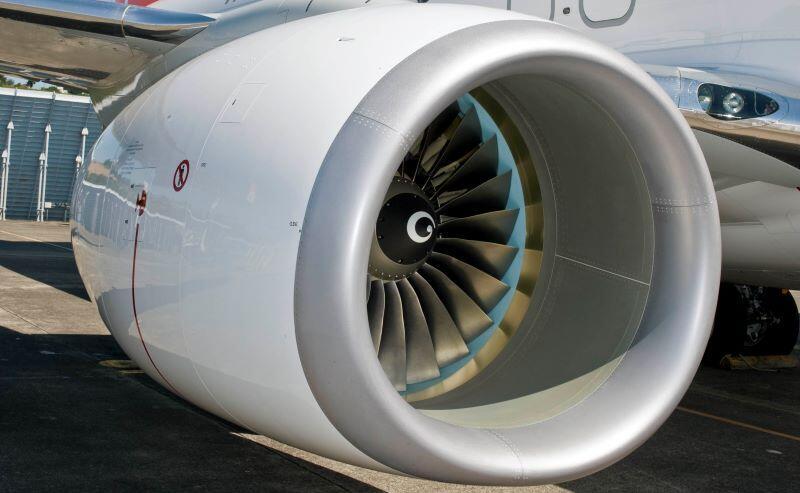
As Aviation Week’s AeroEngines Asia-Pacific event kicks off in Hong Kong, and now that Asia-Pacific operators have finally returned to pre-COVID levels, this week’s Flight Friday highlights the engines that power the vast majority of narrowbody flights: the CFM International CFM56 and Leap, the International Aero Engines V2500, and the Pratt & Whitney PW1000G (GTF).
Total utilization for these “big four” engines is 13% higher in January 2026 compared to equivalent month of 2024, and 3% higher than 2025. As is often noted in Flight Friday analyses, utilization is a correlation of fleet size, and the fleet is larger in 2026 than previous years. There is a 9% higher fleet in 2026 compared to 2024, and a 5% higher fleet than 2025! The difference between the 5% fleet growth when compared to 2025 doesn’t correlate with only a 3% increase in flights. Part of this issue will potentially be because of durability issues on the Pratt GTF engine, which has been a challenge for several global operators.
Looking at each engine in turn, the legacy CFM56 fleet has remained consistent between January 2024 and January 2026, however, flights powered by CFM56 aircraft have grown. Asia-Pacific operators are leaning on these aircraft more to be the backbone of their fleet. Flights powered by the CFM56 grew by 3% over time.
The CFM Leap has seen an uptick in both fleet, a 60% increase, and in flights, a 77% increase. With continued deliveries of Airbus A320neo family aircraft and Boeing 737 MAXs, with the Leap now powers 14% of Asia-Pacific narrowbody flights.
The other legacy engine, the V2500, has maintained a reasonably consistent fleet from 2024 to 2026. In keeping with that constant fleet, the number of monthly flights has also remained consistent, showcasing the reliability of these legacy powerplants, while accounting for 18% of the utilization.
The Pratt GTF currently accounts for 10% of the flights and also accounts for 10% of the fleet. The GTF powered fleet has grown by almost 50% since early 2024, with more than 50 A321neos, 10 A320neos and 10 A220s within the fleet in 2026 compared to 2024.
This data was put together using Aviation Week’s Tracked Aircraft Utilization database.

Related Content