This article is published in Aviation Daily part of Aviation Week Intelligence Network (AWIN), and is complimentary through Oct 10, 2026. For information on becoming an AWIN Member to access more content like this, click here.
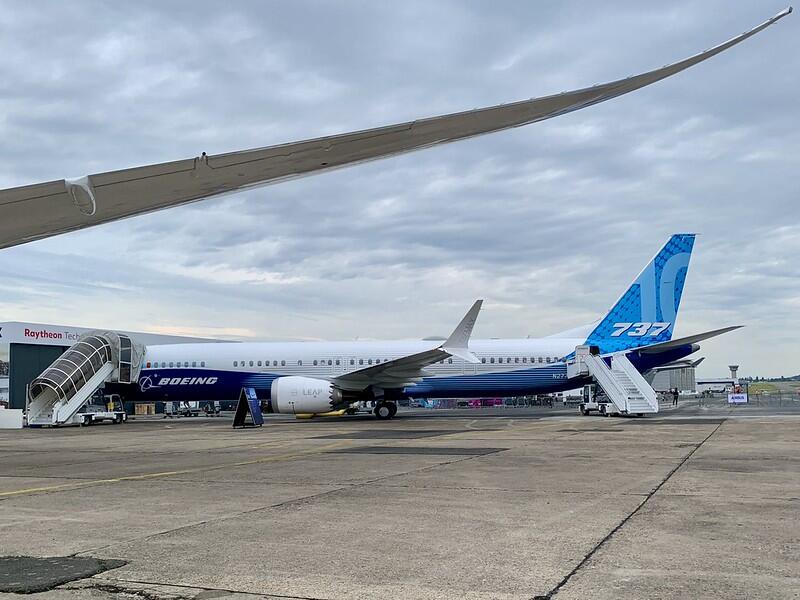
The FAA will not require Boeing to update 737 MAX flight management system (FMS) software as a prerequisite for certifying the 737-10, despite an issue with the code that is in the process of being addressed.
The agency's decision, made by a panel of internal safety experts Oct. 2, alleviates concern that the 737-10 and recently certified 737-7 will face a mandatory update before entering service. The group determined an issue that can affect automated guidance during missed approaches is both apparent to pilots and manageable.
Still unclear is whether customers will accept the newest 737 MAX-family variants without software updates if the changes, which are in progress, aren't ready before deliveries begin.
The panel, or Corrective Action Review Board (CARB), determined a software issue in certain Boeing 737 MAX flight computers "is not a safety concern," the FAA said in a statement. The CARB came to the conclusion "because pilots retain full control of the aircraft and the indications to the flight crew are clear and unambiguous," the agency added.
Boeing will issue a special bulletin detailing how to recognize and respond to the malfunction, which occurs when pilots change the programmed flight path when conducting a missed approach. In certain scenarios, the flight guidance system may transition from VNAV (vertical navigation) mode to a simpler, more rudimentary level of automation for pitch control, like level-change or vertical speed.
The FAA also plans to issue a special bulletin underscoring Boeing's instructions.
Boeing and software vendor GE Aerospace are working on an update to the FMS software, which is on Update (U) 14.1. While other 737 MAXs and 737 Next Generation variants have earlier versions, the current version is the only one compatible with the 737-7 and 737-10, which is nearing FAA approval.
Boeing learned of the issue in 2024 from WestJet, Reuters reported. The problem first appeared in U14.0 but went undetected.
The manufacturer analyzed the issue and determined that while it required fixing, it was not a fight-safety issue. Boeing revisited the problem over the summer following more customer reports. This time, it brought the issue to the FAA for a broader review.
The FAA reviewed Boeing's analysis and conducted a separate independent assessment. Ultimately, it reached the same conclusion as the manufacturer.
The issue is not how much risk the problem introduces, but its timing. Some pilots and human-factors experts expressed concern about adding workload during missed approaches that, while pre-planned and briefed, can introduce stress and complexity.
One 737 operator ran simulator scenarios for pilots that re-created the VNAV-disengagement issue, a person with knowledge of the trials tells Aviation Week. The pilots, who were not briefed beforehand, managed the scenarios well, "but it took some work," the person said.
Several customers, including 737-7 launch customer Southwest Airlines and early 737-10 customer United Airlines, have said they will not accept new aircraft with the flawed software. Deliveries of the 737-8 and -9 variants have continued, but Boeing is rolling back the software to an earlier version to satisfy customer concerns.