Opinion: Commercial Aerospace Has A Profit Problem

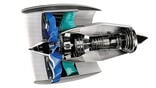
Engine OEMs, such as GE Aerospace with its LEAP engine, have become outsize beneficiaries of the dramatic rescaling of profit margins in aerospace recently.
The financial performance of the commercial aerospace value chain has rebounded. While that sounds like a reason to cheer, the data reveals a troubling development: Profitability has never been so concentrated.
AlixPartners has tracked the commercial aerospace sector’s profit pool for 14 years. Our latest analysis shows that amid the signs of supply chain recovery, imbalances must be addressed to maintain the increased production momentum.
Although rewarding well‑run companies is the hallmark of a healthy market, in an interconnected industry like commercial aerospace, misaligned incentives and a lack of investment capacity among weaker players inevitably spread cracks through the supply chain—and, in time, even the strongest feel the shock.
AlixPartners’ assessment of the commercial industry’s recent financial performance is startling. Engine OEMs and lessors scooped up almost 90% of the $33 billion profit pool in 2024 as they became the gatekeepers of capacity. For everyone else, it was a case of “Thanks for taking part.”
In comparison, industry profits reached $45.5 billion in 2018, which some now view as the high-water mark of a golden age. Aircraft OEMs, finally reaping returns from years of investment in new programs and cost-reduction efforts, claimed almost a third of the commercial profit pool.
The Boeing 737 MAX grounding and continuing disruption following the COVID-19 pandemic have reduced earnings, transformed the mix and left the overall industry margin of earnings before interest and taxes (EBIT) about two percentage points lower than in 2018.
Last year, aircraft deliveries remained flat—at roughly two-thirds of peak levels—due to labor and supply chain headwinds. Aircraft retirement rates have stalled as demand has recovered, and the aging of in-service fleets has extended the aftermarket super-cycle.
The result is that engine-makers are thriving in this “older-for-longer” world. Shop visits and spare parts rule. GE Aerospace leads the segment with a 26% EBIT margin and has raised its guidance through 2028. Rolls-Royce has staged a remarkable comeback, growing its margin to 17% from 1% in five years. RTX’s Pratt & Whitney remains an outlier as it digests geared turbofan retrofit and enhancement costs.
The scarcity of near-term delivery slots turned the orderbook into a seller’s market, further inflating lease and renewal rates. Lessors are riding the shortage of lift as lease terms are extended and rates march higher. AerCap Holdings, BOC Aviation and SMBC Aviation Capital posted industry-leading pre-tax earnings margins above 30% last year.
The profit polarization among aircraft OEMs is even starker. With Boeing in recovery mode and still in the red as production continues to ramp up, Airbus and Embraer achieved record double-digit EBIT performance.
Further down the supply chain, the results are more fragmented; the majority’s poor performance is offset by a few bright spots. Equipment OEMs maintained a solid performance with a 16% margin in 2024. But the challenges continued for aerostructures providers: Most major players were deep in the red with an average -22% EBIT. Cabin suppliers, another big choke point as customers wait for seats and monuments, are barely profitable, averaging just 2% EBIT.
The picture for raw materials is mixed. Metals performed significantly better, thanks to casting and forging bottlenecks and new opportunities in titanium; Howmet’s 22% margin leads the segment. Composites providers remain below their historical performance, but the coming step-up in widebody production rates should lift companies like Toray and Hexcel.
Pure play maintenance, repair and overhaul providers are experiencing a full aftermarket boom. They are achieving record revenue driven by elevated demand, deferred maintenance catch-up and rising shop visits. Margins are strong—hovering in the mid-to-high single digits—although still below those of players rich in intellectual property (IP). This is a reminder that in the aftermarket, IP ownership unlocks outsize profitability.
Besting the record profitability of 2018 and outperforming the market will require confronting near-term and structural challenges.
In the short term, the industry urgently needs to resynchronize its supply chain and crack the code on ramp-up execution. In the long term, it must reconsider how profits are shared across the value chain. Today, half the industry lives off production, and the other half has little incentive to increase output and risk cannibalizing the high-margin aftermarket business.
The window for critical decision-making—around the production ramp, cost structure and supply chain rationalization—is closing faster than many senior industry leaders may recognize.
Related Content