This article is published in Aviation Week & Space Technology and is free to read until Aug 22, 2026. If you want to read more articles from this publication, please click the link to subscribe.

Opinion: Golden Dome Revives Nuclear Anti-Satellite Weapons Concerns
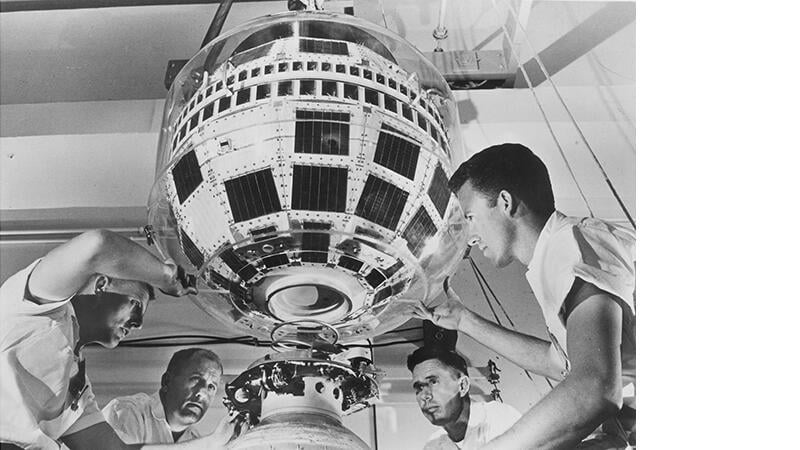
technicians working on Telstar satellite in 1962

Technicians joined the Telstar satellite to the third stage of the Delta Rocket in July 1962.

Credit: Keystone/Getty Images

In August 1962, British instrumental band the Tornados released a song inspired by the just-launched Telstar 1 satellite. The 170-lb. spacecraft revolutionized communications, broadcasting the first images across the Atlantic and connecting televisions, fax machines, telephones and two computers in Europe and America.

The revolution was ill-fated. Telstar’s launch in July came as a Thor intermediate-range ballistic missile lofted a W49 warhead for the U.S. Starfish Prime high-altitude nuclear test. It pumped the Van Allen belts with radiation that fried Telstar’s circuits. The lesson: Unshielded satellites are vulnerable to the lingering effects of nuclear detonations in space.

Months later, as the Tornados’ Telstar tune was topping the UK charts, President John F. Kennedy revealed to the world that the Soviets had deployed nuclear weapons in Cuba. In the burst of treaty-making following the Cuban Missile Crisis, the U.S. and the Soviet Union agreed to prohibit nuclear weapons from two areas to complement previously enjoined Antarctica: the seabed and outer space. This consensus not to place nuclear weapons in orbit was fraught, however. Debates about missile defense continued in the U.S., and Moscow kept up its planning to defeat such defenses.

That fragile consensus is again under strain following a post-Cold War respite. Moscow is exploring ways to destroy large satellite constellations it sees as critical to its adversaries.

Moscow has always been interested in anti-satellite weapons. Despite agreeing not to deploy nuclear weapons in space and on the Moon in 1967, Russia has maintained interest in orbital bombardment—the country temporarily deployed a system in 1969—driven by concerns about American missile defenses. The Johnson administration saw that violation of the outer space treaty as too gimmicky to threaten the balance of power and created the misnomer of “fractional orbit” to avoid challenging the violation.

The reality was (and is) that Moscow planned to use ground-based weapons and maneuvering satellites to attack U.S. satellites, with little regard for debris creation in orbit. In 2022, the Russians lofted the Kosmos 2553 satellite to the outer edge of low Earth orbit on a mission, according to U.S. intelligence, to simulate the stresses of keeping a nuclear weapon in orbit.

Kosmos 2553 failed, but its purpose is clear. For years, Russian military planners have fretted about the rise of commercial actors whose large satellite constellations have become integral to U.S. war planning, operations in Ukraine and the future of America’s defense. They also have rekindled optimism about the feasibility of space-based missile defense. The Russians want options to kill these constellations—Kosmos 2553 can do so efficiently and at scale.

The Trump administration’s Golden Dome and embedded space-based missile defense has revived this arms race. The system would require the deployment of thousands of satellites on orbit, each armed with interceptors to engage boosting missiles.

The allure of space-based missile defense is admittedly tantalizing: Ballistic missiles are most vulnerable during their boost phase before they can cloak themselves in decoys in midcourse or reach the remarkable reentry speeds of the terminal phase. The Reagan-era push for these weapons ran up against the limitations of technology; the cost was too great to build and orbit so many satellites with the launch vehicles of that era. The rise of SpaceX’s low-cost and reusable boosters and its massive Starlink constellation have made that idea more feasible.

Still, the price of space-based missile defense remains enormous. Moreover, according to our research, the immense cost might not purchase the defense that Washington covets. The size of space-based interceptor constellations depends on assumptions about the adversary missile threat. Many of those assumptions—such as missile burn time, interceptor decision and release time, and the potential for countermeasures to negate a constellation—do not stand up to interrogation.

Russia has the tools to defeat even a robust space-based missile defense, as evidenced by Kosmos 2553, and to render the U.S. vulnerable to nuclear attack despite billions of dollars in Pentagon spending.

The bottom line is that the promise of Telstar 1 has been realized. The world is more connected than ever, thanks in large part to space-based systems. This connectivity, however, is not universally advantageous. Russian leadership views the very same technology as a key enabler for its enemies, and space-based interceptors could lock in a Russian return to orbital weapons. Like Telstar, the flourishing commercial space sector might yet succumb to pumped radiation as a casualty of great power competition.


Aaron Stein is president of the Foreign Policy Research Institute, and Sam Lair is a fellow at the think tank.