
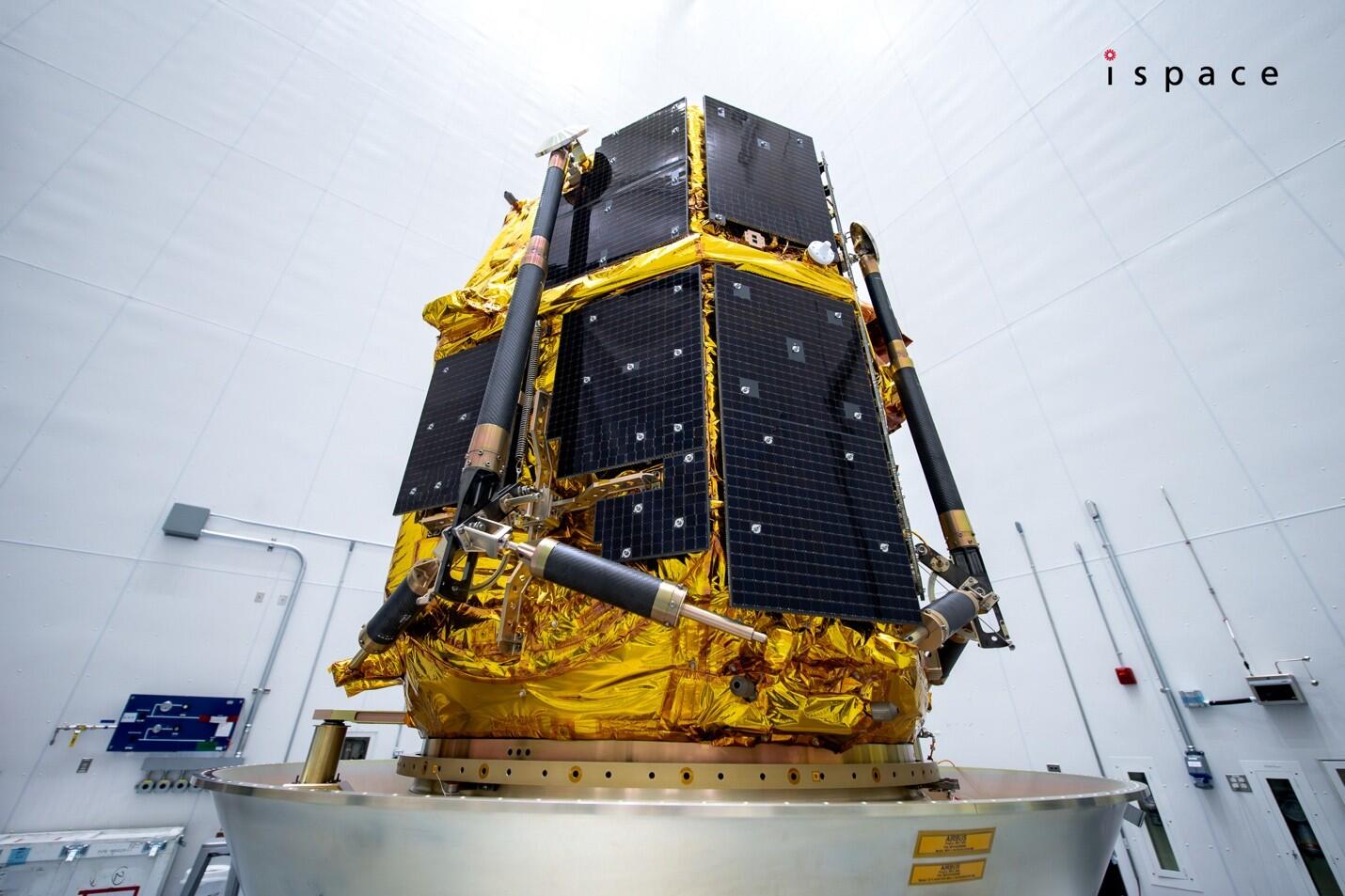
Touchdown of iSpace's Resilience lander on the surface of the Moon is targeted for June 6.
For the third time this year, a robotic lander will attempt to touch down on the surface of the Moon.
Ramping up for lunar operations this time is Japan-based iSpace, which is preparing for its 750-lb. Resilience lander to touch down in an area in the Moon’s far northern region known as Mare Frigoris on June 6. The rover carries an 11-lb. micro-rover, named Tenacious, for additional surface studies.
The Hakuto-R Mission 2 launched along with Firefly Aerospace’s Blue Ghost lander on Jan. 15. Blue Ghost arrived at the Moon 45 days later, landed and operated on the lunar surface until March 16. The iSpace spacecraft took a less-direct, fuel-saving trajectory toward the Moon that included a flyby on Feb. 15. Resilience reached lunar orbit on May 6.
As its name implies, Hakuto-R Mission 2 is iSpace’s second lunar excursion. Hakuto-R Mission 1, which launched in December 2022, attempted to land on the Moon on April 25, 2023. During the final seconds of descent, however, mission control teams lost communications with the lander. Engineers later determined a computer error caused the spacecraft to hover 3 mi. above the surface until it ran out of fuel and crashed.
In addition to Firefly’s Blue Ghost mission, Intuitive Machines attempted a Moon landing this year. The company’s Nova-C Athena lander touched down in Mons Mouton, near the Moon’s south pole, on March 6 but ended up on its side and about 820 ft. from its intended site. Lacking power, the mission ended the following day.
The company on May 12 issued its preliminary assessment of what happened, including:
• Laser altimeter interference during the final phase of the Athena lander’s descent that disrupted the lander’s ability to accurately assess its altitude.
• Lunar south pole rugged terrain and low angle lighting conditions that created long shadows and dimmed the lighting, challenging the landing system’s precision capabilities.
• A lapse in the lander’s optical navigation system using imagery from NASA’s Lunar Reconnaissance Orbiter to accurately account for the appearance of cratering at altitudes lower than 62 mi., due to lighting conditions during the final descent.
Intuitive Machines is working toward launch of its third lunar mission, IM-3, before July 1, 2026. IM-3 is to land on the Moon’s near side at Reiner Gamma, a lunar swirl, with a collection of small rovers developed to demonstrate autonomous robotic exploration capabilities.
The next lander will include a wider variety of altimeters, which are undergoing testing in extreme lighting conditions. Additional independent light sensors are being incorporated to measure velocity, and the lunar terrain crater database has been expanded to enhance navigation across the Moon’s surface.


Related Content


Comments