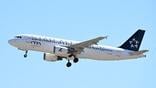
ITA Airways CEO Joerg Eberhart discusses fleet plans and challenges, what’s next for the Italian flag carrier after joining Star Alliance and the wait for Lufthansa's decision on increasing its stake from 41% to 90%.
Subscribe Now
Don't miss a single episode. Subscribe to Aviation Week's Window Seat Podcast in Apple Podcasts, Spotify or wherever you get podcasts.
Discover all of our podcasts on our at aviationweek.com/podcasts.
AI-Generated Transcript
Victoria Moores (00:10): Hello everyone, and thank you for joining us for Window Seat, our Aviation Week air transport podcast. I'm air transport Europe and Africa bureau chief Victoria Moores, and I'm delighted to welcome you on board. This week, I'm joined by Joerg Eberhart, who is the chief executive of ITA Airways. Welcome, Joerg.
Joerg Eberhart (00:28): Yes, hello. Thanks for having me.
Victoria Moores (00:30): So maybe before we begin our conversation about ITA, it would be a good idea to set the scene about your background, Joerg, and also whereabouts ITA Airways has come from for the listeners that maybe aren't so familiar with the business. So you've got a long background with Lufthansa. You originally started out as a pilot with the airline, and you've worked your way from the cockpit to the boardroom. And on that path to joining ITA Airways in January 2025, you were president and chief executive of Air Dolomiti, which is an Italian regional airline within Lufthansa Group. Obviously, that gives you a good familiarity already with the Italian market, and you've also been head of strategy and organizational development at Lufthansa. So that's quite a body of experience that you're bringing to the role.
Joerg Eberhart (01:21): That's right. I actually started as a flight attendant, with six months as flight attendant, and then all the pilots training of the Lufthansa School in Germany and in Phoenix, Arizona, for two years, and started as a pilot, but then within the last, let's say, 15 years, moved to management.
Victoria Moores (01:40): And that's taken you into a couple of very intense years at ITA Airways. So obviously, Italy used to have Alitalia as its flag carrier. And after Alitalia ceased operations, ITA was born in 2021 with two main hubs, which are Rome Fiumicino and also [Milan] Linate Airport. And in early 2025, Lufthansa took a 41% stake in the airline alongside the Italian government. Now, I noticed that you managed to deliver a $209 million net profit for ITA last year. So things are obviously on the right track, but what we are going to focus on today is the significant developments that you're going through in 2026, probably starting with the fact that ITA joined Star Alliance on April 1. I'm curious to hear about your experiences since you joined ITA in January 2025.
Joerg Eberhart (02:41): ITA, as you mentioned, was born almost five years ago. It was a greenfield approach. So also pioneer work, I would say. Even if many resources of ITA have been, let's say, taken from the old Alitalia. So it was a head start and also some, I would call venture capital from the Italian government, £1.35 billion. Of course, it was then a long way to come to the 103 aircraft we have actually in our fleet. So to reach 103 aircraft, there was a lot of work to be done, especially in the operations part of the airline. And there was also the focus to build up an airline. And it was a good decision at the end to decide for an Airbus only fleet. And for new technology, as we already reached a quota of 70% of new technology, meaning more efficient aircraft, and we are still substituting old technology by new aircraft.
(03:53): And within two years, we will arrive at more than 90% new generation aircraft. But besides this operations focus, we are now looking into processes, into optimization, and with the Lufthansa Group into integration projects that we will, in this way, realize synergies both on the cost side, but also on the revenue side.
Victoria Moores (04:19): Yeah. So that's a lot to have been done in the past five years to get to the point that ITA is at today. Thinking about the fact that ITA joined the Star Alliance on April 1, and also you're going through that large integration process with Lufthansa. What are the next major milestones for ITA over the rest of 2026?
Joerg Eberhart (04:43): We are going to phase in two more long-range aircraft. It means we had to find two more destinations, and one will be Houston from May 1. Before the second aircraft, we did not decide yet. So this is work to be done, analyzing network, analyzing also synergies that we might find. And once we enter into the joint venture with United Airlines and Air Canada, we can also then optimize our networks together with them. So the next milestone is entering into the joint venture, but to enter into the joint venture, we need antitrust immunity where we did a filing a couple of months ago in order to be approved, let's say within the next, I would say, six months, and then we can enter into the joint venture.
Victoria Moores (05:35): And then I understand that another milestone in addition to that is the joint venture on Japanese routes too, which again forms part of that partnership with Lufthansa.
Joerg Eberhart (05:46): Yes. Less important, but it's also a target, less important than the US. The US market represents more than 50% of our long-range flights. And to Japan, we have one daily Tokyo. And of course, we are also working on this and there are other two joint ventures currently with destinations we currently don't fly to. One is with China and the other is with Singapore.
Victoria Moores (06:17): And you mentioned there the Lufthansa ownership too. I understand that as part of the agreement when Lufthansa took that 41% stake in ITA in 2025, that there's the option each June for the next couple of years for them to increase their stake from 41% up to 90%. I imagine that that's on the cards for this summer, that decision hearing whether or not Lufthansa wants to go ahead with increasing the stake.
Joerg Eberhart (06:45): That's right. So in this June, we'll open up a window for the whole month in which Lufthansa could execute a call option to come to 90%, so would be another 49%, and the next window would be next year, June. Anyhow, from our perspective, of course, the decision rests with Lufthansa, but from our perspective, an early execution of the option would bring us into the position to realize synergies much earlier.
Victoria Moores (07:20): Whereabouts are you up to in that process? Obviously, there's a bit of a blocker there in the fact that the joint venture that you mentioned with United and Air Canada, the A++ Transatlantic joint venture, you're not able to fully integrate with Lufthansa until that has been approved, but where are you up to in the overall integration process?
Joerg Eberhart (07:42): The sequence is that we first need the execution of the option, and then there will be a merger control process. Then Lufthansa having sole control regarding the US, but also EU. And if this is done, then we can enter into the joint venture, A++. And this is a sequence more or less we have to follow.
Victoria Moores (08:08): So it seems as though there's quite a structured pathway through for what needs to be done this year with several large projects that the team is working on. Obviously, where we're at right now alongside having those integration projects, there is some market volatility with a conflict in Iran. How is that impacting your operation at the moment, and what's your outlook for the remainder of the year if you're able to get visibility on that?
Joerg Eberhart (08:36): I would say the impact from this conflict is quite contained for the time being. We just had to cancel three routes. It was Tel Aviv, it was Dubai, and it was Riyadh. So only a small part of our network. Of course, medium, long-term, we are facing higher fuel prices that could be partly compensated by hedging and partly by higher fuel surcharges. But as in the whole industry, if the conflict will extend into the second half of the year, everybody might have problems because then the hedging period would not cover the expenses on the fuel and maybe also demand would be less strong as it is today. So what we are doing, we are preparing on different scenarios. One scenario is a long conflict, and in the scenario for long conflict, we cannot exclude to cut capacities.
Victoria Moores (09:50): And we've seen some activity around reshaping that network at Lufthansa as well just recently. Sticking with the idea of the strategy for the moment, obviously you've got a business plan through to 2030 at the moment—I'm curious to know what you see for ITA's development in terms of fleet and network and overall strategy for the remainder of that period, obviously given that we don't really know how things are going to work out with the geopolitical unrest at the moment.
Joerg Eberhart (10:21): The base planning foresees growth on the long-range parts beginning of this year, we started with 24 aircraft widebody, and this widebody fleet will be increased within the next five years until 2030 to 30 aircraft, meaning six aircraft more. Of course, we are striving for new technology and technology that fits into the current fleet. So, we are looking for Airbus A330-900, and we are looking for A350-900. This growth on the widebody fleet goes along with some optimization in the short-haul feeder network on the narrowbody fleet, where we are optimizing the situation in [Milan] Linate where we have still a slot portfolio that allows us to do many domestic flights. There might be optimization potential with the Lufthansa group when it comes to babysitting of some slots. Also in winter, for example, we gave some slot pairs to Austrian Airlines that enabled them to move their operations from Malpensa to Linate.
Victoria Moores (11:38): So again, it's really showing the benefits of being part of a broader group where you're able to move things like that between the member airlines. We touched on fleet obviously there. I know that you've been impacted by the issues with Pratt & Whitney engines. I'm wondering how many aircraft you've got grounded at the moment because of that and what your outlook is for that going into the next year or so.
Joerg Eberhart (12:03): Currently, we have 18 narrowbody aircraft on ground due to the problems, technical problems we have with the Pratt & Whitney engines. It's the engine 1100 and 1500. So, Airbus A320 family, but also A220. And of course, this causes a serious damage on our operations. Hopefully within the next three to five years, this number should go down, but it depends on the cycles when we send the engine to the shops. It could be 12 months, could be 15 months. We just learning every day about the situation that could become worse.
Victoria Moores (12:56): So, it's a case of monitoring that very closely and keeping an eye on that with the fleet management. Obviously aircraft, they're there for a purpose, that's to operate the network. What do you see in terms of potential new destinations and market focus? I understand that Latin America might be a market that you're looking to develop in at the moment.
Joerg Eberhart (13:17): Yes, but primarily the market [for] long range is the US. And of course, once we are in the joint venture, we might then connect to the network of United. And Houston is an example for this where United is strong. Another example would be [New York] Newark, where United has also a very strong network. So, we try to connect our network to theirs. Secondly, there is still potential in South America where we are already quite strong. ITA alone is doing more to South America than all the other members of the Lufthansa Group, and there's still potential to increase, but also potential for new destinations. We are looking to Lima, for example. We are looking into Santiago de Chile. We might consider Bogota, which is operationally difficult. Everybody's hoping that Caracas will reopen, that this would be a candidate. So, we have a lot of ideas.
Victoria Moores (14:21): Excellent. So watch this space, although it does sound as though there's quite a lot there to cover already. My final question before we wrap up, and that's that at the beginning of the conversation, we talked about how ITA rose from the ashes of what was Alitalia to become the new Italian flag carrier. Is there any prospect of reviving the Alitalia brand to be your main brand, or are you going to be ITA Airways for the foreseeable future?
Joerg Eberhart (14:47): Generally, we stick to the brand, ITA Airways, where we already invested time and money and communication. So, in Europe, it's quite a known brand already, of course, less in other continents, but we are working on that. We might, let's say, take some elements of the old Alitalia brand, but then we have to identify positive content, not referring to times of the old Alitalia when they struggled and were burning money and poor service. So we have to go back maybe to the 60s, 70s where Alitalia was real, a very well-recognized brand in the world, and we might combine some of these elements of the old Alitalia brand with our modern ITA, but we don't know yet when and how.
Victoria Moores (15:55): So again, that's part of the decisions that you're going to have coming up over the coming months and years. Well, it's been a pleasure speaking with you today, Joerg. Thank you so much for your time. And thank you also to our producers, Guy Ferneyhough and Cory Hitt. And of course, thank you to our listeners for following Window Seat. Make sure you don't miss us each week by subscribing to the Window Seat podcast on Apple Podcasts or wherever you listen. This is Victoria Moores disembarking from Window Seat.

Related Content