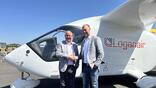
Electra CEO Marc Allen talks with Karen Walker about the new EL9 hybrid-electric aircraft.
Subscribe Now
Don't miss a single episode. Subscribe to Aviation Week's Window Seat Podcast in Apple Podcasts, Spotify or wherever you get podcasts.
Discover all of our podcasts on our at aviationweek.com/podcasts.
AI-Generated Transcript
Karen Walker (00:10): Hello everyone and thank you for joining us for Window Seat, Aviation Week's air transport podcast. I'm ATW and Aviation Week Air Transport Editor-in-Chief Karen Walker. Welcome on board. Now this week I am delighted to be in the beautiful city of Charleston, South Carolina, which is hosting the CAPA Leader Summit Americas, and I'm absolutely thrilled to be joined by a very special guest, Marc Allen, who is the CEO at Electra. So Marc, welcome. Thank you for joining us.
Marc Allen (00:40): Thank you, Karen. It's good to be here and what a great city we're in.
Karen Walker (00:43): It is. It's gorgeous, isn't it? Electra is a hybrid electric aviation company that is developing the EL9, a small ultra short takeoff and landing regional aircraft. Before joining Electra, Marc served as chief strategy officer at Boeing, so he's definitely got all the right aviation knowledge and background. Here in Charleston, he's been talking to attendees about the EL9 and we saw a significant step achieved when a two-seat prototype was flown here and landed on the city's pier.
Marc Allen (01:15): Right by the river, right by the hotel.
Karen Walker (01:17): That's right. Yes, it was. And it also delivered a special guest, so we'll hear about that in a minute too. So Marc, again, thank you for your time. Like I say, exciting times here in Charleston. Could you start please by telling us a little bit about the EL9 and what its role would be for the commercial airline world?
Marc Allen (01:37): Yeah, maybe I can start with the customer because the customer really informs what the EL9 is. We released this week our Direct Aviation Market Outlook, which is the first inaugural effort to take all the data that exists on Americans and how they move and to really define where are those economically viable trips for Americans that right now are happening on the ground that should be in the air. And the distances that we've been studying are between 50 and 500 miles. The real heart of the market is 50 to 250 miles as you fly. So a road trip could be longer, of course, but as you fly 250 miles. There are 33 million trips every day that fall into that zone. An enormous amount of them are flights that when we convert them from ground to air, save passengers anywhere from one to two, even more than three hours of time and they do it in an affordable way.
(02:39): And so as we start to size this market, we've now built the EL9 with that demand in view. The EL9 is a nine passenger hybrid electric airplane.
(02:49): It can operate for sure from airport to airport, but more than that, it's been built to be able to deliver the access of a helicopter. So it can go into novel access points, whether it be a vertiport or a heliport or a parking lot or a barge or like you saw yesterday a pier in a city center. It's the technology foundation to this ultra short aircraft that lets it access new environments like a helicopter that changes everything because it means people can now fly from where they are to where they want to go. And whether that's a first mile or a last mile to an airport or whether that's a novel access point to another novel access point, those are choices that operators now get to make.
Karen Walker (03:30): So just tell me a little bit about those engines. I saw this aircraft for the first time myself yesterday, and like I said, we'll talk about that special moment in a little while, but there's eight, right? Four on each side. Tell me about that engine.
Marc Allen (03:45): Eight electric engines, we call it a distributed electric propulsion. The propulsive heart of the aircraft is a turbo generator paired up with a battery system. The two work in tandem with effectively a mutual boost function of the interplay between the turbogenerator and the battery. They then charge those electric engines. Electrons moving through cabling out to the edge of the wing. And because we've got the distributed propulsion, we are able to accelerate airflow over the wing in very particular ways to create enormous amounts of lift. We fool the wing. We make the wing think it's going faster than it actually is that allows the airplane, as you saw it, to come in at super slow speeds. So even though the EL9 can cruise at 175 knots, it can operate at 30 and that is a wild, wild range of difference.
Karen Walker (04:36): And so was the engine developed specifically for the EL9? And it sounds like it's a very fuel efficient aircraft.
Marc Allen (04:46): So we have built an integrated supply chain with best of class suppliers for all parts of the airplane. The engines are provided by Evalido, which is a British company. We have been working very closely with Safran on the turbo generator. The batteries, we're in the middle right now of a down selection across a handful of finalist suppliers and so those announcements will be made at a later date. But we built the airplane intentionally from best of class suppliers around the world and we serve as the integrator of all that so that we could keep our eye on how the integration of the aircraft comes together and meets the customer need.
Karen Walker (05:26): Right. How long has the development program been to this point? And presumably you're going to need all those good things like FAA certification. What are the key timelines and goals that you're aiming for?
Marc Allen (05:39): The company is six years old. We spent the first three years designing the technology and then building the prototype. We spent the last two years, two and a half years flying the prototype and beginning to transition the technology from prototype to product. We launched our product in November of 2024, so just over a year ago and we've been designing it since. We filed our FAA cert application for a Part 23 type certification in November of 2025. So we're now on the clock and we're excited about that. The design is advancing, the bill of materials is advancing with our suppliers' build and we're headed towards a first flight of EL9, which will be late 27 into early 28. So certification, of course, will then follow several years of flight test. We assume one year of company flight test, one year of FAA flight test. That means that we reach type cert in late 29 and through 2030.
(06:32): We always talk landing zones. We never talk a single point in time.
Karen Walker (06:35): Sure. And roughly speaking, entry into service?
Marc Allen (06:38): 2030.
Karen Walker (06:39): 2030. Right. Thank you. As a passenger a lot of the time, never a pilot, but always a passenger, and I do a lot of it. I always have to ask this question. Where do the bags go?
Marc Allen (06:49): We've got a huge baggage compartment in the back of the airplane. So the airplane is able to carry 300 pounds of payload. When you fill it with nine passengers and two pilots, that means each passenger can still carry 50 pounds of baggage. Golf clubs, skis, big bags. The point is to make, again, a practical aircraft that satisfies passenger need. It just happens to do the unthinkable and land in a parking lot right near you.
Karen Walker (07:16): Yeah. So that's the key difference here. I mean, it's sort of short haul, but it's not that short when you mentioned those numbers. So it's got to be reasonably comfortable for those nine passengers. Is it a single pilot?
Marc Allen (07:31): It will be certified for single pilot operation, but it will have two crew stations. So an airline can choose to put two pilots on. You're absolutely right about what it means from a range perspective. This airplane has up to a thousand nautical miles of range. It can go very far. For the commercial use, the heart of the market is really going to be that 200 to 300 mile sweet spot. The value of that, of course, is time. And so it's freedom really, because these are distances that are just too long to drive conveniently, but they're too short to fly efficiently. And so we're able to win time back and give people freedom in their lives by creating this new source of aviation, which we call direct aviation because it goes from where you live, where you work, where you play, and it takes you to where you really want to go.
Karen Walker (08:18): So the idea is that because it can pretty much get into anywhere, you'd set up a, for want of a better way, meeting point for where people could be collected or delivered at the end of their trip. And then how do you anticipate all of that integrating into a major airport? We know there's all the congestion in the airspace and everything like that. How do you anticipate this integrating into the national airspace system and major airports?
Marc Allen (08:46): Yeah, this airplane wins because it's built to integrate without adding any congestion to airspace, ramp space or gate space.
Karen Walker (08:54): How?
Marc Allen (08:54): Very intentionally. So we have already done operations at commercial airports where we have landed at the airport not on the runways. So we have approached it through helicopter approaches, landed on ramps and on taxiways. And by doing so, we can operate in major airports without adding to congestion. Right now, we're executing under a CRADA, that's a cooperative research and development agreement with the FAA with their technology center based in New Jersey, which has intentionally been scoped to explore the data and thus build out the policy around what those novel airport non-runway operations look like for ultra short aircraft.
Karen Walker (09:33): Interesting. What would be the anticipated altitude, cruising altitude for want of a better way of putting it?
Marc Allen (09:41): The airplane has an operating ceiling of 20,000 feet, but it's not pressurized. So we assume usual operations between six and 12,000 feet, much like you'll find in the existing nine passenger aircraft market, whether it's a Tecnam or a Caravan or a PC-12.
Karen Walker (09:56): Right. And how would you build up the pilot base for that because they would have to be certified to that particular type of aircraft, yes?
Marc Allen (10:06): It's not a particular type cert for the pilots for the airplane. A pilot who has a multi-engine land rating will be able to fly this airplane. We'll certainly provide familiarization to what it means to fly an ultra short aircraft, but it will be a multi-engine land certification that's required for operation.
Karen Walker (10:24): Interesting. Now, I know that there are multiple uses for an aircraft like this that you're looking at, but obviously Window Seat and our audience is interested in the airline world. So you're going to need airline customers, yes?
Marc Allen (10:40): Absolutely.
Karen Walker (10:40): Can you give us an idea of where your thinking is? Is it going to be you're going to start in the US with the US airlines and what amount of interest are you seeing?
Marc Allen (10:51): So we have a backlog of 2,200 orders in our LOIs and that's from 63 operators. These are all regional operators. They're global. About 60% of them are outside the US, but I do expect we'll start in the US. We've begun to convert those LOIs into firm orders. The position number one goes to Bristow, one of the world's largest helicopter operators, but also airplane operators. They have operations both in the US and non-US. So we won't declare yet where plane number one goes, but certification certainly is going to happen in the US. So in all likelihood, we start here in the US. One point I'd flag is that the use of the aircraft, when you talk about what the use cases are, is so versatile. I mean, we're here in Charleston, but just as an easy example, for those of our guests who came to this CAPA conference from outside the US, if they're looking for international service, they're likely going to want to fly out of Charlotte or out of Atlanta to get back to wherever they came from, maybe out of DC.
(11:49): Well, this aircraft, the EL9, is going to save passengers two hours trying to get to Charlotte. It's going to save them two, two and a half, maybe even three hours getting to Atlanta. And the ability to fly out of an environment close to this hotel, go straight into the Atlanta airport operating environment, not on the airspace, not on the runways. Land like a helicopter, deposit passengers who then can access their aircraft for international flights is I think going to be a really attractive use case.
Karen Walker (12:18): For want of a better way of putting it, is this a rich man's plane? Not at all.
Marc Allen (12:25): Not at all. Can never be that.
Karen Walker (12:25): Can't ever do that. Exactly. So where do you think a typical flight fare might sit?
Marc Allen (12:33): We're talking to your airline audience. They know CASM [cost per available seat mile]. So CASM is going to match up with existing nine seat airplanes. So think about again, the Cessna Caravan. About 80 cents per available seat mile is the CASM. Just to put that in context, an Uber to the rider is about $2 per mile. So if your CASM converts into about a buck 50 price, you're still cheaper than an Uber on a per mile basis. That's the advantage of this system. It's going to be affordable. It's going to democratize air access. And by having operators that operate these airplanes, filling out those nine seats, they're able to deliver that kind of efficiency.
Karen Walker (13:10): And of course, when you get to that moment where airlines are taking them in, you've got to have production and coming from Boeing, you know all about the factories and ramp up and production things. Where is your thinking on where you're going on that?
Marc Allen (13:26): Yeah, no, we're not going to make any news on this podcast, I'm afraid, but we've been involved in an extensive and careful site selection process over the last year. We had 140 individual sites that answered our RFP and bid on providing a site, great sites all across the United States. We narrowed that list down. Our team visited dozens. I've now gone out to visit the final shortlist and we'll make a decision this summer.
Karen Walker (13:53): This summer? Yeah. Okay. So we'll know soon where that's going. Let's talk about that demonstration yesterday and why that was special. Yes, I know. I was there. I was on the pier. You're right. You can stand right on the pier. We were right by the edge of the water. And then we saw this aircraft on the far horizon coming in and doing a turn and landing very short right in front of us. So tell us the significance of that and who the passenger was.
Marc Allen (14:20): Yeah. So look, we've flown this airplane for two and a half years. We have a lot of confidence in it and we've been able to demonstrate its performance fairly well. So it wasn't novel in that sense. What was novel was that this is the first time we've done it in a close and urban environment. I don't know if you noticed, but we were about a block away from a Harris Teeter.
Karen Walker (14:42): We were surrounded by buildings on that side.
Marc Allen (14:45): And the hotel was just a few blocks away.
Karen Walker (14:47): And...
Marc Allen (14:47): So we had hundreds of people come out from the conference to watch it. We had airline CEOs there. We had government authorities, we had airport managers. It was fantastic. What a great group. Being able to demonstrate the performance in use, you were there, Karen, you saw it. We had thunderstorms behind us.
Karen Walker (15:04): There was quite a lot of crosswind, wasn't there?
Marc Allen (15:05): We had a 15-knot crosswind on the access point and the airplane just handled it beautifully. Demonstrated to everybody what it looks like. Almost coming in, it's so slow, you'd almost think it was hovering because it's just coming to land at about 25 knots. It's such a slow approach speed.
Karen Walker (15:20): Yeah. In that respect, from the outside, it looked much more like a helicopter than an airplane.
Marc Allen (15:28): That's right. It was also very quiet, unlike a helicopter. It was very quiet and then it just stopped. Yeah. And that's what we call helicopter-like access. We always talk the rule of six, which is access like a helicopter, quiet like a Tesla. Payload and range, that's aviation's motherhood and apple pie, affordable so we can really democratize the business here and safe, the number one rule of aerospace. And we were able to demonstrate all six of the rule of six yesterday, which was great. And then of course, the airplane came to a stop in front of us, the door opened and Alex Wilcox, the CEO of JSX came out. Alex is a good friend and a good collaborator in this advanced air mobility space. JSX has signed in our backlog for LOIs with Electra. And so we look forward to seeing what advanced air mobility operations will look like in JSX colors in a couple of years.
Karen Walker (16:16): How many aircraft are in the LOI?
Marc Allen (16:19): You know what? I'm not sure if we've announced publicly that. Okay. It's a large number.
Karen Walker (16:23): Yeah. It's not a sort of a single digit.
Marc Allen (16:27): And I apologize, I didn't come into this podcast ready to give you exactly that answer, but yeah, we've got 2,200 airplanes in the LOI book. As you know, JSX is the fastest growing airline in the world right now. So we've got a lot of respect for what they're doing.
Karen Walker (16:42): And your headquarters is just down the road from where I live in Manassas, Virginia. Very close by. So I'll be following up with you to get more of those numbers as you get certainly into the summer. I guess just one last question if I may. I mean, do you see this? I think I know what you're going to say, but I'd like to ask, is this an aircraft that replaces many of the regional aircraft that are out there in terms of I'm thinking like the ATR turboprops, is that what it's about or not?
Marc Allen (17:19): No, this is about creating a new level of the aviation network. If you think about it today, if you look at the aviation network route maps that we have, they are absent from this 50 to 250 nautical mile space I told you about. I told you there were 35 million travelers every day in the zero to 500. There are 33 million of those 35 are zero to 250 nautical miles. And there's less than 1% of those trips that are being done by air. So this is about creating a whole new opportunity to move people up into the air to make their life better, to make it more efficient, to give them freedom so they can move faster and save time. That's what this is all about. So I think you'll see this not as a replacement for an existing part of the market, but rather as a whole new network element that rests on top.
(18:10): It'll just kind of nestle right on top of the existing air network and make it even more connected. Frankly, we'll get more people into broader air service because of this.
Karen Walker (18:19): Yeah. And I'm guessing that's what gets the airline CEOs' attention in that it does exactly that. It can feed more people into their hubs.
Marc Allen (18:31): The airport feeder service here, the opportunity to let people replace a three-hour drive to an airport and turn it into a 30 or 40-minute flight is really attractive.
Karen Walker (18:40): Marc, thank you so much for your time. This has been fascinating. I thoroughly enjoyed seeing that demonstration yesterday and you could sense the excitement there among people that it's always lovely to see something really new, but...
Marc Allen (18:53): I was as excited. I mean, this was a big moment for us as a company and for the industry.
Karen Walker (18:58): To see a new aircraft like that just land right in front of you, just showed you the versatility and why this was different. So I look forward to following up with you and I hope you'll join us as things move along and develop in the summer, et cetera.
Marc Allen (19:12): We will. We will. Thanks for having me here, Karen.
Karen Walker (19:14): Thank you and wishing you and Electra every success.
Marc Allen (19:17): Wonderful.
Karen Walker (19:18): Thank you also to our producers, Cory Hitt and Guy Ferneyhough, and of course a huge thank you to our listeners. Make sure you don't miss us by subscribing to Window Seat on Apple Podcasts or wherever you like to listen. This is Karen Walker, disembarking from Window Seat.

Related Content