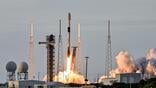
The new administrator shakes up the space agency with plans for lunar base and sunsetting SLS. Aviation Week's Joe Anselmo and Irene Klotz speak with Redwire Space President Michael Gold about the developments.
Subscribe Now
Don't miss a single episode of the award-winning Check 6. Follow us in Apple Podcasts, Spotify or wherever you listen to podcasts.
Discover all of our podcasts at aviationweek.com/podcasts
AI-Generated Summary
The podcast discusses NASA's recent changes to the Artemis Lunar Exploration Initiative, led by Jared Isaacman.
The plan involves moving away from the Space Launch System (SLS) and Orion spacecraft after Artemis V, opting instead for commercial providers to transport astronauts to lunar orbit. The Gateway lunar orbit outpost is being replaced with a direct lunar base, which affects international partners like the Canadian Space Agency.
The initiative aims to increase lunar missions to 70 over the next decade, utilizing a $25 billion annual budget and an additional $10 billion from a fiscal bill. The discussion highlights the importance of the U.S. establishing a presence on the Moon before China, emphasizing the geopolitical implications.
The podcast also covers the potential of commercial lunar payload services and the role of private companies in advancing lunar infrastructure. The conversation reflects on the historical context of NASA's programs, the evolution of public-private partnerships, and the need for sustainable and affordable space exploration strategies.
The dialogue concludes with optimism about the future of lunar exploration, noting the maturity and readiness of current plans compared to past initiatives.
Key Topics:
- NASA's Artemis Initiative Changes
- Transition from SLS to Commercial Providers
- Replacement of Gateway with Lunar Base
- Geopolitical Race with China
- Increase in Lunar Missions
- Role of Commercial Lunar Payload Services
- Historical Context of NASA's Programs
- Future of Lunar Exploration Strategies


Related Content