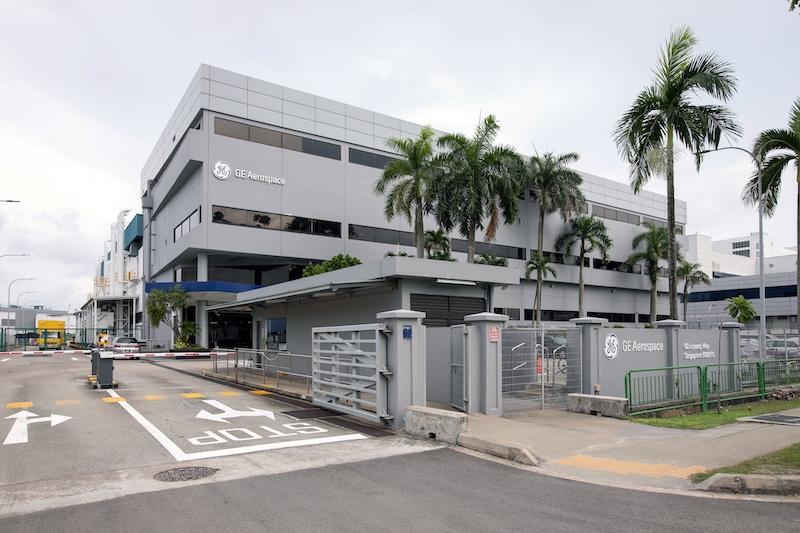
GE Aerospace's component repair facility in Singapore.
SINGAPORE—Singapore is prioritizing deeper MRO capabilities, moving up the aerospace value chain and expanding research and development as it seeks to sustain growth in an increasingly AI-driven and uncertain global trade environment.
The Singapore Economic Development Board (EDB) aims to further strengthen the city-state’s position as a regional aerospace MRO hub, including in aftermarket services. Singapore is home to about 130 aerospace companies and accounts for about 10% of global airframe MRO output and 20% of engine MRO activity, according to EDB.
The sector has been supported by about S$750 million ($580 million) in investment commitments announced around the Singapore Airshow, including GE Aerospace’s plans to expand engine repair capabilities in Singapore.
“Second, we will move up the value chain. So beyond manufacturing parts, we are looking at owning the engineering, the intellectual property, the know-how behind them, and this is where Singapore will continue to differentiate ourselves,” Zheng Jingxin, EDB vice president and head of Mobility and deputy head of Americas, said here at MRO Asia-Pacific.
The government also wants to expand aerospace R&D and establish centers of excellence for artificial intelligence.
“We want to be the place where the future of aerospace is designed, developed, and deployed,” Zheng said.
Government-led initiatives including AI Singapore and AI for Manufacturing (AI MFG) are intended to help companies develop, test and deploy AI technologies in operational environments.
Zheng said the aerospace sector has outperformed Singapore’s broader manufacturing sector in recent years in areas including output and value-added, alongside other high-growth industries such as semiconductors and healthcare.
He expects MRO demand to remain resilient as the regional commercial aircraft fleet is expected to double, while airlines and aerospace companies increasingly adopt AI and other digital technologies.

Related Content