TAMPA, Florida—As engine shop capacity tightens and material lead times remain unpredictable, Alaska Airlines is placing assured access to parts ahead of price in a constrained aftermarket.
Speaking during a material availability panel at Aviation Week’s AeroEngines Americas on Feb. 10, Alexander Gorinsky, the Seattle-based carrier’s managing director of supply chain operations and material management, said demand across much of the MRO ecosystem continues to outstrip supply—a dynamic he expects to persist through the end of the decade, if not beyond. The imbalance has triggered a reassessment of how the airline sources engine material.
Aviation Week's Fleet Discovery database shows Alaska has an in-service fleet of 251 mainline aircraft, 232 of which are Boeing 737NGs and 737 MAX jets powered by CFM56 and Leap engines, respectively. It also flies three 787s following its 2024 merger with Hawaiian Airlines, with additional widebodies due to enter the fleet this year.
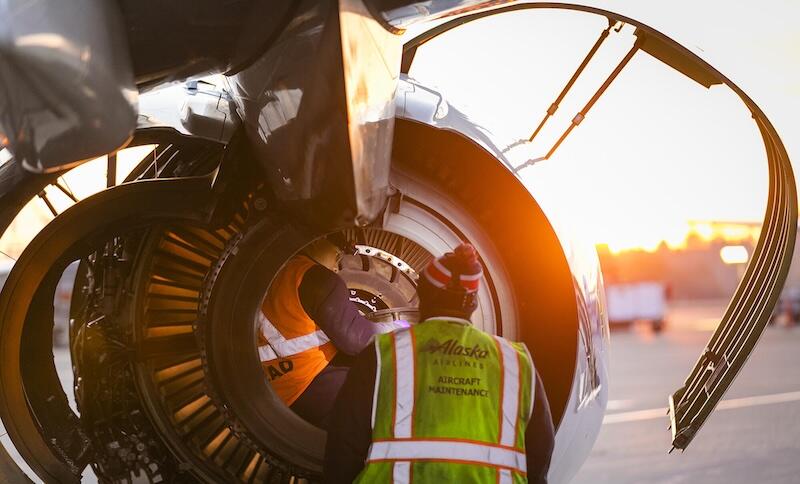
For Alaska, engines remain the principal pressure point, where early removals, constrained shop slots and repair bottlenecks continue to complicate maintenance planning.
“We are concerned particularly with the new engine areas in terms of material availability, the repairability of those components, and then, of course, keeping engines on wing,” Gorinsky said. “These engines are still coming off a little bit too early, and they're spending a little bit too much time with shops.”
Although some segments are stabilizing, durability improvements and repair advancements “can’t come fast enough,” he added, particularly with a wave of shop visits looming. The prolonged disruption has prompted Alaska to broaden its sourcing strategy.
Historically closely aligned with OEM channels, the airline is now diversifying its supply sources to secure materials.
“We’ve taken a different approach: not just in terms of cost, but the availability of parts in order to secure the supply that we need,” Gorinsky said. “Availability has become the primary driver, but the cost savings have got to be there.”
Cost discipline remains critical. The airline has faced what Gorinsky described as “incredible cost creep and escalationary pressures” in recent years. He believes that these increases cannot simply be passed on to customers through higher fares.
Another strategy is for Alaska to adopt a more open stance toward Parts Manufacturer Approval (PMA) components and Designated Engineering Representative (DER) repairs, in step with the growing number of airlines worldwide accepting PMA and DER.
“We’ve looked at PMA and DER and owner-produced parts a lot differently than we have in the past, and we've been a lot more vocal about it,” Gorinsky said. “We're not afraid of PMA and DER. We want to evaluate it where it makes sense, in the areas of the airframe that we're comfortable in and that our engineers are comfortable in approving.”
At the same time, the carrier is wary of overbuilding inventory to buffer volatility. “We are spared accordingly, but we don’t want to over-spare to really address the peaks, because what are we going to do in the valleys?” Gorinsky said.
Ultimately, closer alignment with OEMs and MRO partners on forecasting remains central to navigating the constrained environment, he added.
“All in all, I think there's light at the end of the tunnel in terms of supply chain recovery. However, it's not coming fast enough. We do need to get better forecasting. We need to be really working together with our partners to ensure that we provide our removal forecast so that they can prepare for material and material consumption.”

Related Content