This article is published in Aviation Week & Space Technology and is free to read until Nov 06, 2026. If you want to read more articles from this publication, please click the link to subscribe.
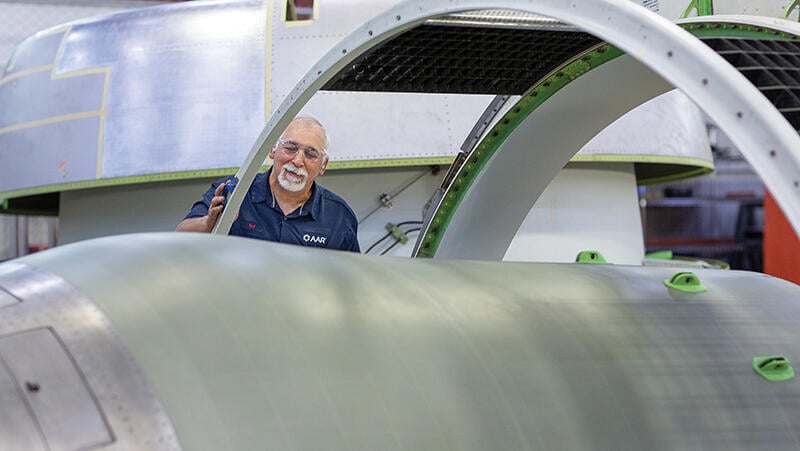
Modern nacelle MRO requires specialized tooling and multidisciplinary technicians.
Modern nacelles have become far more than protective engine structures. As airlines confront increasingly complex composite repairs, rising asset values and tighter engineering standards, the nacelle aftermarket is evolving into a specialist business in its own right.
Nacelle structures on new aircraft platforms are far more expensive than previous generations. Composite materials and aerodynamic tolerances are making repairs significantly more complex. The nacelle aftermarket is undergoing the same transformation that engine MRO experienced 20 years ago. In other words, nacelle services are evolving from a repair business into engineering-led asset management.
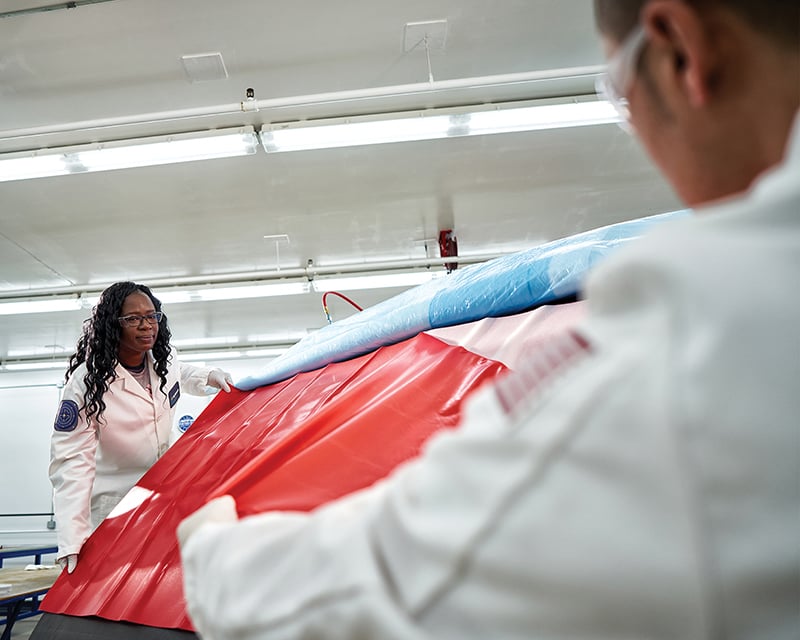
Henrik Schlotfeldt, head of global nacelle MRO at ST Engineering, agrees that nacelles are evolving into their own specialist aftermarket segment, driven by increasing technical complexity, asset values and OEM involvement. He expects the market to consolidate around a few highly capable providers.
Similarly, xCelle Americas Chief Operating Officer Brad Tyler notes that today’s nacelles demand distinct technical knowledge, certification structures and capital investment, positioning their next-generation MRO as a specialty area.
A STEP CHANGE
Next-generation nacelles have become critical aerodynamic structures that directly influence engine efficiency, meaning even relatively small repairs demand tighter engineering standards than on previous generations.
As Schlotfeldt explains, nacelles are no longer simply aerodynamic engine coverings. On platforms such as the CFM International Leap-powered Airbus A320neo and Boeing 737 MAX, as well as the Boeing 787, the nacelle is designed as an integral part of the propulsion system. This means repairs that may have been considered cosmetic or relatively straightforward can affect aerodynamic performance, noise and fuel efficiency.
“The nacelle system is now an integral part of the engine,” he notes. “The whole standard of the nacelle system has increased significantly, so we expect that airlines will start to treat nacelles as small engines.”
Tyler says modern nacelles use advanced composite structures, tight aerodynamic tolerances, complex acoustic systems and integrated electrical and sensor components. “This requires specialized tooling, multidisciplinary technicians and OEM‑approved processes,” he explains.
Kurt Tschaepe, general manager at Nordam’s repair division, has similar views, stressing that nacelle system complexity continues to evolve over successive generations of aircraft, characterized by more advanced composite materials, greater weight optimization and increased integration among structures, all within ever tighter tolerances.
“These attributes demand in-depth engineering understanding and repair process technology backed by quality systems that assure the integrity of the final product,” he notes.
Tschaepe says four core disciplines are essential to nacelle MRO and must be tightly coordinated to work effectively: repair engineering, material processing, nondestructive inspection and manufacturing.
“The goal is never simply to ‘fix the part,’ but to restore the structural integrity and nacelle system performance in a way that satisfies both the FAA and the customer,” he says. “The key to evolving repair capability is the effective work of multidisciplinary teams meeting the requirements of increasingly high-performance propulsion systems.”
RISING REPAIR COSTS
Airlines may be underestimating the cost of maintaining nacelles on modern aircraft. As structures become more complex and materials more specialized, repairs grow more expensive, replacement costs increase and preventive maintenance appears more attractive. This underpins the argument for moving away from reactive repairs.
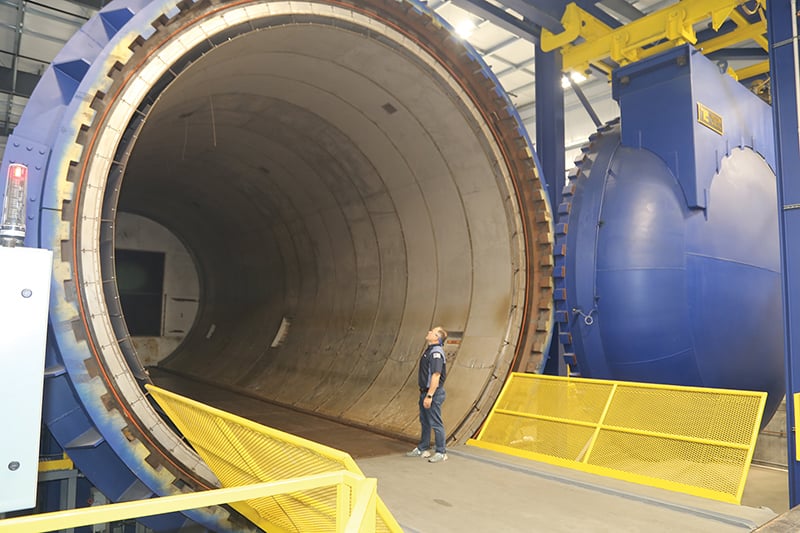
ST Engineering sees its ability to extend repairability as a major differentiator, particularly as airlines seek to avoid replacing increasingly expensive nacelle structures. “Our desire is to repair more than replace, because that is where we bring value to the customer,” Schlotfeldt says. “We are driving a repair-versus-replace strategy, and sustainability is also built into that.”
Tyler notes that next‑generation fleets powered by engines such as the Leap, GE Aerospace GEnx and Rolls-Royce Trent families are moving into heavier maintenance cycles, driving up demand for composite repairs, acoustic liner restoration and thrust reverser maintenance. At the same time, supply chain delays are pushing operators toward repair rather than replacement. He adds that xCelle Americas is expanding nacelle capabilities to help airlines cut downtime and protect asset value through integrated repair solutions.
Preventive maintenance is key. Rather than allowing nacelles to deteriorate until major repairs become necessary, Schlotfeldt asserts that airlines should adopt planned maintenance programs similar to those used for engines.
“Operators understand that they need to treat nacelles as small engines,” he says. “They need to build maintenance programs and schedule maintenance events rather than fly to failure. That will increase demand for professional nacelle support.”
Schlotfeldt suggests that the future competitive advantage in nacelle MRO will depend on where exchange assets are located and how quickly they can be transported, rather than simply where repairs are carried out. He adds that access to OEM engineering data and repair approvals will increasingly determine who can compete in the nacelle aftermarket.
COMPOSITE CHANGES
Composite structures are driving significant change. According to Schlotfeldt, the shift from metallic to composite-intensive nacelles is fundamentally altering workforce requirements, with growing demand for technicians skilled in advanced composite repair.
Schlotfeldt explains that earlier nacelle platforms were made up of roughly 80% sheet metal and 20% composite, whereas the latest generation has shifted to a much more balanced 50‑50 mix.
Changes extend to nacelle design and maintenance requirements. As Tschaepe explains, new-generation engines incorporate higher-bypass-ratio designs that require more technically stringent nacelle system features to improve overall propulsive efficiency.
These larger-diameter nacelles, he says, require lighter structures per unit of surface area, refined aerodynamic smoothness for laminar flow, more effective acoustic absorption to minimize the amount of noise treatment material required and higher under-cowl temperatures due to very high core-pressure ratios.
These characteristics drive repair requirements related to composite structural margins. According to Nordam, repairing next-generation nacelles is no longer simply about fixing visible damage. Repairs must restore structural strength, maintain precise aerodynamic surface quality and fully reinstate thermal protection systems to ensure the nacelle performs exactly as designed.
“Our work designing, manufacturing and supporting advanced aerostructures gives us a practical understanding of how repair technology needs to evolve as maintenance requirements change,” Tschaepe says.
INFRASTRUCTURE MATTERS
At ST Engineering, around 80% of new facility investment goes into core infrastructure. Schlotfeldt’s reasoning is that once the infrastructure is in place, capabilities for individual programs can be added over time.
As next-generation nacelles continue to increase in size and complexity, ST Engineering is reshaping its global support network around a two-tier operating model. While major overhaul work will remain concentrated at its full-capability MRO hubs, the company is developing a network of regional service centers located closer to airline customers and heavy maintenance facilities. Schlotfeldt says the shift reflects a practical reality: Transporting modern nacelles is becoming more challenging and, in some cases, more costly than the repair itself.
ST Engineering increasingly views itself as a global nacelle integrator rather than simply an MRO provider, Schlotfeldt says. Alongside repair capability, the strategy combines component/parts exchange asset management, logistics, regional support and customer services to minimize transport requirements, reduce aircraft downtime and provide faster access to replacement nacelles. Under this model, airlines are purchasing an availability solution as much as a repair service, with regional service centers supporting operators locally while major overhaul activities remain within ST Engineering’s primary MRO facilities.
CAPABILITIES AND INNOVATION
Nacelle specialists are already looking ahead at what capabilities will be most important as the next generation of aircraft fleets matures.
Tschaepe expects experience with advanced materials, particularly composites, coupled with design-level engineering, to be the linchpins for next-generation nacelle system MRO. “We see that real, ongoing investment in people, both direct workers and the technical support teams, will be the differentiator for MRO organizations that airlines rely on as trusted suppliers,” he says.
Tschaepe also suggests that successful MRO organizations will be those that can pair engineering expertise on par with design-level capabilities with disciplined manufacturing execution on the shop floor—not one or the other. “That pairing is very familiar for us; it’s how nacelle work has always been done at Nordam, with design and repair informing each other rather than sitting in separate silos,” he says.
In terms of technology and innovation, Schlotfeldt sees artificial intelligence (AI) primarily as a workforce tool. He says ST Engineering is using AI to accelerate technician training, capture organizational knowledge, guide inspections, support planning and provisioning, and reduce reliance on highly experienced staff as workforce turnover increases.
Over the next five years, Tyler expects the biggest nacelle MRO opportunities to come from the growth of next‑generation fleets, the spread of digital and automated repair technologies, and rising airline demand for integrated nacelle and structures solutions. On the other hand, he sees specialized workforce shortages, ongoing supply chain constraints and the growing maintenance needs of aging next‑gen fleets as the main challenges the sector will face.

Related Content