This article is published in Aviation Week & Space Technology and is free to read until Dec 11, 2026. If you want to read more articles from this publication, please click the link to subscribe.
Next-Gen Aircraft Cabin Storage Systems Boost Space And Digitalization
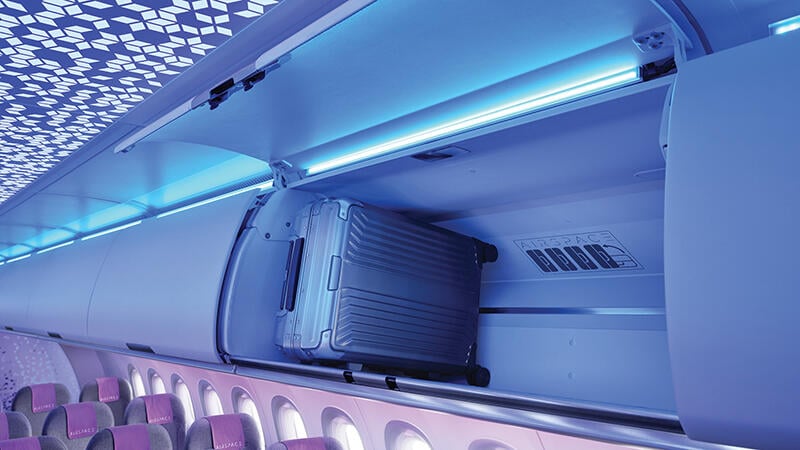
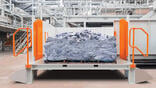
Vertical bag storage in the Airspace XL luggage bin provides considerably more stowage capacity.
Aircraft cabin storage is evolving as passengers seek more carry-on space and airlines push for cabin densification. Manufacturers are developing intelligent overhead bins, integrated storage products and advanced galley systems that blend greater capacity with digital connectivity and sustainable design.
“We expect two major trends to continue shaping the evolution of cabin storage systems,” says Carsten Laufs, senior vice president of innovation and digitalization at Diehl Aviation. “First, ongoing cabin densification will continue to drive demand for increasingly efficient and integrated storage solutions. Manufacturers and airlines will seek to maximize available storage space—not only in overhead compartments but also within front-row monuments.”
The second trend Laufs cites is related to cabin segmentation and differentiation, which he says will remain priorities. “Airlines continue to seek customized passenger experiences across different travel classes, creating demand for storage solutions that are scalable, flexible and adaptable to a wide range of cabin layouts,” he says.
Laufs points out that digital connectivity and enhanced ergonomics, in addition to increasing capacity and sustainability while reducing size and weight, will become even more important for the design of storage systems as they are “increasingly integrated into the connected cabin ecosystem.”
In that regard, he points to Diehl Aviation’s movable bin solution, which it has implemented on the Airbus A350. The bin remains elevated during flight, creating a more spacious cabin appearance, he explains, while its intelligent mechanism lowers the compartment to an ergonomic height when opened. He adds that the OEM has developed mechanical and electrical lift-assistance systems that support the operation of large-capacity bins.
“In addition, our Smart Cabin portfolio includes digital solutions such as the eSmart Bin, which enables features such as bin fill-level detection,” Laufs explains. “Through solutions such as the eSmart Bin, overhead storage compartments become connected cabin assets.”
He notes that other features, such as fill-level monitoring and lost item detection, can improve operational efficiency while enhancing the passenger experience. “These solutions contribute to greater connectivity between cabin systems and centralized cabin management networks, paving the way for the next generation of intelligent aircraft interiors,” Laufs says.
Diehl Aviation has also developed integrated functional features, Laufs adds, such as a mechanical lift system (MLS) for overhead bins, which “significantly reduces” the force required to close fully loaded bins and contributes to improved ergonomics and workplace safety for cabin crews. “This is particularly important on widebody aircraft, where overhead bins can accommodate payloads of more than 40 kg (88 lb.),” he says.
According to Laufs, airline operations have already demonstrated the benefits of this technology. Swiss International Air Lines and Diehl Aviation launched a retrofit program for the A350 that equips existing overhead bins with the MLS. This allows airlines to enhance crew ergonomics without replacing the entire bin system, making it an efficient upgrade option for in-service fleets.
At the same time, Laufs reports, that Diehl Aviation continues to advance the use of next-generation lightweight composite materials and innovative manufacturing technologies. This includes new thermoplastic composite concepts that enable reduced weight, improved sustainability and optimized production processes, he notes. For example, the ECO Bin uses thermoplastic composites and fewer different materials. “The concept has been developed with a focus on better recycling and more efficient manufacturing,” he says.
MAXIMIZING SPACE
Ingo Wuggetzer, vice president for cabin marketing at Airbus, says the OEM maximizes cabin space by “rethinking” underutilized areas and modernizing traditional layouts.
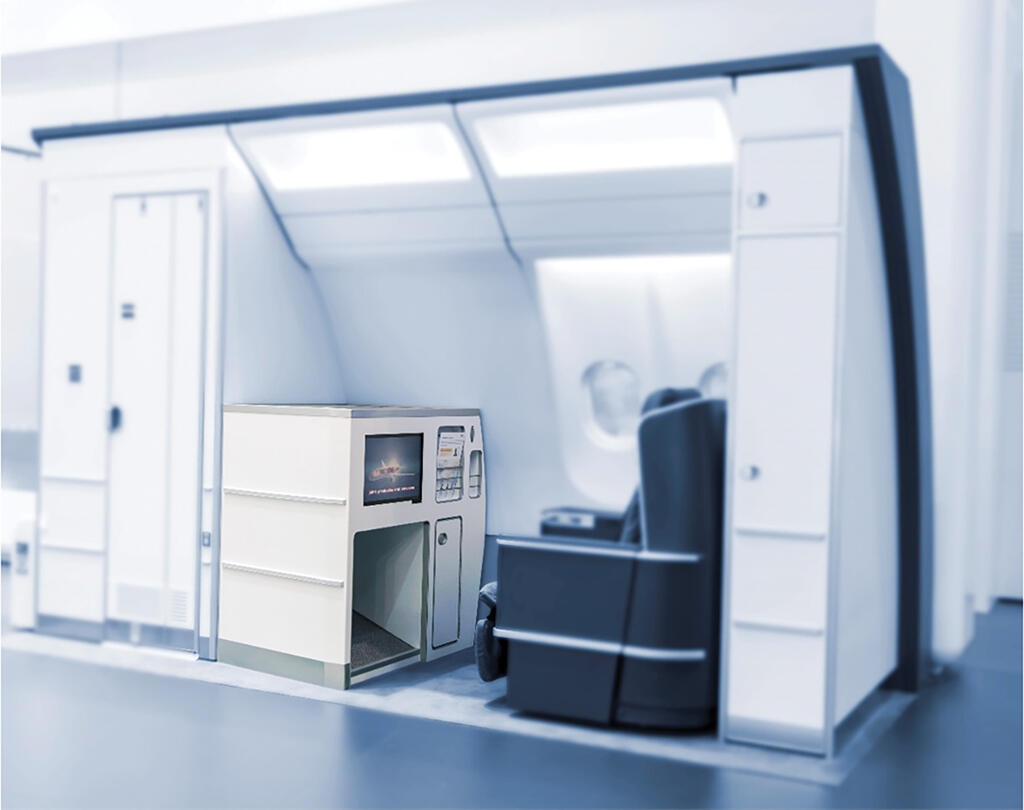
“Our Airspace Cabin concept integrates smart seating with dedicated storage alcoves, housing everything from shoes to inflight entertainment hardware directly into the seat structure—eliminating underseat clutter and maximizing passenger legroom,” Wuggetzer says. “We also offer bigger stowage for coats or other clothes that are usually attached to monuments next to the passenger cabin.”
He adds that premium seats in first and business class provide private stowage space for passenger devices, smaller bags and other equipment while for catering, safety or other operational equipment, airlines provide stowage space in the galley or in the ceiling.
Wuggetzer notes that Airbus has pursued a design philosophy that transforms passive cabin volume into “active, high-value real estate.”
“By reengineering legacy overhead architecture and dead-space pockets, we maximize usable volume, crew efficiency and sustainability—all while creating space for additional seats or expanded galleys without compromising the passenger experience,” he says.
In 2016, Airbus introduced the Airspace Cabin brand, featuring high-capacity bins as standard line-fit equipment and a quick-install retrofit cabin baggage stowage solution in large and extra-large (XL) sizes. The XL variant entered commercial service in 2019 on the A320 family as a retrofit for American Airlines, then on the A321LR as a line-fit item for JetBlue Airways in 2021. Air Canada’s A220s are slated for delivery with Airspace XL bins this year.
A key design innovation is the Airspace XL bin system, which allows passengers to store roller bags vertically on their sides, rather than flat, Wuggetzer says.
“Depending on the aircraft model and bin variant, cabin carry-on capacity increases by 20-60% over older systems,” he says. “On an A321neo equipped with Airspace XL bins, overall carry-on capacity increases by 60%, allowing the aircraft to accommodate up to 240 standard roll-aboard bags—a net gain of 90 extra bags—compared to legacy A320 overhead storage.”
The Airspace fixed bin concept uses a simple door mechanism. “The cabin crew does not have to lift all the bags to close the bins,” Wuggetzer says. “They simply close the door from the top without any hand force. Combined with integrated LED lighting for clear interior visibility, these features drastically reduce cabin congestion and boarding stress for passengers and crew.”
Also, Wuggetzer notes that the Airspace bins incorporate a range of proprietary Airbus technologies and patented design features. Key examples include lightweight composite material construction for fuel efficiency as well as ergonomic kinetic mechanisms for bin doors and latches, he says.
Airbus engineered its bins with higher durability and faster maintenance in mind. “The bins feature a modular, plug-and-play architecture, allowing maintenance crews to swap out individual latches, doors or LED modules right at the gate without dismantling adjacent cabin panels or delaying flights,” he says. “When damage does occur, repairs are exceptionally fast.”
Wuggetzer expects that cabin storage systems will evolve into smart, fully integrated ecosystems.
“We are continuously driving innovation, working currently on future Airspace designs using bionic design principles and recyclable thermoplastics to further reduce cabin component weight and shifting toward circularity,” he says. “Future innovations could be driven by new business models or new technologies like real-time weight and volume sensors guiding passengers via ambient LEDs, or feed live capacity data to flight attendant tablets. Grid-powered, motorized drop-down mechanisms and touchless latches could remove physical strain, while lightweight 3D-printed biocomposites fused into sidewalls offset the added electrical hardware.”
COLD STORAGE
In addition to overhead luggage stowage, aircraft refrigerated food and beverage containment systems are also evolving.
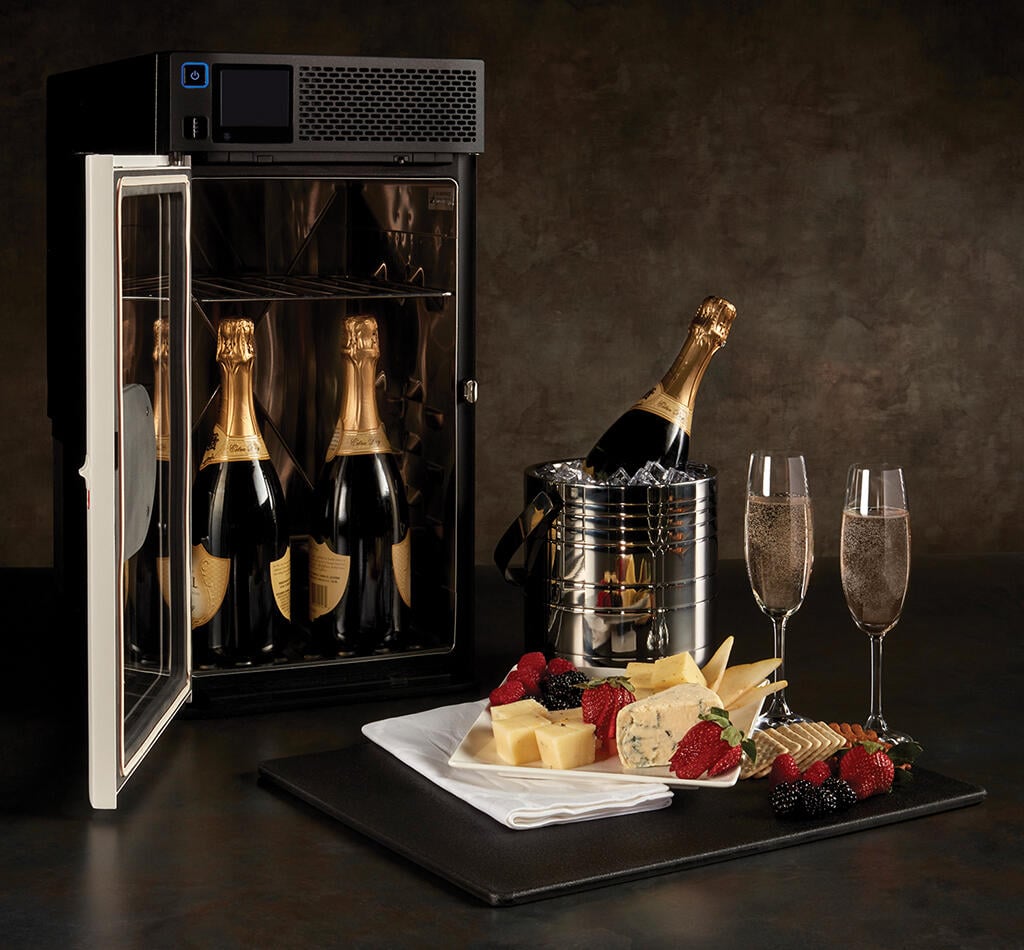
Brian Schmalz, director of sales at Collins Aerospace, reports that the OEM’s Endura and Essence product families both include “trimode” refrigeration units. These galley inserts sit above the galley work deck and provide beverage chilling, refrigeration and freezer capabilities within a single unit, he explains.
“Trimode refrigeration incorporates push-button temperature control, allowing cabin crew to reliably maintain serving temperatures for items such as chilled wines or frozen desserts without additional equipment,” he says. “Each of Collins’ galley insert families are certified across aircraft platforms, offering commonality for operators throughout a commercial fleet.”
Schmalz points out that the manufacturer offers “a portfolio of galley air chillers” that provide bulk food and beverage cooling in trolley carts underneath the galley work surface. While the inserts are common across platforms, he says most galley air chillers are unique to specific aircraft platforms to accommodate their geometry and required capability.
“Our new Q-series air chillers are fundamentally designed to reduce cabin noise and improve operating efficiency on the Boeing 777X,” Schmalz notes. “The redesign goes beyond adding insulation to older part numbers and includes foundational modifications to the composition of the unit.”
He also points out that Collins has recently developed its SpaceChiller system, which uses thermoelectric cooling to provide compact, highly efficient cooling to a variety of places that historically have not been able to accommodate chilling—such as passenger self-service monuments—in what would otherwise be unusable cabin space. The underlying thermoelectric technology is engineered to be quiet and lightweight, foregoing the use of chemical refrigerants.
As Schmalz notes, Collins continues to evolve the materials used in its galley refrigeration and storage units to improve performance, reduce weight and meet efficiency expectations. Today’s product designs incorporate a mix of advanced materials, he explains, including composites, lighter-weight metals and environmentally friendly materials that help reduce weight while maintaining durability.
“Compared to earlier generations, the shift toward composites and lighter-weight metals reflects a broader industry trend toward materials that deliver improved strength-to-weight performance and support more efficient onboard operations,” Schmalz says. “As travelers increasingly seek air travel experiences that more closely resemble the service, amenities and food options they receive on the ground, there comes an increase in the amount of chilling capacity required, and with that comes an increased need for weight and energy efficiency.”


Related Content