This article is published in Aviation Week & Space Technology and is free to read until Aug 07, 2026. If you want to read more articles from this publication, please click the link to subscribe.

FAA Altimeter Upgrade Plan Feasible, Stakeholders Say

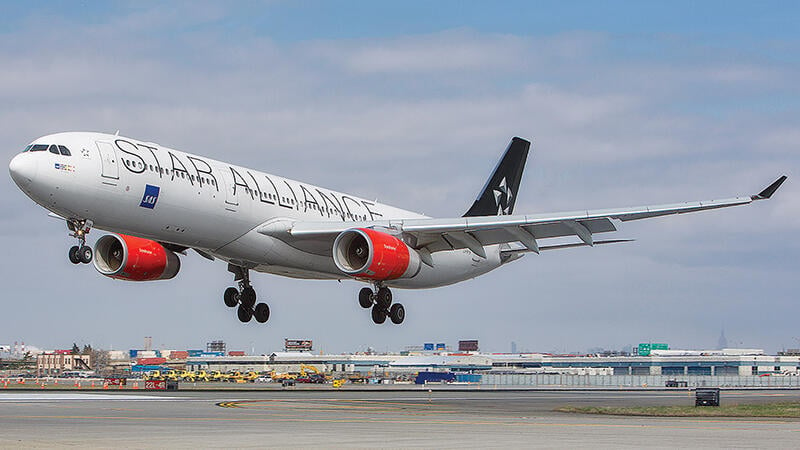
Star Alliance Airbus A330-343

New radio altimeter requirements would extend to foreign carriers flying into U.S. airspace.

Credit: JoePriesAviation.Net

Aviation stakeholders are confident they can meet or even beat the FAA’s proposed timeline for upgrading radio altimeters to withstand interference from new wireless services the U.S. government will soon authorize. But their plan requires extensive coordination between the FAA and the Federal Communications Commission, as well as a few concessions from wireless companies along the way.

The complex plan responds to the Federal Communications Commission’s (FCC) pending sale—ordered by law in the July 2025 One Big Beautiful Bill Act—of at least 100 MHz of spectrum in the 3.98-4.2-GHz band, or upper C band. This comes on the heels of the 2020-21 auction that put 5G wireless services in the 3.7-3.98-GHz bands but required significant concessions to satisfy aviation safety concerns.

Radio altimeters (RA) calculate an aircraft’s height above the surface below by measuring how long it takes electromagnetic waves to travel to the surface below and back. They are crucial for low-visibility operations and support myriad automated functions, including traffic alert and collision avoidance systems, enhanced ground proximity warning systems, automatic braking and stall warnings.

RAs operate in the 4.2-4.4-GHz range and were not designed to filter out 5G or 6G signals. Covering urban areas means wireless networks must have numerous ground stations near airports, compounding aviation’s problem.

A patchwork of voluntary wireless service delays, power reductions and airworthiness directives helped the initial upper C-band wireless services roll out in 2022 while aviation stakeholders developed short-term fixes and a long-term plan. The fixes focused on modifying existing RAs with filters, while wireless service providers agreed to downgrade or delay some of their new 5G services.

But new RAs are essential to ensure safe operations alongside the full 5G spectrum rollout and planned 6G services.

The FAA’s proposal, released in January (Inside MRO February, p. MRO6), lays out an upgrade plan that would require Part 121 and 129 operators to have upgraded RAs when new 6G wireless services are introduced, between 2029 and 2032. The exact deadline is up to the FCC and auction winners.

A coalition of aviation associations says a 2029 deadline is feasible, with several caveats. Chief among them: Operators must be reimbursed for the actual cost of the RA upgrade. The FAA put the per-system cost at $80,000, but acknowledged the figure could be low as it is based on existing RAs, not new ones.

Airlines for America (A4A) estimates the costs will top out at $120,000 per unit, it said in public comments to the FCC in May. “A significant portion of the Part 121 fleet” may not need a new transceiver, but rather a modification of the existing one “at a lower cost,” it noted.

A4A estimates 17,000 in-service RAs—some aircraft have more than one—and another 1,500 spares need upgrading. The FAA’s proposed upgrade plan prioritizes these and about 10,000 systems on smaller commercial aircraft. Another 31,000 RAs on other aircraft would have an additional two years to comply.

Aviation stakeholders also want incentives to help fast-track the upgrade process and avoid a bottleneck at the deadline.

“Acceleration incentives will help align incentives among aviation stakeholders and enhance financial capacity across Part 121 operators,” A4A said. “With additional financial capacity through incentives, Part 121 operators can make early investments in workforce capacity, offset potential revenue losses from accelerated installations and negotiate business arrangements with radio altimeter manufacturers to expand production of new altimeter transceivers.”

The funds would come from spectrum auction proceeds. The last lower C-band sales generated $81 billion from 21 winning bidders.

Another key aspect is a harmonized set of technical specifications, including out-of-band emission (OOBE) allowances, across the entire C band.

“A radio altimeter cannot distinguish the source of any interference signals it receives within the 4.24-4.4-GHz frequency band,” a coalition of 17 aviation organizations, including several manufacturers, said in a May FCC filing. “Its performance is degraded by the aggregate power arriving in its band from all unwanted emitters in its operational environment, including both lower and upper C-band emitters. . . . If the OOBE limits for upper and lower C band are not harmonized, this would undermine the aviation safety analysis on which the FAA coexistence framework for radio altimeters depends.”

The Radio Technical Commission for Aeronautics (RTCA) and Eurocae are working jointly on a new set of RA minimum operational performance standards (MOPS) that will include an Interference Tolerance Mask (ITM). The ITM will define the maximum interference levels that RAs can tolerate. The MOPS are tentatively set for final publication in March 2027 following a validation process that could wrap up as soon as September.

The FAA’s proposal also has an ITM, developed by RA manufacturers. The agency plans to align technical standard orders and other requirements to the RTCA/Eurocae standard. Many in the industry want to press forward using the FAA’s ITM as a de facto certification target to help fast-track the upgrade process.

But some caution that separating the ITM from the rest of the MOPS is unwise.

The ITM requirements “are captured by one component of the new MOPS,” the European Union Aviation Safety Agency (EASA) said in public comments on the FAA’s plan. “This ITM portion cannot be addressed completely separately from the update of other parts of the standard, due to interdependencies.”

Adopting ITM requirements before the MOPS are validated “introduces a risk for its accomplishment, due to the aforementioned interdependence between intended function-related requirements and ITM requirements,” EASA added. “The final achievable ITMs should instead constitute a consolidated result of this process, after having assessed that the relevant performance requirements that are considered needed for supporting the safe aircraft operations can be met together with them.”

The aviation industry also says it needs extensions of the wireless providers’ voluntary mitigation measures set to expire on Jan. 1, 2028. Established as part of the previous C-band rollout, the measures—from reduced power to postponing new services—were critical to ensuring operational safety around many airports while the FAA evaluated possible risks (AW&ST Feb. 13-26, 2023, p. 60).

“Extension of these commitments through the initial RA compliance deadline is not merely procedural—it is a safety-imperative,” the Regional Airline Association told the FAA in comments.

Aviation stakeholders and their wireless counterparts are working through their differences. They agree on harmonizing standards, but the FAA’s worst-case baseline for spurious emissions is seen by wireless stakeholders as too conservative. The CTIA, the wireless industry’s chief trade association, has proposed a sliding scale depending on where equipment is placed near an airport.

The wireless industry does not support reimbursing or incentivizing operators. It also does not want any delays in the auction, scheduled for July 2027, or for subsequent rollout plans for the new 6G services. Wireless companies are likely to find the two positions in conflict, if not incompatible.

Sean Broderick

Senior Air Transport & Safety Editor Sean Broderick covers aviation safety, MRO, and the airline business from Aviation Week Network's Washington, D.C. office.