
Gallery: Inside Delta TechOps’ ATL Maintenance Campus
July 07, 2026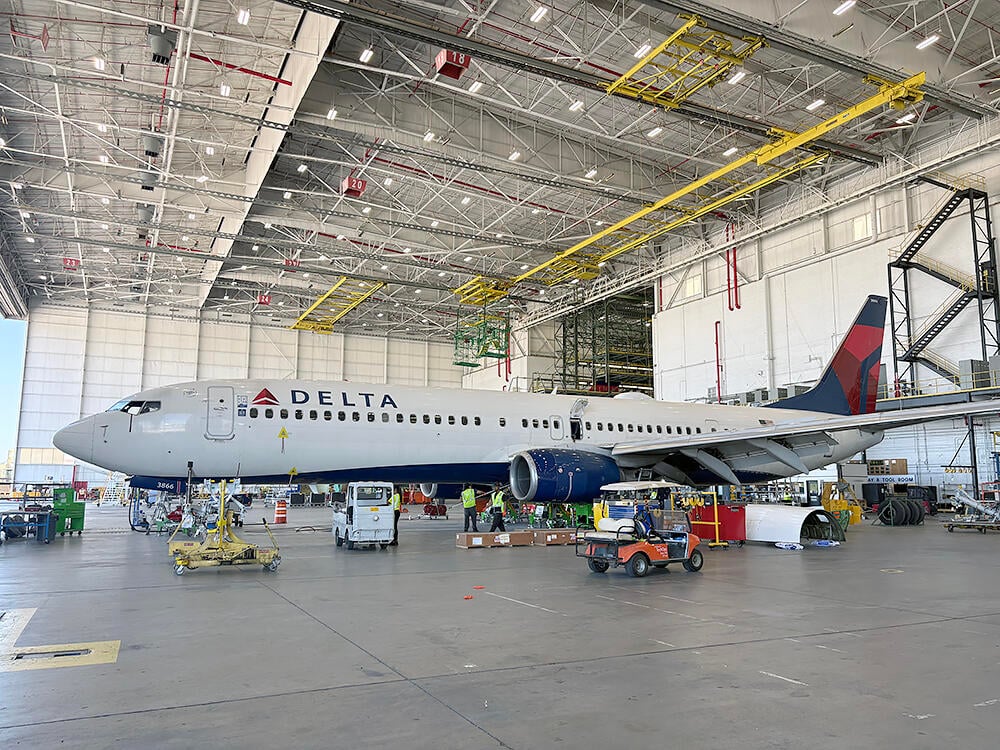
Atlanta Footprint
Delta TechOps’s 200-acre campus at Hartsfield-Jackson Atlanta International Airport houses a wide range of maintenance facilities, including hangars, shops and engine test cells. Aviation Week got an inside look at many of these facilities to learn how the company is expanding its maintenance capabilities and footprint.
Preparing For The Future
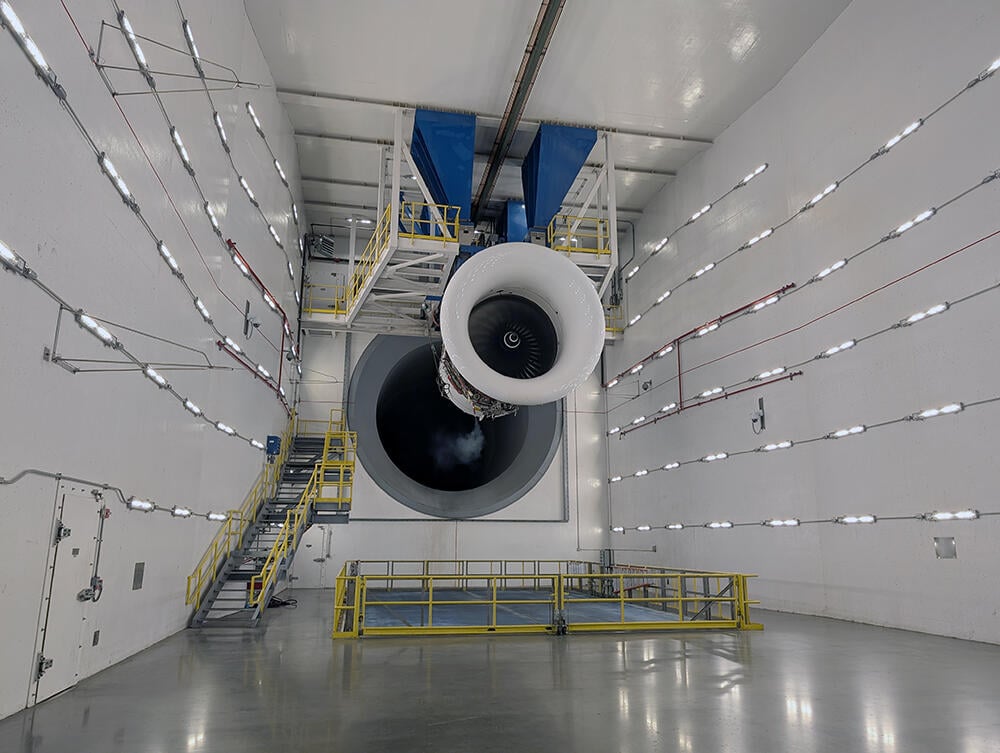
Delta TechOps opened the world’s largest production test cell, pictured here, in 2019. The 14.6-meter test chamber is rated for airflow and thrust up to 150,000 lb., which the company says will prepare it for next-generation engines many decades into the future.
Trent 1000 Test
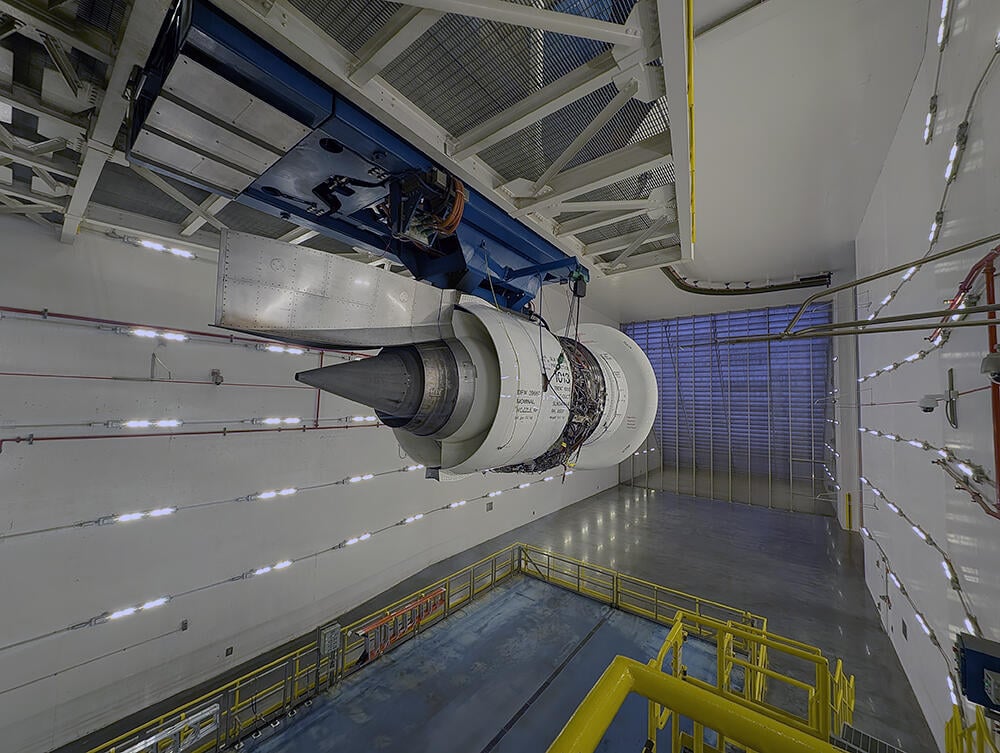
During Aviation Week’s visit, Delta TechOps was running a Rolls-Royce Trent 1000 engine in the test chamber.
Control Room
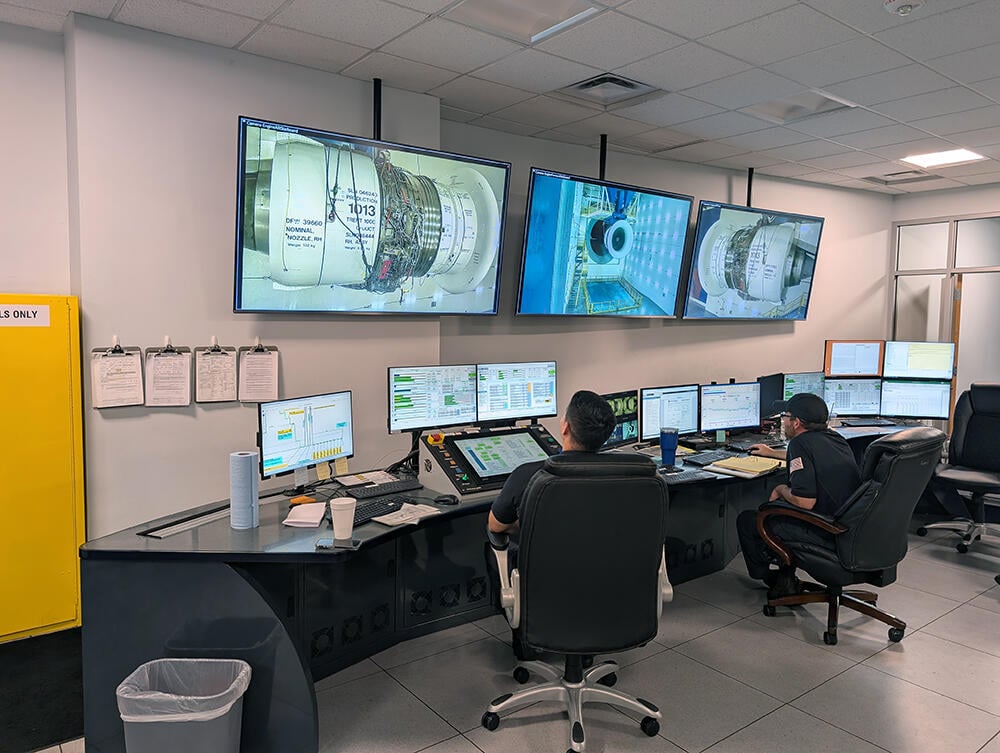
From the test cell control room, staff controls the throttle, movement and other engine functions while data is captured. Delta TechOps says staff here can usually get through about 2-3 engines per day, although some engines—such as the Trent 1000 present during the visit—could spend a minimum of 10 hr. in the test cell facility between preparation and testing.
Engine Storage
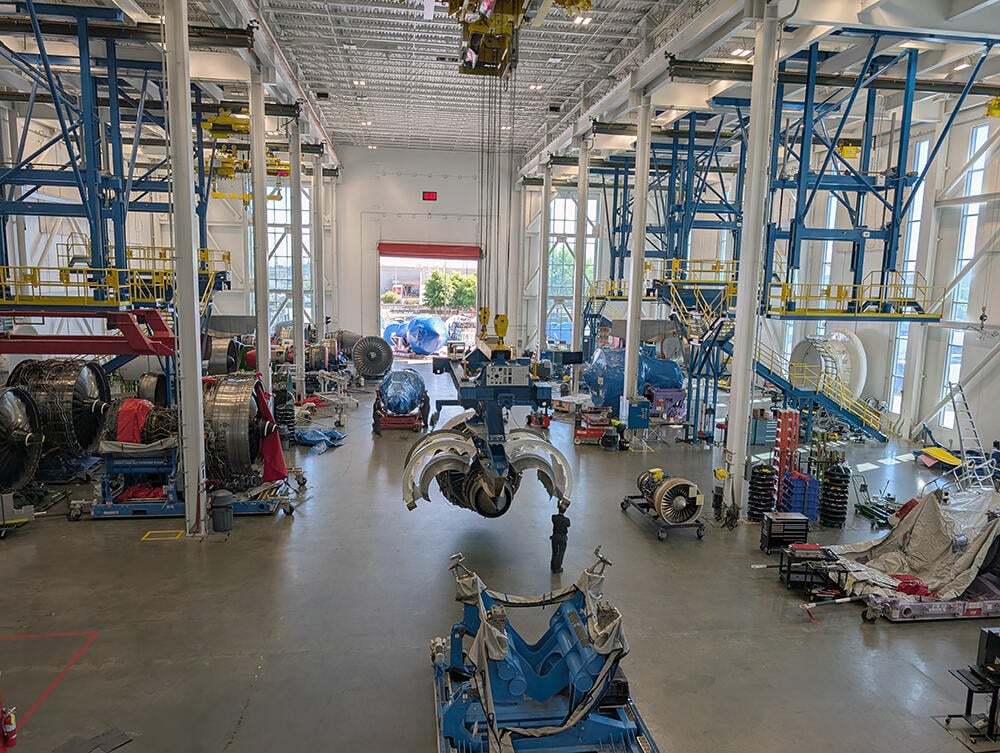
This storage area in the test cell facility houses engines preparing for testing or awaiting return to service. The facility is on track to test around 750 engines this year.
Test Capabilities
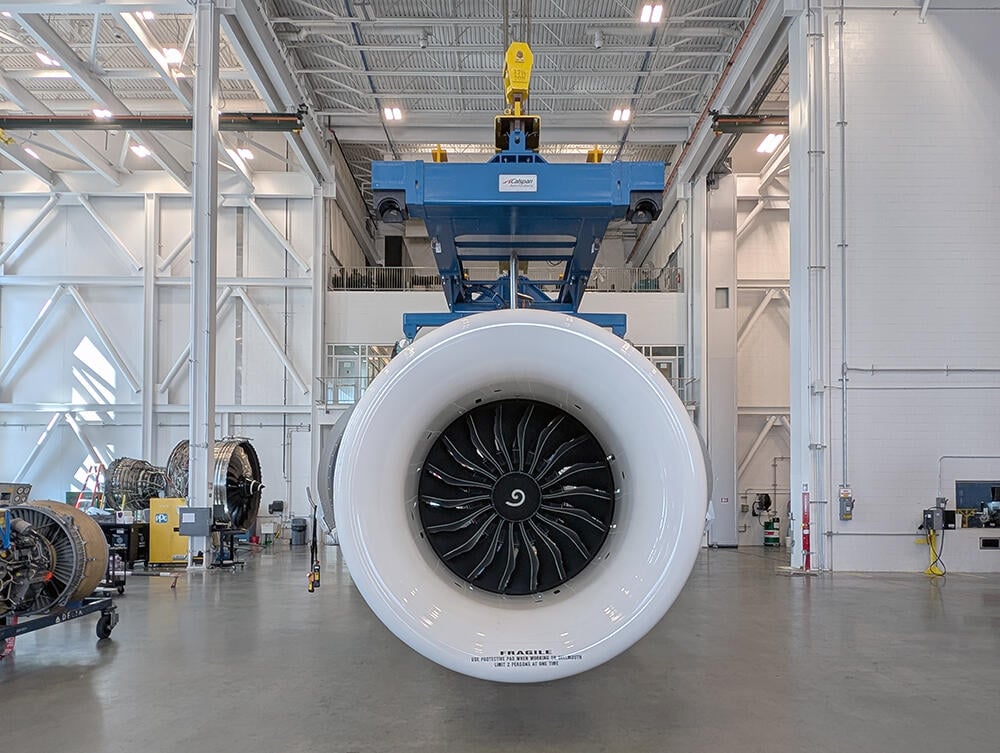
Delta says the volume of Pratt & Whitney geared turbofan engines it needs to test is very high, so it has been shuffling engines between its various test cells in Atlanta to make room. The test cell can also run Rolls-Royce Trent 1000, 7000 and XWB, and CFM International Leap-1B engines, such as the one pictured here. Delta says the facility will soon run Leap-1As as well.
GTF Shop
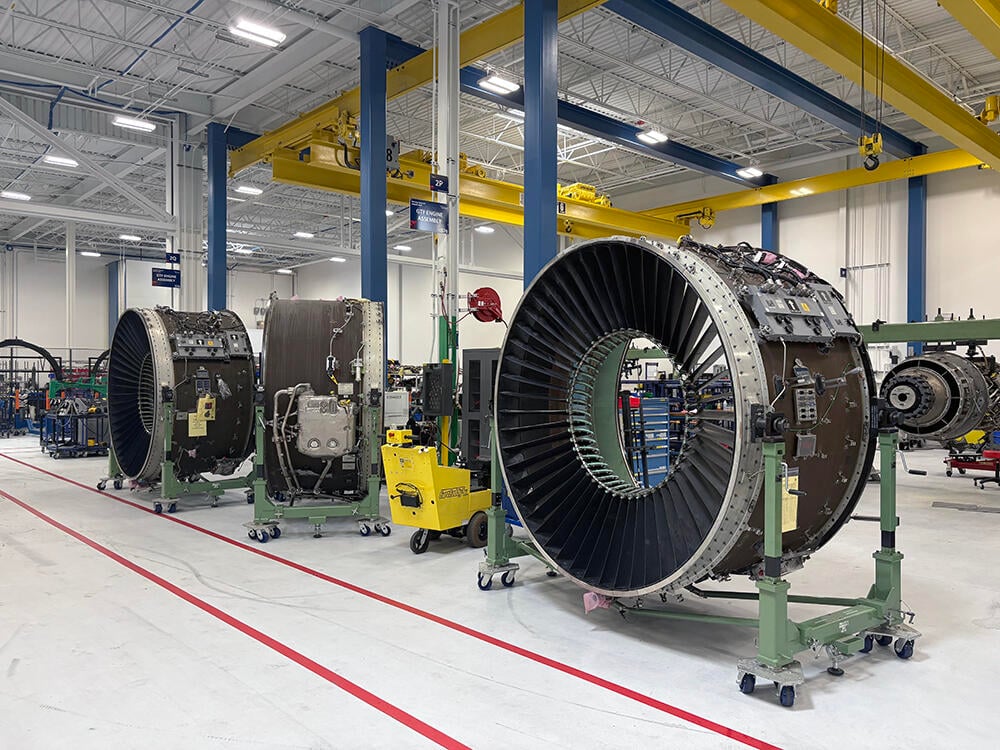
Delta opened a Pratt & Whitney geared turbofan (GTF) engine shop in 2023 inside a former Delta Air Lines cargo facility. For more on how the GTF shop is ramping up capacity, check out this separate photo gallery here.
Trent Shop
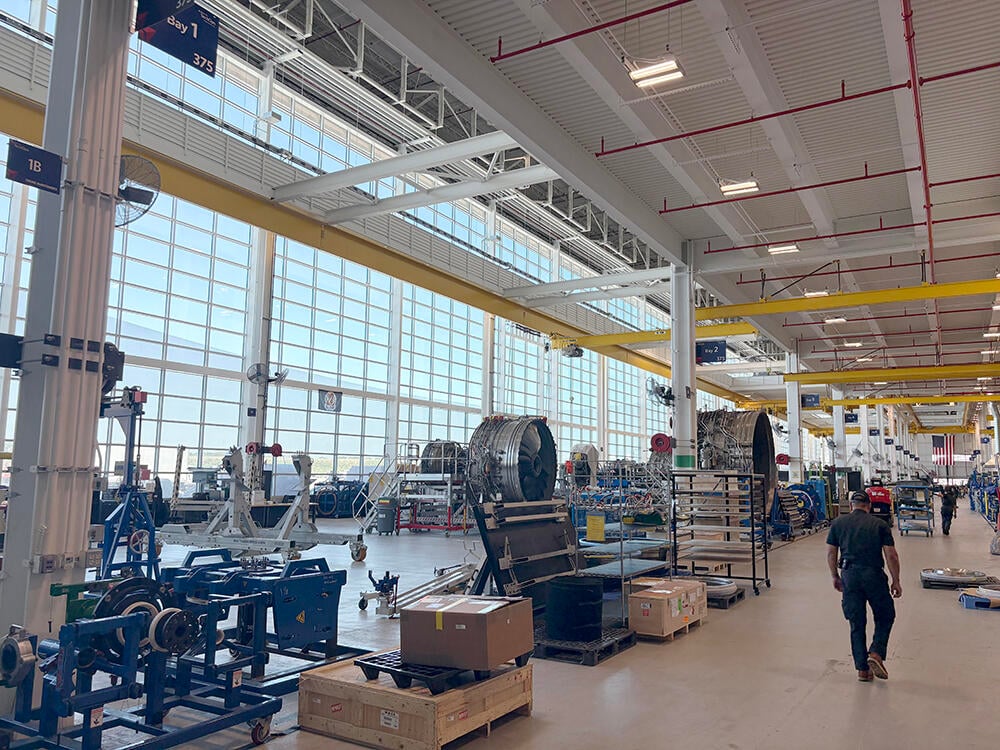
Delta converted a former aircraft maintenance hangar into this Trent engine shop about a decade ago. Because of the large size of Trent engines, the airline has needed to strategically manage space to accommodate parts, tooling, fixtures and stands.
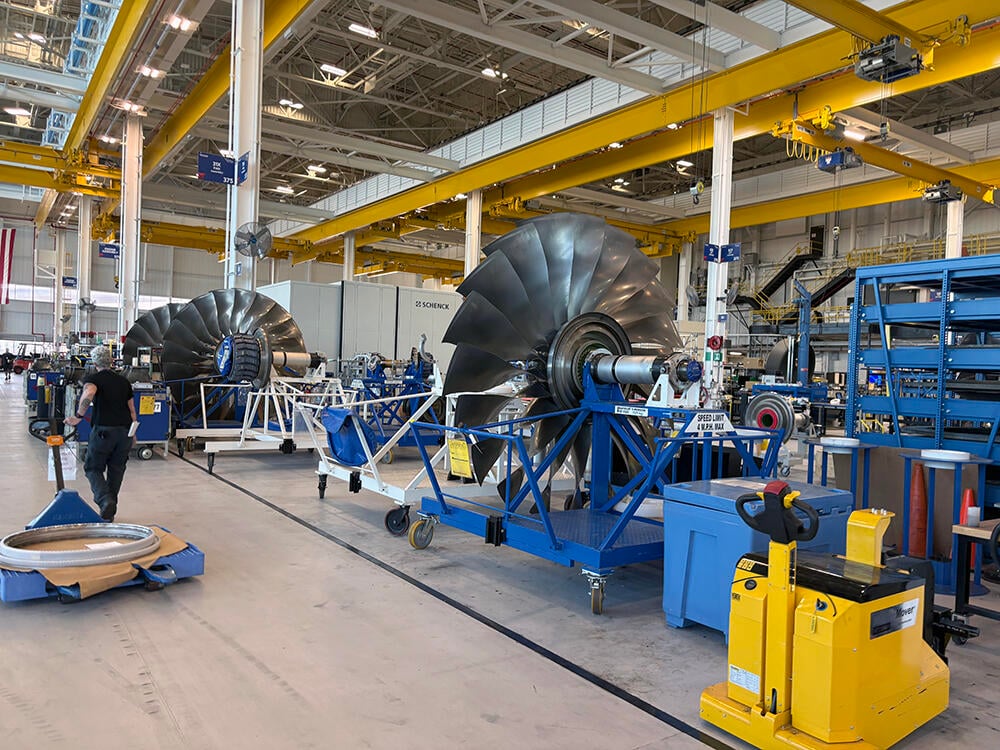
Third-Party Support
The shop supports Trent 1000s, 7000s and XWBs. About 75-80% of the Trent shop’s work is for third-party customers. It is a major Trent 1000 shop for Rolls-Royce, and it has been building up its capabilities for the XWB.
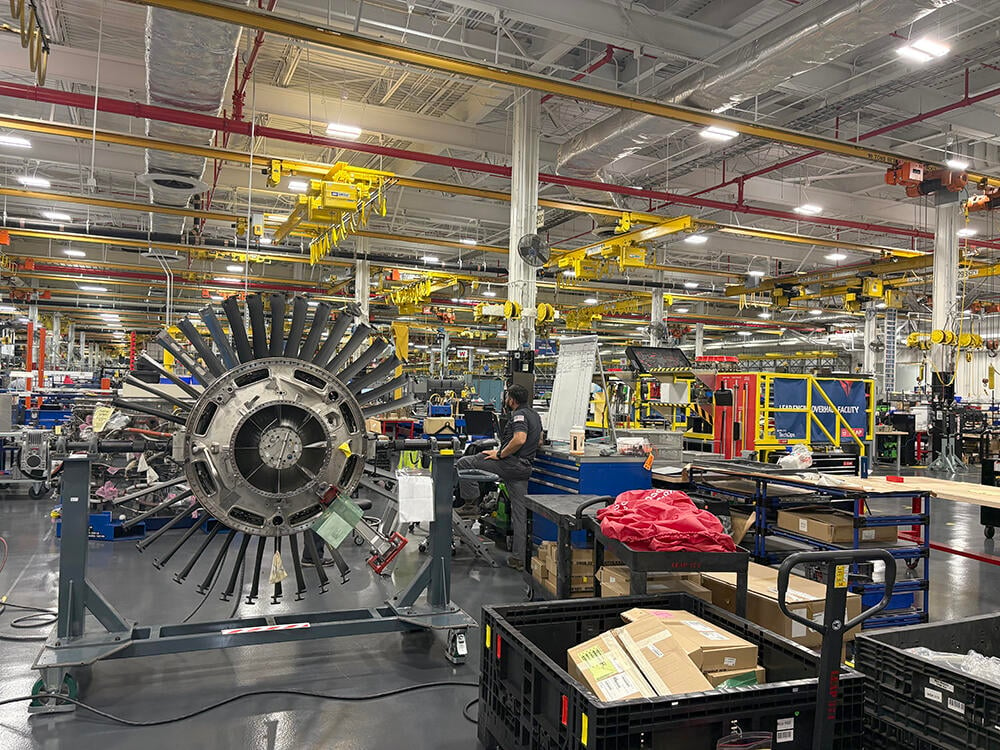
Legacy Engine Shop
Delta TechOps’ legacy engines shop services a range of platforms, although the company says CFM International Leap engines are a large part of its growth strategy. The company has been working to optimize space usage in the shop to accommodate Leap volume growth without sacrificing capacity for other product lines.
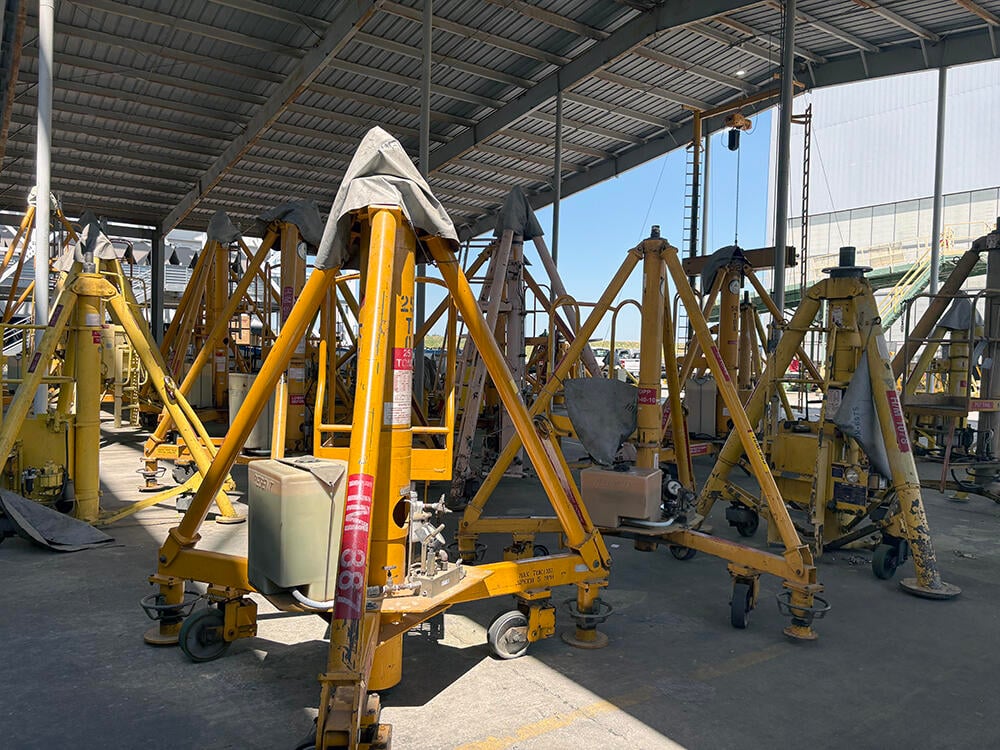
Stand Land
Delta TechOps staff refer to this outdoor storage area for aircraft gear jacks as “stand land.” The gear jacks enable base maintenance staff to lift landing gear wheels off the ground for tire changes and other servicing.
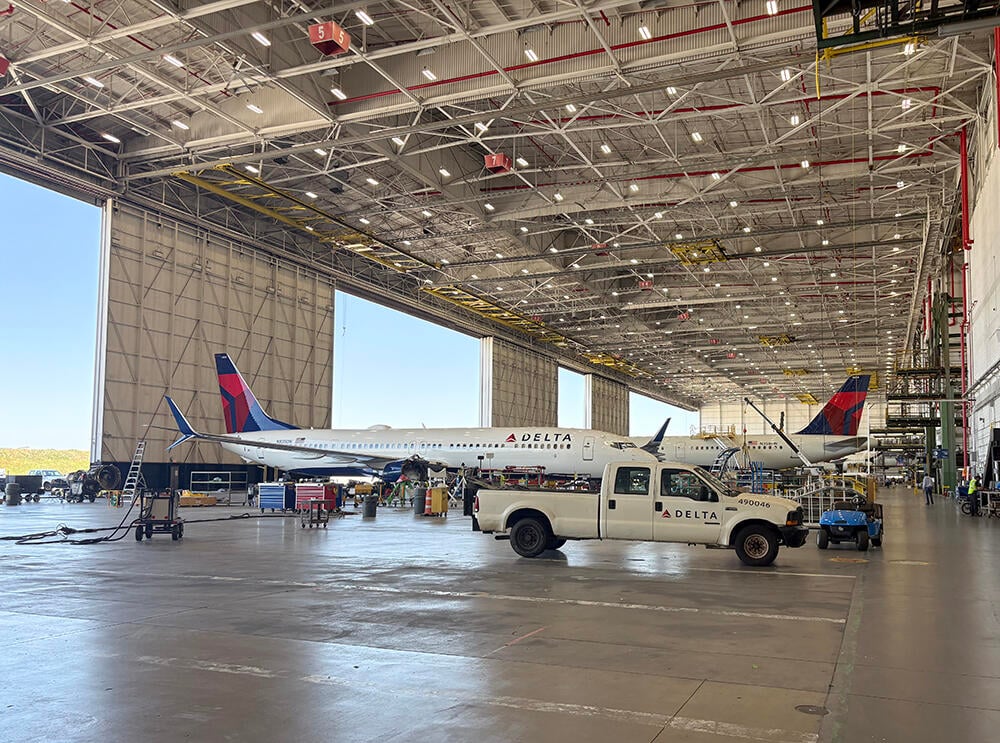
Base Maintenance
Technical Operations Center (TOC) 2 is Delta’s main maintenance hangar in Atlanta. During Aviation Week’s visit, the company was gearing up for summer support. During the summer season, this hangar is usually packed with aircraft undergoing non-routine work such as engine or landing gear changes.
Hail Headaches
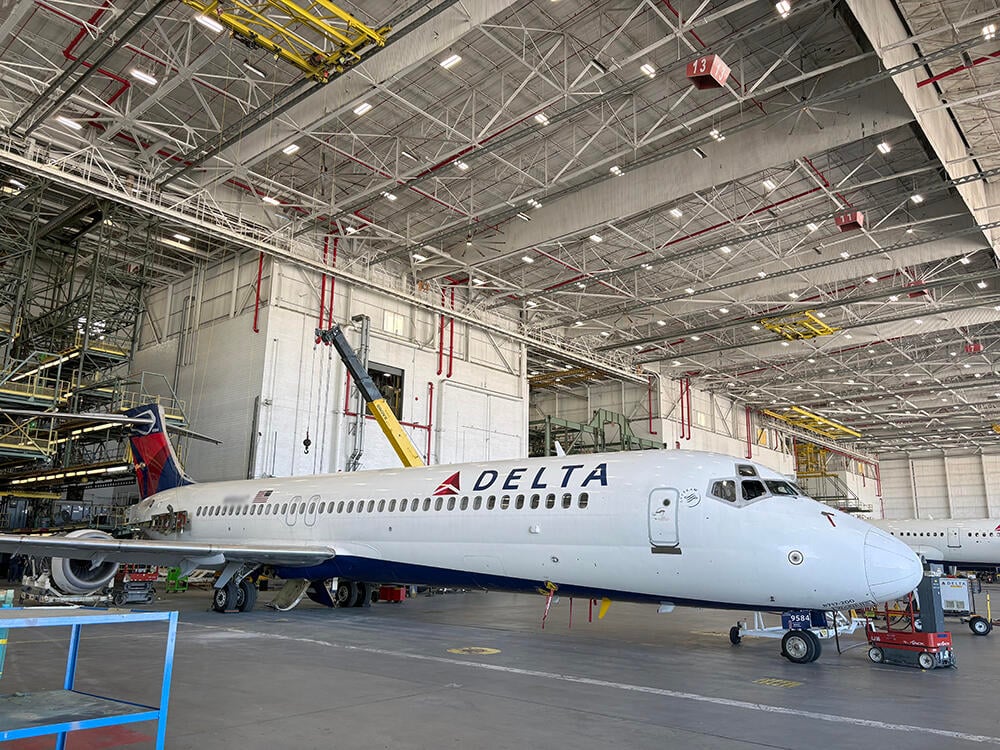
This Boeing 717 was at TOC 2 for inspection and hail-damage repair. TOC 2 can also accommodate much larger aircraft up to the size of an Airbus A350. Beyond its hangar bays, the facility also has many support shops, including parts manufacturing, sheet metal, avionics and paint.
Preparing For Service
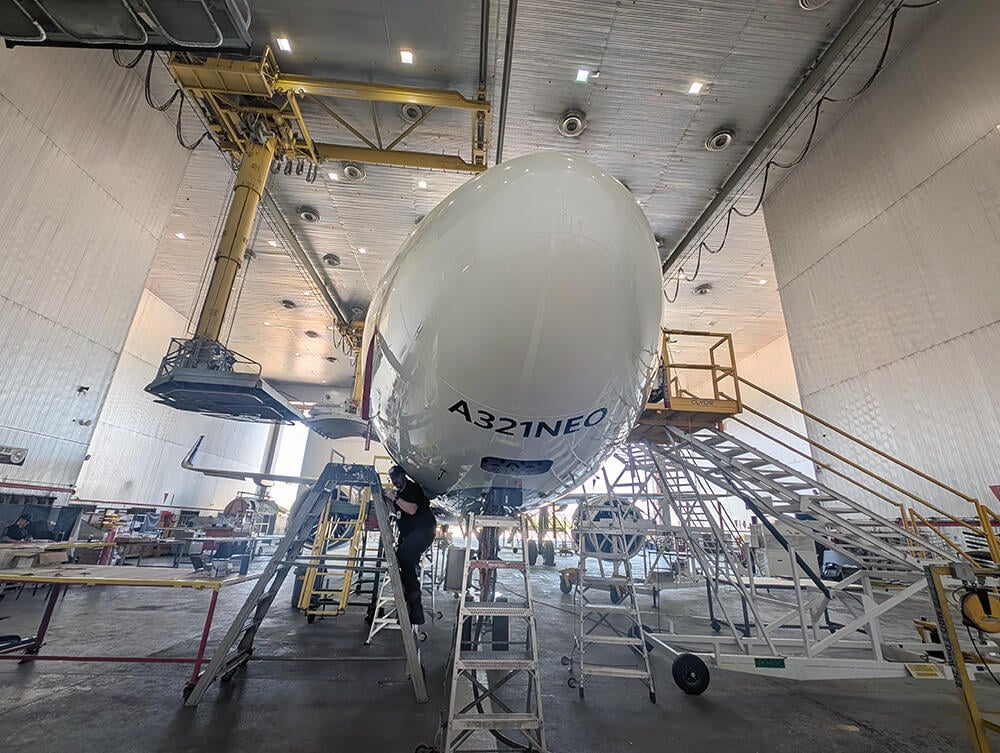
Delta TechOps was preparing this Airbus A321neo for induction into service after performing seat work in the cabin.
Computer Innovation
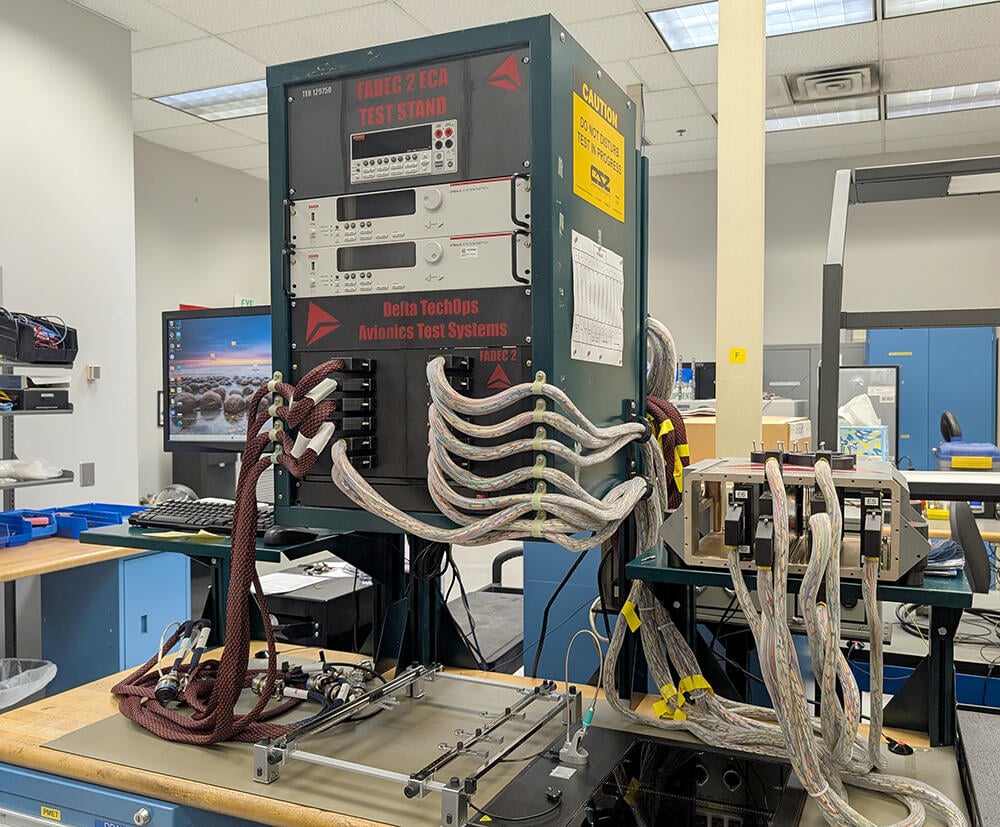
Delta TechOps has three stories of “wall-to-wall” component shops in Atlanta. In this particular shop, component staff work on tasks such as getting older aircraft engine computers to “play together in the same sandbox” with newer equipment. By figuring out how to perform aircraft engine computer overhauls in-house instead of outsourcing that work, Delta TechOps has already saved between $80-90,000 on just three overhauls.
Automating Testing
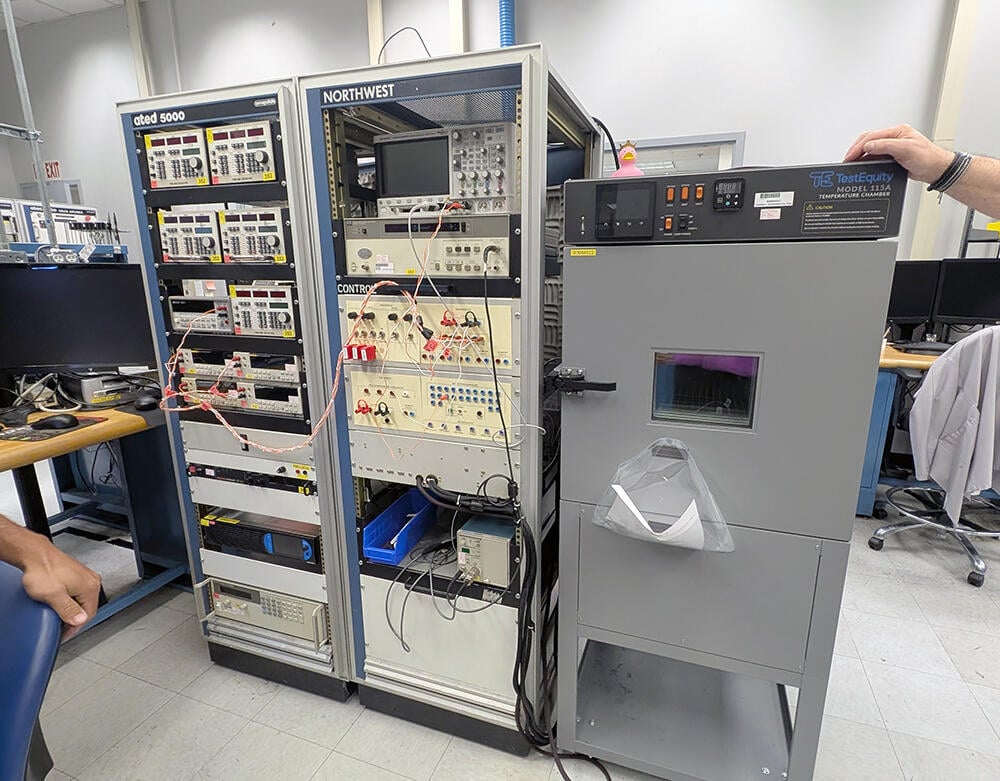
Delta TechOps component shop staff built this equipment to automate continuity testing of overhauled electronic engine control units. Manual testing previously took around 8 hr., but automated testing now takes only around 17 min.
A look inside some of Delta TechOps’ maintenance hangars, engine test cells, and engine and component shops in Atlanta.