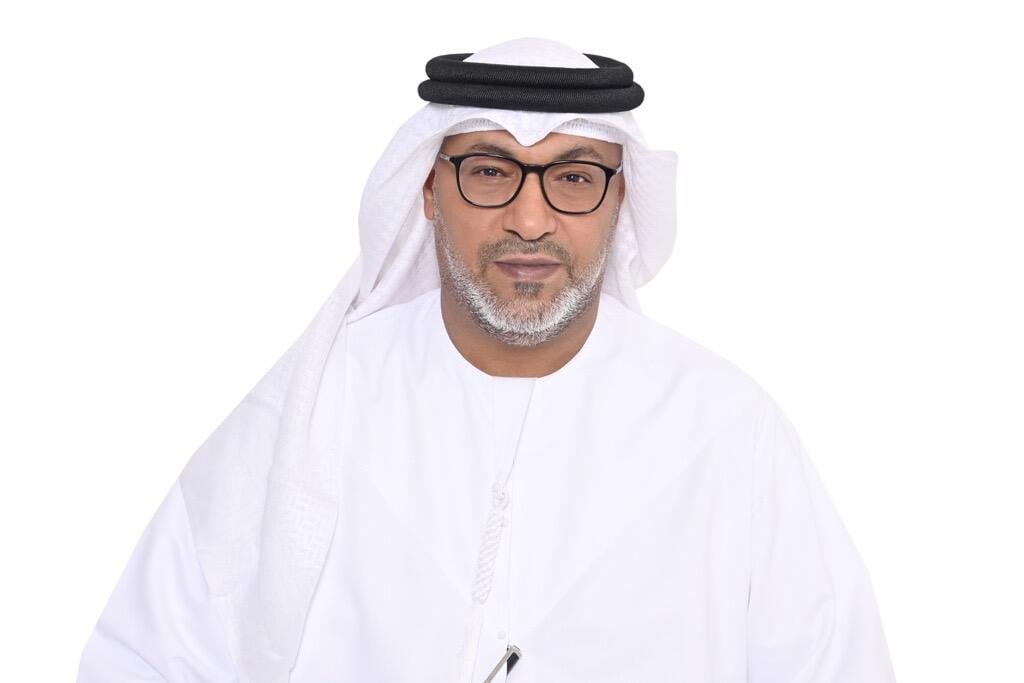
Arif Alameri, managing director at FL Technics UAE
FL Technics Group has significantly bolstered its presence and capabilities in the Middle East with a series a recent strategic developments at its FL Technics UAE subsidiary. These include the expansion of its European Union Aviation Safety Agency Part 145 certification to encompass all three major international airports in the United Arab Emirates, a new line maintenance station at Al Maktoum International Airport, becoming the first independent MRO at Abu Dhabi International Airport’s Terminal A and a strategic partnership with two more domestic airlines. Keith Mwanalushi spoke with FL Technics UAE Managing Director Arif Alameri to learn more about the company’s regional growth and future plans.
What is the ultimate strategic goal behind your aggressive United Arab Emirates (UAE) expansion?
Our goal is to establish FL Technics as the leading third-party line maintenance provider in the UAE, just as we’ve done globally. The UAE is one of the fastest-growing aviation markets, and we see both active and future demand for reliable support. This expansion is about being an integral part of the region’s aviation growth story and ensuring the industry has a capable maintenance partner at every key hub.
What operational efficiencies or commercial advantages does the expanded European Union Aviation Safety Agency (EASA) certification unlock across your three UAE hubs?
With our expanded EASA Part 145 certification now covering DXB [Dubai International Airport], DWC [Al Maktoum International Airport and AUH [Abu Dhabi International Airport], we’re delivering operational flexibility across the entire UAE. We’ve aligned our capability with the aircraft types most commonly operating in the region, and we continue to invest in multi-type ratings for our engineers, as well as tooling, training and logistics—ensuring full readiness across multiple platforms. Operationally, this allows us to deploy highly versatile teams with broad coverage under both EASA and GCAA [UAE General Civil Aviation Authority] approvals. Commercially, it reduces complexity for airlines by offering a full suite of services: Transit, daily and weekly checks and A checks if needed, and a full scope of AOG [aircraft-on-ground] support … all under one roof. And as part of a global group with full line and base maintenance capabilities, we are always ready to scale our solution in line with customer needs.
Were there notable challenges in harmonizing maintenance protocols across DXB, DWC and AUH under EASA standards?
Each airport presents its own set of challenges in terms of infrastructure, facilities and logistics. To meet EASA standards consistently across all three locations, we had to invest in both physical facilities and in ensuring our teams are fully aligned with regulatory expectations. We focused on standardizing our operations so that, regardless of whether our team is based in DXB, DWC or AUH, they operate with the same standards, documentation practices and compliance mindset. This involved dedicated internal training programs, process alignment and continuous quality and safety monitoring. The result is a high-performing operation that positions us to scale quickly and confidently as demand grows.
What is your strategy for recruiting and retaining the skilled, EASA-certified engineers required to staff your rapid expansion in the UAE?
From day one, we’ve invested in our team’s growth. Since launching operations in 2022, we’ve been preparing for this expansion by upskilling our engineers, adding new type ratings and aligning their capabilities with EASA standards. Developing talent from within remains a core strategy and we believe in building long-term expertise and loyalty. At the same time, as our footprint grows, we actively recruit externally when required. By balancing internal development with strategic hiring, we ensure we’re always ready to meet the demands of our customers while maintaining high technical standards across all locations.
Are there plans to further expand EASA-certified services to other airports or regions beyond the UAE?
Within the UAE, our goal is to eventually cover all major airports, and that expansion is already in motion. We will soon launch mobile AOG support under both our EASA and GCAA approvals, allowing us to respond rapidly to unscheduled events at any location across the UAE.
On a group level, FL Technics operates at over 100 stations worldwide, and that network continues to grow in response to customer demand. Looking ahead, the [Gulf Cooperation Council] and broader Middle East are key focus areas for our regional growth. With both EASA and GCAA approvals in place, we’re well positioned to offer flexible, cross-border support. In fact, we’re actively exploring opportunities to support UAE national carriers at their outstations across the [Gulf Cooperation Council states] and wider Middle East, extending our reach where their fleets need it most.

Related Content