This article is published in Aviation Week MRO part of Aviation Week Intelligence Network (AWIN), and is complimentary through Mar 06, 2026. For information on becoming an AWIN Member to access more content like this, click here.
Asset manager Airborne Capital is stepping up its commitment to end-of-lease services by partnering with an aviation-focused artificial intelligence (AI) platform for technical records review.
Ensuring that aircraft have all the correct technical documentation is among the most onerous aspects of lease transitions, but it is a task that may be ripe for AI assistance.
Soji AI claims that its software can understand unstructured technical records and instantly read, structure, review, and contextualize this information for the user.
“In a sector characterized by complex, manually intensive, and tightly regulated processes, we have identified the ability for AI to drive impactful efficiencies across traditional workflows, delivering substantial resource and cost savings,” Soji CEO Florian Falk says.
Airborne Capital has said it will invest “both intellectual and financial capital” in Soji.
This follows its previous announcement of a partnership with MRO Japan to improve end-of-lease services for clients.
The two companies aim to jointly offer advisory services including records review, supply chain management, and project planning for end-of-lease transitions.
Airborne Capital, which markets itself as a bridge between investors, lessors and airlines, will contribute project management and technical capabilities to that venture, while MRO Japan will focus on providing MRO expertise and regional market access.
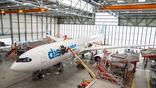
Okinawa-based MRO Japan provides heavy, line and component maintenance services from its hangar at Naha airport, which can fit one widebody or three narrowbody aircraft. It is capable of performing C checks on the Boeing 737, 767, 777 and 787, on the Airbus A320 and on the De Havilland Canada Dash 8-400.
Dublin-based Airborne has also announced that it will partner with Mercuria Investment to launch a new open-ended aircraft leasing fund with a target size of at least ¥150 billion ($700 million).
The MACH OE fund aims to offer investors stable returns through generating cashflows by investing in popular aircraft types on lease to a select group of high-quality airlines.