This article is published in Aviation Week & Space Technology and is free to read until Apr 10, 2026. If you want to read more articles from this publication, please click the link to subscribe.

Snapshot: New Engine Developments By Region

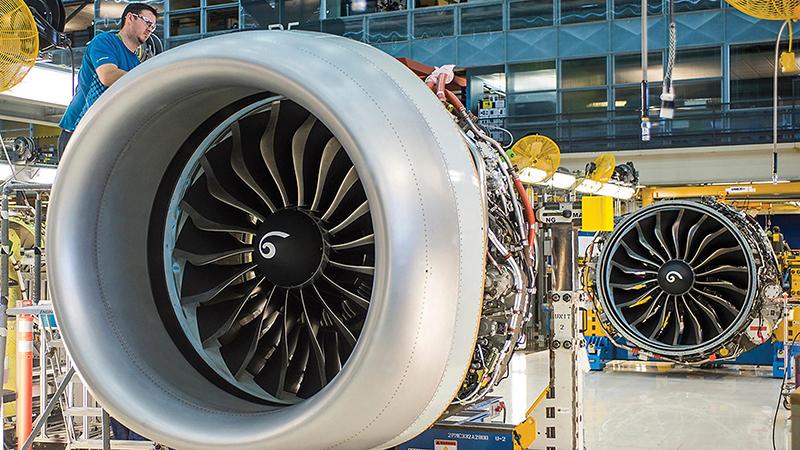
Person working on CFM International Leap

Expect CFM International to deliver more than 1,100 Leap-1B engines in 2026, according to Aviation Week data.

Credit: Safran

Engine news frequently makes headlines these days. Powerplant-makers face steep ramp-ups and sort through on-wing reliability issues, and airlines continue to fly older aircraft due to traffic demand. Here is a look at how maintenance providers in the four largest engine MRO regions approach fleet dynamics, capacity and capability additions.

NORTH AMERICA

Carriers in North America continue to operate at high utilization levels, particularly with narrowbody fleets. Early removals of CFM International Leap-1A and -1B engines and some Pratt & Whitney geared turbofan (GTF) variants due to durability issues over the past few years have affected several North American operators, contributing to an increasingly front-loaded shop visit profile.

In recent years, Pratt & Whitney has invested heavily in its engine MRO network. In the U.S., the manufacturer has expanded shop capacity by 40% in West Palm Beach, Florida. GTF network member Delta TechOps intends to increase overhaul output for the PW1500, which powers Airbus A220 aircraft, by more than 450 engines annually over the next 10 years. The Atlanta-based company also repairs the PW1100 variant.

Legacy engines, the CFM International CFM56 and IAE V2500, continue to generate strong aftermarket demand with higher-than-expected shop visits projected through to 2028, but the focus has shifted somewhat.

“In North America, we continue to see a clear industry shift as airlines and MROs increase their focus on the GTF and Leap engine platforms,” CTS Engines CEO Bill Kircher says. “As resources and capacity migrate toward these newer-generation engines, support for legacy fleets is becoming more limited.”

Kircher sees opportunities for independent MROs like CTS to step in and provide services for operators that still depend on legacy engine programs such as the GE Aviation CF6. “In addition, we are seeing a newer trend, and that is test cell availability,” he says. “Over the past six months, we are seeing more requests for legacy engine test slots, and we predict this trend will continue for the foreseeable future.”

With engine shops facing longer induction times, stretched labor pools and uneven access to materials, some airlines in the region have diversified their aftermarket strategies. This includes blending OEM agreements with independent shop capacity where possible to manage turn times while taking a more long-term approach to shop visit planning. Narrowbody service entry issues on new-technology engines have pushed operators toward long-term lease extensions beyond 2-3 years, resulting in heavier workscopes on these engines.

Some carriers are revising engine life-cycle strategies on a model-by-model basis. Air Canada is phasing out its CFM56-5A engines but extending the life of CFM56-5Bs by adopting strategies to increase time on wing. “We will be harvesting good engines from exiting aircraft, and those good engines will then serve for the wind-down to be active as spare engines,” Philip Lee, general manager of engine maintenance at the airline, said about the CFM56-5A at Aviation Week’s MRO Europe in October.

While many engine MRO providers cite labor shortages and access to materials as the primary challenges facing the market today, North American shops are addressing capacity issues to support new programs. StandardAero is working to accelerate its capacity for the Leap-1A and -1B variants by 2029 at its facility in San Antonio as demand in North America—reflecting a wider trend globally—increases for quick-turn and performance-restoration shop visits. The U.S. MRO, one of the inaugural members of CFM’s Premier MRO network, has also started leasing Leap engines on short-term arrangements for operators undergoing shop visits to address short-term supply issues.

Meanwhile, MTU Maintenance Fort Worth, formerly MTU Maintenance Dallas before rebranding last year, is transitioning to become a full overhaul site. The provider has joined the aftermarket network for Leap engines and the GE Aerospace GEnx, one of two engine options for the Boeing 787 program.

EUROPE

MROs will continue to try to grow in-region capacity this year for both narrowbody and widebody engine types in Europe while also targeting capability and repair development in areas such as engine components.

Airlines, particularly network carriers, are pursuing fleet simplification as part of efforts to reduce exposure to legacy widebody engines, concentrate demand on high-volume narrowbody platforms and streamline maintenance and inventory.

MROs are also pushing for breakthroughs in repair development. Lufthansa Technik hopes to develop more repairs on new-technology engine types as they age. With an eye on capability enhancements, the company is scheduled to open a facility for aircraft and engine parts repairs near Porto, Portugal, in 2027, that is expected to employ more than 700 people and open up the possibility of aiding heavier repairs to ease capacity its main engine center in Hamburg, Germany.

As MTU Maintenance looks to expand capacity across its network, it plans to expand repair and test capabilities in Europe and globally for new engine programs such as the Leap. Meanwhile, TAP Maintenance & Engineering, the maintenance division of TAP Air Portugal, is working toward Leap-1A approval, having gained certification for piece-part repairs, full overhaul and testing on the engine as well as upgraded its test cell facility in Lisbon.

Ryanair, seeking greater control over the maintenance of its narrowbody fleet, intends to bring online two engine shops over the next 5-10 years. The Irish low-cost carrier is still assessing potential locations in Europe and North Africa.

In the widebody engine segment, Rolls-Royce has expanded at its home base in Derby, England, while resuming commercial services in Dahlewitz, Germany. The powerplant-maker is also working with Turkish Technic to construct a Trent XWB and 7000 MRO shop in Istanbul that is set for a 2027 opening.

European MROs face structural cost disadvantages compared with other regions, which has prompted efficiency drives and continued investment in areas such as digital inspection, predictive maintenance and modular repair strategies. Taking into account geopolitical factors and an emphasis on greater supply chain resilience, smaller, more localized MRO engine ventures could emerge on the continent.

ASIA-PACIFIC

This region is expected to generate the strongest engine aftermarket growth through 2026, underpinned by expanding fleets and sustained demand for both domestic and long-haul travel. Aviation Week predicts narrowbody work will account for around 47% of maintenance this year, with nearly 45% related to widebody demand.

Decreases in workforce during the COVID-19 pandemic mean the supply chain is still recovering, leaving an insufficient engine MRO footprint. In spite of this, engine aftermarket investment is continuing across the region. Korean Air, one of the Asia-Pacific region’s largest airline aftermarket service providers, is building a large engine MRO cluster near Incheon Airport, set for completion by 2027. The facility is expected to triple Korean Air’s annual MRO engine capacity to 360 engines from 100.

The opening of Rolls-Royce’s first engine MRO shop in China at the end of 2025 is expected to be a step change for the region’s widebody MRO. There, Beijing Aero Engine Services Ltd. will repair Trent XWB-84 and XWB-97 variants for Airbus A350s and Trent 7000 engines for A330neos. Once at full capacity by the mid-2030s, the shop is expected to be able to handle up to 250 engine shop visits annually. This brings further capacity to China, a country with a commercial fleet surpassing 4,000 aircraft.

MTU Maintenance Zhuhai, a joint venture between MTU Aero Engines and China Southern Airlines, opened its second shop in Jinwan last year, focusing on PW1100G engines and planned to have capacity for up to 260 engine shop visits annually. In the wider region, Singapore Aero Engine Services is expanding capacity at its Rolls-Royce shop by around 40%; Rolls is also investing heavily in equipment and tooling at its Hong Kong Aero Engine Services joint venture with HAECO. ST Engineering, meanwhile, has targeted narrowbody capability growth by investing in expanded CFM56 and Leap-1A and -1B services.

MIDDLE EAST

The Middle East continues to see strong fleet growth, with rising MRO demand for support on the CFM56 and Leap family as well as on GEnx widebody engines. Operators are increasingly focused on turnaround time, cost certainty and proximity, driving demand for capacity in the region. Demand is strong for widebody engine shop visits, on-wing support and mobile repair services.

The need for further engine capacity and support infrastructure, such as component repair shops, has led to investment drives at existing MRO shops, including Sanad Group. The MRO provider is ramping up capacity and capability in Abu Dhabi, and is expected to bring a new GTF engine repair shop online by the third quarter of 2028. Once operational, the facility is projected to be able to handle as many as 350 engine shop visits annually.

Following a trend among well-resourced airlines, Emirates plans to bring more engine capabilities in-house for the Trent 900 that powers its fleet of A380 aircraft, of which it is the world’s largest operator. The airline signed a memorandum of understanding in November with Rolls-Royce to service its in-fleet Trent 900s at a soon-to-be-built designated engine shop in Dubai starting in 2027.

Although much of the Middle East’s engine aftermarket is dominated by OEM-affiliated shops, new players in the region are setting up commercial engine shops, predominantly for narrowbody models. Among those is Dubai-based IER MRO Industries, the maintenance business of industrial gas turbine specialist International Energy Resources. The company is moving into commercial MRO with a planned Leap engine facility at Dubai South in 2027.

Managing Director Ahmed Nematollahi says IER MRO Industries is positioning the facility to help address this gap with new-build infrastructure, integrated test capability and long-term capacity. “Despite existing providers, the scale and growth of the regional fleet mean that engine aftermarket demand continues to outpace available full-overhaul and test cell capacity, particularly for modern narrowbody engines and GEnx,” he says.

Another new player, DTX Group—which was divested from Drayton Aerospace last year-—plans to set up a CFM56 quick-turn MRO shop in Sharjah in the United Arab Emirates by year-end.

Saudi Arabia is also likely to build a growing influence in the engine aftermarket as part of the country’s wider long-term investment plans to expand its aerospace industry. Saudia Technic, the state-backed MRO, has engine capabilities limited to some CFM56 variants. However, the company is expected to expand its engine types in the coming years through its MRO Village in Jeddah, including the opening of a test cell in the next 1-2 years, which is planned eventually to service both narrowbody and widebody engine types. Saudia Technic also has a potential joint venture with AFI KLM E&M for GEnx engine repairs, having signed a memorandum of understanding just over one year ago.

James Pozzi

As Aviation Week's MRO Editor EMEA, James Pozzi covers the latest industry news from the European region and beyond. He also writes in-depth features on the commercial aftermarket for Inside MRO.