This article is published in Aviation Week & Space Technology and is free to read until Dec 04, 2026. If you want to read more articles from this publication, please click the link to subscribe.
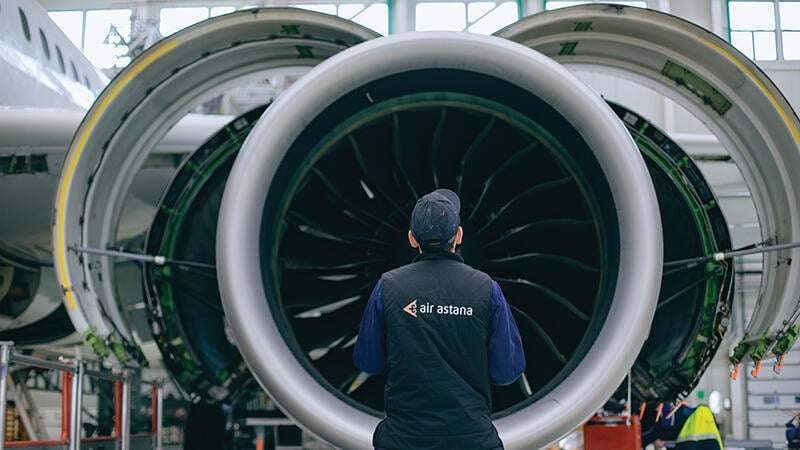
Air Astana rests its engines during low-season periods to preserve remaining life, but this requires more engine swaps and aircraft storage.
When engine maintenance backlogs began to stretch across the MRO industry, the assumption was that airlines located farther from major MRO hubs or with less developed aftermarket infrastructure would bear the brunt of the disruption. But industry analysts now see a different pattern emerging.
Engine MRO pressures are no longer breaking along geographic lines. Instead, airlines’ exposure hinges on scale, fleet composition, purchasing power, spare engine coverage and access to in-house or regional capability. The shift is pushing operators away from routine maintenance planning and toward strategic management of engine assets, material pipelines and fleet availability.
Alton Aviation Consultancy says it is not seeing meaningful differences region by region. Instead, the impact increasingly depends on the type and scale of the customer, with larger airlines and operators with in-house engine MRO capability better positioned to secure scarce resources, says Managing Director Jonathan Berger. He suggests that what initially appears to be a geographical divide may actually be an aftermarket hierarchy.
Mansoor Janahi, managing director and group CEO of Sanad in Abu Dhabi, sees a similar pattern across the company’s international customer base. While airlines face the same underlying constraints, their ability to respond varies based on several factors. “Two airlines operating the same engine platform can have very different requirements, depending on fleet size, spare engine coverage, material availability, maintenance planning and the operational flexibility within their networks,” he says.
Airlines are developing different ways to protect fleet availability. But the dividing line is proving less about where an airline operates than its ability to secure engines, material, maintenance capacity and alternatives when the normal maintenance cycle breaks down.
MATERIAL SQUEEZE
The shortage of engine parts is emerging as a critical constraint behind the wider MRO capacity problem. Alton says the root cause is a “dearth of spare engine parts” needed simultaneously to support new aircraft production, engine MRO shops and spare engine production. This creates competing demands for the same material, with the effects cascading through the aftermarket.
Airlines increasingly feel it in longer shop visits and tighter fleet planning. According to Kenya Airways, shop turnaround times have increased due to constraints in the supply of piece parts, as well as post-COVID-19 skilled labor shortages and other dependent factors. At the same time, engine shop slots have become more constrained as turnaround times lengthen and demand for visits rises.
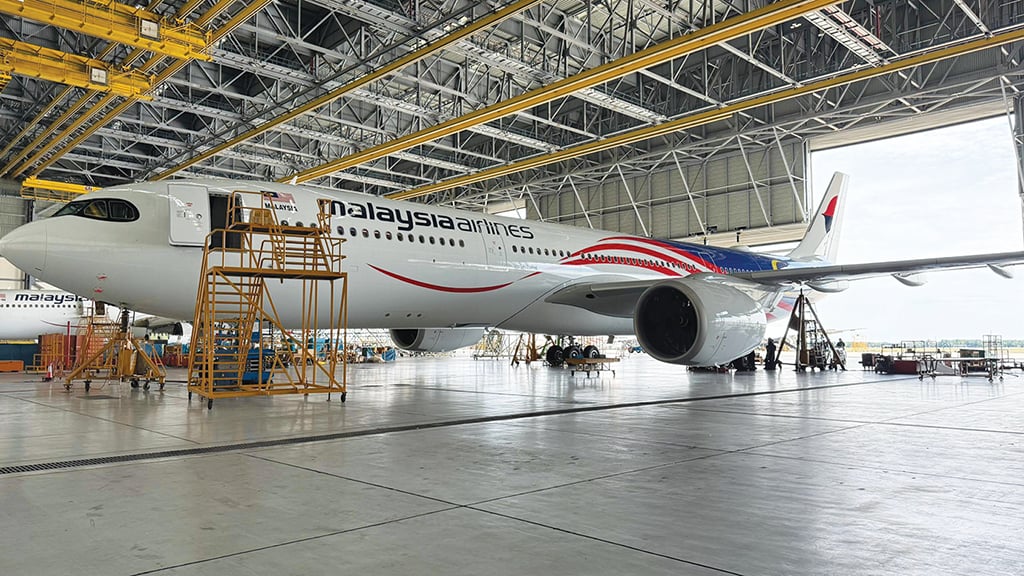
Malaysia Airlines sees the issue extending beyond the availability of shop slots. “The larger challenge today is the overall availability of engine assets and repairable material throughout the supply chain,” says Captain Nasaruddin A. Bakar, president and group CEO of the Malaysia Aviation Group. The airline also is seeing extended lead times for critical engine piece parts and repairable components, which directly affect turnaround times and fleet recovery.
This creates a vicious cycle: A lack of spare parts extends repairs, longer repairs restrict engine availability and airlines have less room to absorb the resulting disruption. Operators distinguish themselves by their flexibility in finding alternatives.
AIRLINES ADAPT
The response from airlines increasingly focuses on creating flexibility around constrained engine assets rather than simply accepting longer maintenance cycles. Kenya Airways had to adjust its engine removal plans around the availability of shop slots, while delaying returning aircraft to service as it waits for engines to come back from maintenance.
The carrier also has sought to extract more life from engines already in its fleet. “We have had to rethink several things due to these pressures,” says Gilbert Bett, technical director at Kenya Airways, pointing to efforts to extend time on wing through continuous monitoring and inspections. The airline has turned to engine leasing to support operations while its own engines await shop visits.
Air Astana has adopted a different approach. When the shortage of engines first became apparent, the airline started resting engines during low-season periods to preserve their remaining life and to maximize engine and aircraft availability during peak demand. The strategy has worked but requires more engine swaps between airframes and increased aircraft storage, the airline states.
Malaysia Airlines is taking the planning process further, bringing engineering, asset management, network planning and operations closer together. “The objective is no longer simply to induct an engine into the shop at the right time, but to ensure that sufficient assets, spare engines and recovery options are available throughout the entire maintenance cycle,” Bakar says.
As Sanad’s Janahi observes, airlines are engaging earlier, looking further ahead and considering a wider range of solutions, with engine maintenance increasingly integrated with material sourcing, spare engine availability and fleet planning.
SCALE ADVANTAGE
Response capabilities are unevenly distributed. As Alton’s Berger contends, the strongest source of resilience is not geography, but scale and control over maintenance resources.
That purchasing power can influence where an airline sits within a constrained supply chain. Airbus and Boeing are first in line for new engines needed to support aircraft deliveries, followed by very large airlines and those with airline-affiliated engine MRO capability, leaving smaller carriers less able to compete for scarce resources, Berger says.
For operators without that scale, the response has increasingly centered on flexibility and closer supplier relationships. Malaysia Airlines has strengthened collaboration with OEMs, MRO providers and component repair vendors, with greater emphasis on demand forecasting and identifying constraints early. It also has explored alternative repair sources, asset-sharing opportunities and stronger spare-engine planning.
“As a Southeast Asian operator, we may not possess the scale advantages enjoyed by some of the larger global airline groups,” Bakar says. “Therefore, relationship management, agility and speed of decision-making become particularly important.”
GEOGRAPHY MATTERS
Air Astana, which operates from a market outside the major established engine MRO centers, says it has not experienced a specific disadvantage because of its location. “The challenges we face in accessing engine MRO capacity and support are broadly consistent with those affecting operators elsewhere in the global market,” says Keith Wardle, the airline’s vice president of engineering and maintenance.
Kenya Airways presents a different picture. The airline sees growing demand for maintenance services closer to home and is pursuing a 2040 MRO strategy covering aircraft, components, engines and services, with a focus on Africa and beyond. The aim, according to Bett, is to create more “bespoke, flexible and sustainable solutions” and increase self-sufficiency within Africa.
Meanwhile, Sanad’s international customer base provides a broader perspective. Janahi says airlines’ requirements vary according to their fleet structure, access to spare engines and material, MRO capacity and network flexibility, rather than simply their region. At the same time, he says geography will continue to matter as airlines seek greater proximity and diversification within their maintenance networks.
He points to a more complicated geography of engine support. Location can influence proximity to maintenance capability and the options available to an airline, but it does not determine resilience. The strength of the surrounding aftermarket ecosystem and an operator’s ability to access it may ultimately be more important.
BEYOND CAPACITY
The immediate pressure on the engine aftermarket may ease in time, but airline perspectives suggest that some of the changes to maintenance planning will endure. Earlier forecasting, stronger contingency planning and closer coordination between engineering, MRO providers and suppliers are becoming part of the response to a market in which certainty remains difficult to secure.
Alton expects the engine material supply chain challenges to improve as the global market returns toward equilibrium over the next 24-36 months. But Sanad cautions that adding physical shop capacity alone will not resolve the industry’s constraints. Effective capacity also requires OEM-approved capabilities, skilled technical talent, advanced repair and testing capabilities, mature supply chains, material availability and access to engine assets. “All of these capabilities take time to develop and scale,” Janahi says. For airlines, that points to a longer-term shift in how engine support is managed. Geography will continue to influence where maintenance capacity is available, but scale, asset access, supplier relationships and operational flexibility can determine how effectively an airline responds when that capacity is constrained.
“The industry’s challenges are unlikely to be resolved overnight,” Bakar says. “Ultimately, resilience in today’s environment depends on collaboration, transparency and proactive planning.”

Related Content