This article is published in Aviation Week & Space Technology and is free to read until Dec 19, 2026. If you want to read more articles from this publication, please click the link to subscribe.
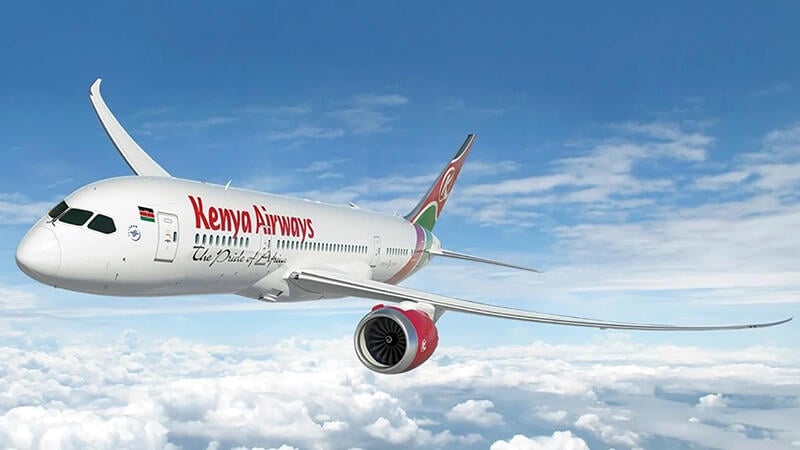
Kenya Airways completed its first Boeing 787 D check this summer.
Kenya Airways is bringing increasingly complex maintenance work in-house. Technical Director Gilbert Bett talks with Keith Mwanalushi about capability milestones and how the airline plans to build on these achievements.
Kenya Airways has completed its first in-house Boeing 787 D check. What did it take to build this complex capability?
The first Boeing 787 D check was the culmination of a deliberate capability-building program rather than a single project. It required investment across people, tooling, facilities, processes, engineering capability, materials and regulatory approvals.

We had to develop the competence of our technical teams, establish the appropriate maintenance processes and documentation, strengthen our planning and production-control systems and ensure the required tooling and equipment were available locally. Equally important was the regulatory dimension; we had to demonstrate to the relevant authorities that the capability, procedures and competencies met the required standards.
The program was also an important organizational learning exercise. We progressively built confidence through the successful execution of increasingly complex maintenance tasks, culminating in the D check. It demonstrates that Nairobi can support sophisticated widebody maintenance at a level consistent with international MRO standards.
What have you learned from the program, and how does this change the way you approach future 787 heavy maintenance?
The biggest lesson is that capability is more than having skilled technicians. A successful heavy maintenance program requires the entire ecosystem to work together: planning, engineering, materials, tooling, production, quality, safety, records and supply chain.
The D check has given us a much deeper understanding of the true resource requirements, task sequencing, turnaround drivers and material dependencies associated with the 787. We have also identified opportunities to improve planning accuracy, work-pack preparation, material forecasting and productivity.
Going forward, we will use this experience to create a more repeatable and scalable 787 heavy maintenance model rather than treating each check as a stand-alone event. The objective is to progressively improve turnaround time, predictability and cost while increasing the proportion of work that can be performed locally.
Kenya Airways also has completed its first in-house Boeing 787 landing gear replacement. What new capability does this add to the engineering operation?
Landing gear replacement is a significant capability because of the level of planning, specialized tooling, engineering oversight and precision required. We now have practical experience across the complete process, from planning and tooling to removal, installation, inspection, testing and return to service.
Strategically, this expands the scope of work we can perform locally and reduces our dependence on external MRO providers for certain high-value maintenance activities. More importantly, it builds a platform from which we can develop additional components and structural capabilities around the 787 and other aircraft types.
The landing gear project took years of preparation. What were the biggest challenges in developing the people, tooling, materials and processes needed to perform the work in-house?
The challenge was essentially building the whole capability simultaneously.
On the people side, we needed to ensure that engineers and technicians had the appropriate type knowledge, practical experience and task-specific competencies. On tooling, we had to ensure that specialized equipment was available, calibrated and serviceable when required.
Materials and supply chain were equally important. Aircraft maintenance is highly sensitive to material availability, and a missing part can stop an otherwise fully prepared maintenance activity.
Finally, we had to integrate all these elements into robust procedures and production processes. The key lesson is that major capability development must be approached as an end-to-end program with clear readiness gates rather than focusing only on the technical task itself.
Are these new capabilities changing the balance between in-house versus outsourced maintenance?
Yes, but we are approaching this based on strategic capability and economics rather than simply trying to insource everything.
Our objective is to retain and develop capabilities that are strategically important, provide operational resilience, build internal competence or have a viable commercial opportunity. At the same time, specialized work requiring significant external infrastructure, unique equipment or economies of scale may continue to be outsourced.
We therefore look at the total life-cycle cost, turnaround time, operational risk, capability requirements and potential MRO revenue opportunity before deciding whether capability should be developed internally.
The direction is toward a more balanced model where Kenya Airways has stronger internal control over critical maintenance while maintaining strategic partnerships with OEMs, specialist MROs and other industry players.
How much of this capability is ultimately intended for your own fleet, and how much opportunity do you see to support third-party operators?
The primary driver is always the reliability and availability of the Kenya Airways fleet. Developing these capabilities gives us greater control over our own maintenance requirements and reduces exposure to external capacity constraints.
However, once we have demonstrated the capability and established sufficient capacity, there is a clear opportunity to offer selected services to third-party operators. That is an important part of our broader MRO strategy. We are building Kenya Airways Technical not only as an internal maintenance function, but as a potential regional MRO platform serving the wider African market.
The opportunity is particularly relevant given the growth of the African fleet and the limited availability of sophisticated widebody maintenance capacity on the continent.
What specialist skills have been most important in reaching these milestones, and where does Kenya Airways still need to build capability?
The most important capability has been the combination of deep technical expertise with strong maintenance program management.
For complex maintenance, we need licensed engineers and experienced technicians, but we also need specialists in engineering, planning, reliability, quality, materials, supply chain and production control. The integration of these disciplines is what enables a complex check to be delivered safely and predictably.
Going forward, we need to continue strengthening specialist skills around new-generation aircraft, advanced diagnostics, digital maintenance, reliability engineering, data analytics and component capabilities.
We are also placing significant emphasis on structured competency management and career development so that knowledge is institutionalized within the organization rather than remaining with individuals.
Are there particular components or materials where lead times or availability continue to influence maintenance planning, and how are you managing that risk?
Yes. Engines, landing gear components and selected high-value or long-lead-time rotable components can have a significant impact on aircraft availability. The global supply chain environment means that availability cannot always be assumed, even when the maintenance requirement itself is well understood.
Our approach is therefore moving from reactive procurement toward forward-looking material and component planning. We are strengthening forecasting based on reliability data, maintenance programs and expected removals while working with OEMs, suppliers, leasing companies and MRO partners to secure capacity in advance.
We are also looking at appropriate levels of strategic inventory, repair arrangements and alternative sourcing options. The objective is to identify potential constraints early enough to prevent aircraft-grounding events.
Kenya Airways recently returned a Boeing 777 to service. How does this fit into the airline’s wider approach to managing widebody availability and maintenance requirements across the fleet?
Returning an aircraft to service is about more than completing the immediate maintenance work. It forms part of a wider fleet availability strategy.
For widebody aircraft in particular, we look at the fleet as an integrated system—aircraft availability, engine availability, landing gear, major components, maintenance inputs, material availability and planned heavy checks all have to be aligned.
The return of the 777 strengthens fleet flexibility and gives the airline additional capacity while we continue managing the maintenance requirements of the wider fleet. More broadly, our approach is to improve visibility of upcoming maintenance requirements and address constraints earlier, allowing engineering and operations to make better-informed fleet decisions.
What is the next area of maintenance capability Kenya Airways wants to develop?
The next phase is about moving from individual capability milestones to a broader and more integrated MRO platform.
We are looking at expanding our capability across several areas: additional widebody maintenance, component capability, specialized structures, engine-related support, digital MRO and stronger engineering and reliability services.
We are also focused on developing the infrastructure and operating model required to support third-party customers. This includes strengthening our regulatory approvals, technical competencies, tooling, supply chain and commercial capabilities.
Ultimately, the ambition is to establish Nairobi as a leading aviation maintenance hub in Africa—one that supports Kenya Airways’ fleet while also providing competitive maintenance solutions to other African and international operators.
FACT FILE
About Kenya Airways
Headquarters: Nairobi, Kenya
History: Founded in January 1977, following the dissolution of East African Airways, Kenya Airways is the national carrier of Kenya and one of Africa’s leading airlines. It became the first African flag carrier to undergo privatization successfully in 1996 and joined the SkyTeam airline alliance in 2007.
Fleet: Kenya Airways operates a fleet of 35-40 aircraft, comprising Boeing 787s, Boeing 737NGs, Embraer 190 regional jets and dedicated freighters. The airline continues to evaluate fleet growth opportunities to support network expansion and cargo operations.
Maintenance: Kenya Airways operates one of Africa’s largest and most established MRO businesses, with more than 700 technical specialists supporting its operation. Based at Jomo Kenyatta International Airport in Nairobi, Kenya Airways Technical is European Union Aviation Safety Agency Part 145 certified and provides line maintenance, base maintenance, component support, nondestructive testing, calibration and engineering services for Kenya Airways and third-party airline customers across Africa and beyond.

Related Content