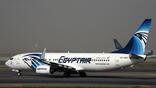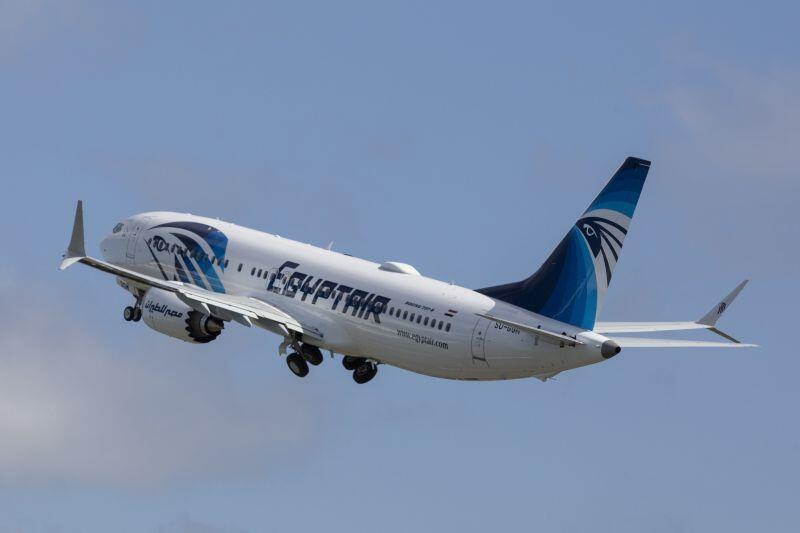
EgyptAir plans to add 18 Boeing 737-8 aircraft.
LONDON—EgyptAir Maintenance & Engineering (M&E) is using the introduction of the airline’s Boeing 737 MAX 8 fleet as the foundation to establish in-house Leap-1B MRO capability.
The strategy reflects how the Cairo-based MRO sees the airline’s transition to the 737 MAX as more than a fleet renewal program. While the immediate focus has been ensuring a smooth entry into service for the aircraft, the longer-term objective is to position the company for growing CFM International Leap-1B engine maintenance demand as more operators introduce next-generation narrowbodies.
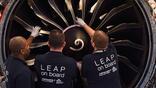
“Our strategy is to develop an in-house Leap-1B MRO capability in close collaboration with the OEM,” chairman, CEO and accountable manager Mohamed Samy tells Aviation Week. He says the engine manufacturer’s role will initially focus on technical guidance, training, tooling and qualification activities needed to establish the capability locally.
Samy says the workshop targets its first Leap-1B engine induction in 2029, aligned with EgyptAir’s first planned performance-driven engine removal. Once established, the capability will primarily support the carrier’s own fleet before expanding to third-party customers in Africa and the Middle East.
Preparations for the 737 MAX entry into service provided the basis for that longer-term strategy. EgyptAir M&E already maintains Boeing 737NG aircraft, enabling it to leverage significant fleet commonality rather than build an entirely new support infrastructure.
Samy says around 80% of the required tooling and ground support equipment was already available because of the company’s existing 737NG experience. The remaining work focused on acquiring specialized tooling, expanding approved maintenance capabilities, securing regulatory approvals and integrating Boeing technical documentation and maintenance planning data into the company’s digital systems.
The company also strengthened operational readiness by securing standby Leap-1B engines and auxiliary power units to reduce aircraft-on-ground risk, while introducing differences training for engineers, technicians and pilots transitioning from the 737NG to the MAX. Training combined classroom instruction with practical experience, competency assessments and supervised maintenance before the aircraft entered commercial service.
“Introducing the 737 MAX 8 definitely required a wave of fresh, strategic investments,” including spare parts, Samy indicates. “These acquisitions ensure our teams can handle everything from routine line checks to complex base maintenance in strict compliance with global safety standards.”
The Leap-1B road map also forms part of a wider ambition to expand EgyptAir M&E’s position in the regional aftermarket. Samy believes growing adoption of next-generation narrowbody aircraft across Africa, the Middle East and the Eastern Mediterranean will increase demand for local maintenance capability, reducing the need for operators to send engines and aircraft to more distant MRO providers.
He also sees opportunities beyond conventional maintenance. As airlines increasingly adopt digitally enabled aircraft, EgyptAir M&E expects the 737 MAX platform to support greater use of predictive maintenance, aircraft health monitoring and data-driven fleet support while strengthening technical partnerships with Boeing and expanding workforce capabilities.
The strategy comes as global demand for Leap-family engine maintenance continues to build, creating opportunities for MRO providers. While EgyptAir M&E’s immediate priority remains supporting EgyptAir’s expanding MAX fleet, it views the aircraft’s introduction as an important step toward establishing a broader role in the regional aftermarket for next-generation narrowbodies.
EgyptAir plans to take delivery of 18 737 MAX 8 aircraft in total.

Related Content