This article is published in Aviation Week & Space Technology and is free to read until Dec 04, 2025. If you want to read more articles from this publication, please click the link to subscribe.

Opinion: How The Defense Industry Is Being Redefined

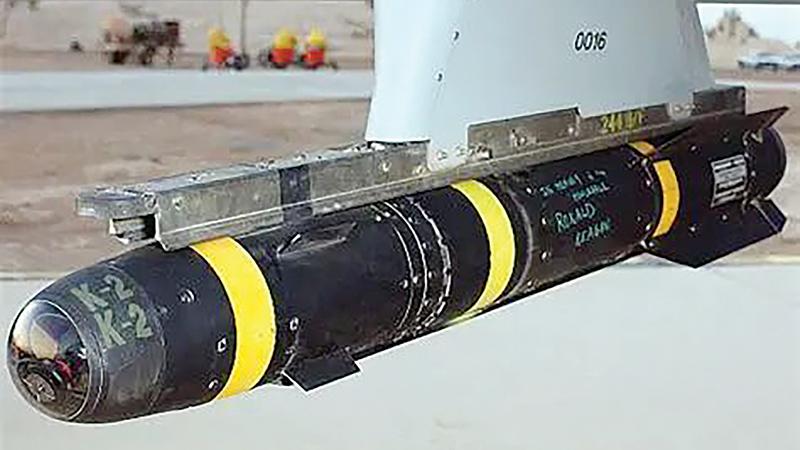
Hellfire missile

Lockheed Martin announced in September that it intends to have Atacms and Hellfire missiles manufactured by Rheinmetall in Germany.

Credit: Lockheed Martin

There is an old saying that “the only thing permanent is change,” and that can apply to thinking about how global defense contractors and the structure of the industry could change by 2030. In the 1990s, contractors in the U.S. and Europe consolidated. That spawned today’s U.S. megaprimes and Europe’s national champions, such as BAE Systems, Leonardo and Thales. The structure did not change much in the first decade of the 2000s, although some standout smaller firms rode a wave of spending on force protection.

Developments since 2020 suggest new frameworks are emerging that are redefining the structure of the industry as it now exists. There are three to consider.

The first is the rise of new defense entrants. It is incorrect to characterize these as “defense technology” companies, as that implies that contractors such as BAE Systems, Lockheed Martin and Northrop Grumman do not produce defense technology. Historically, defense entrants have emerged as new technologies are used for military needs. In the 1950s-70s, entrants provided microelectronics and electronic warfare as well as signals-intelligence systems. The current wave of entrants is primarily providing autonomous systems and software, although they are also marketing themselves as willing to take more risks and behave differently than established contractors.

The availability of capital and the willingness of venture and institutional investors to fund defense entrants have seen substantial changes. In 2025 alone, approximately $4.5 billion has been raised through secondary stock offerings by companies such as AeroVironment and Kratos, which have used funds to pay for acquisitions and internal development. Companies including Karman Space and Defense and Voyager Technologies have undertaken initial public offerings. In Europe, venture investing has increased and helped grow companies like Helsing. Initial public offerings and spin-offs in 2024-25 spawned new stand-alone companies, including Exosens, Renk and TKMS.

The new defense entrants and capital flowing into the sector are creating a new middle tier of defense contractors. This tier was hollowed out between the 1990s and early 2000s as larger companies sought growth through acquisition. The new midtier companies will both compete and cooperate with larger defense contractors.

The second trend is the rise of European and Asian defense contractors and, with that, multidomestic business models. The mean of sell-side analyst estimates for Rheinmetall’s sales in 2030 is €39 billion ($46 billion), according to Bloomberg. That would place sales for Rheinmetall, which is expanding operations beyond its German home, above those projected by analysts for L3Harris Technologies in 2030. South Korea has aspirations—reiterated at the Seoul International Aerospace & Defense Exhibition in October—to become the fourth-largest defense industrial power.

It should be little surprise that if countries spend more on defense, they would like to see that spending benefit their own populations and the resilience and security of their defense industrial capacities. A related change to the rise of European and Asian contractors has been the increase in cross-border investment and joint ventures. Hanwha’s acquisition of Philly Shipyard and Renk’s acquisitions of Cincinnati Gearing Systems and other U.S. businesses are examples of interest in U.S. markets. The joint ventures announced by Lockheed Martin and Rheinmetall and by RTX and MBDA for the production of U.S. weapons in Europe are other examples of multidomesticity.

Defense has always been an international sector, but these changes suggest there could be less success with traditional exports and more through having facilities and partnerships where defense monies are being spent.

A third trend will be restructuring, which may be triggered by boards and managements reaching their own conclusions and actions or by activist investors that impose those changes. KBR announced in September that it was spinning off its Mission Technology Solutions segment to shareholders and thereby becoming a pure commercial engineering and construction company. The spin-off of TKMS by Thyssen Krupp was another recent example, and in 2026, Honeywell Aerospace will be a freestanding company following the breakup of Honeywell.

Restructuring can be prompted by lagging stock price performance and by shareholder desires for less complex and diversified business portfolios in the companies they own. Looking at the consolidation that took place in the 1990s-2000s, the presence of some multisector companies and instances where stock performance may lag market performance, we should expect more such activity soon.

More consolidation in the global defense sector is likely. How the Trump administration handles the Norfolk Southern-Union Pacific railroad merger may be a clue to its views of defense consolidation. There should be eventual shakeouts in space, autonomy and other defense sectors that have received capital inflows but where major defense procurement programs have not jelled. There will be pieces to pick up when that happens. Defense-federal services also remain relatively fragmented and could undergo further consolidation when U.S. spending outlooks settle down.

The bottom line of these trends is that by 2030, the defense sector should be more competitive and more international. Assessing and getting in front of these changes will be a major task for defense planners, analysts and investors.

Byron Callan

Contributing columnist Byron Callan is a managing director at Capital Alpha Partners in Washington.