This article is published in Aerospace Daily & Defense Report part of Aviation Week Intelligence Network (AWIN), and is complimentary through Jul 12, 2026. For information on becoming an AWIN Member to access more content like this, click here.
BERLIN–Consortium partners working on the European Hypersonic Defense Interceptor (HYDEF) project have settled on a single-missile concept that they will take forward into a contest that could lead to the development of a ground- and sea-based defense system capable of downing hypersonic threats.
The 7-m-long, three-stage HYDEF missile concept has been designed for maximum agility in the endgame, Harald Buschek, Diehl Defense’s chief program officer, told journalists June 11 on the second day of the Berlin ILA Air Show here. The missile would be equipped with a launching booster, a midcourse booster and the kill vehicle.
“The kill vehicle has agility because it is smaller, it’s lighter and you don’t have this big moment of inertia,” Buschek explained. “You can actually throw this [kill vehicle] around in the last milliseconds for less to have a direct hit on the target.”
Diehl Defense is one of the lead members of the HYDEF consortium alongside Spanish Missile Systems (SMS).
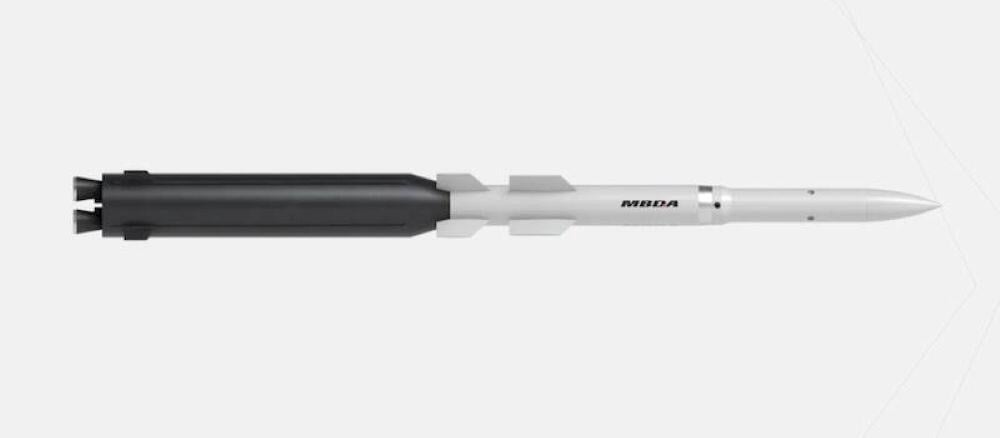
It is one of two hypersonic defense interceptor efforts in Europe, the other being the Hypersonic Defense Interceptor System (HYDIS2), which is led by MBDA. MBDA officials at the show say they are in the process of finalizing their concept selection from a low-single-digit number of options.
HYDEF and HYDIS2 are both funded by the European Union’s European Defense Fund (EDF) and will go on to inform the development of a pan-European hypersonic defense system currently codenamed Twister. But only one of the two concepts will move forward into a second phase of the project—the €100 million ($115.3 million) High-End Endo-Atmospheric Interception initiative. It is to be funded by EDF and due to begin in 2027, which will pave the way for demonstrations of the interceptor technologies.
The HYDEF missile’s kill vehicle will use an infrared seeker, Buschek said, because using a radar seeker closer to the target could result in a “blurry reflection” from the target. “With an infrared sensor, you really get the shape of the target and when you go to Mach 5 and beyond, it really heats up, so you can easily detect this hot target against the cold background very precisely,” he said.
Buschek said that while HYDEF would address the threats of tomorrow, he noted that Ukraine was already experiencing strikes from hypersonic threats today, albeit not in large numbers because they are difficult for Russia to produce.