This article is published in Aerospace Daily & Defense Report part of Aviation Week Intelligence Network (AWIN), and is complimentary through Jul 18, 2026. For information on becoming an AWIN Member to access more content like this, click here.
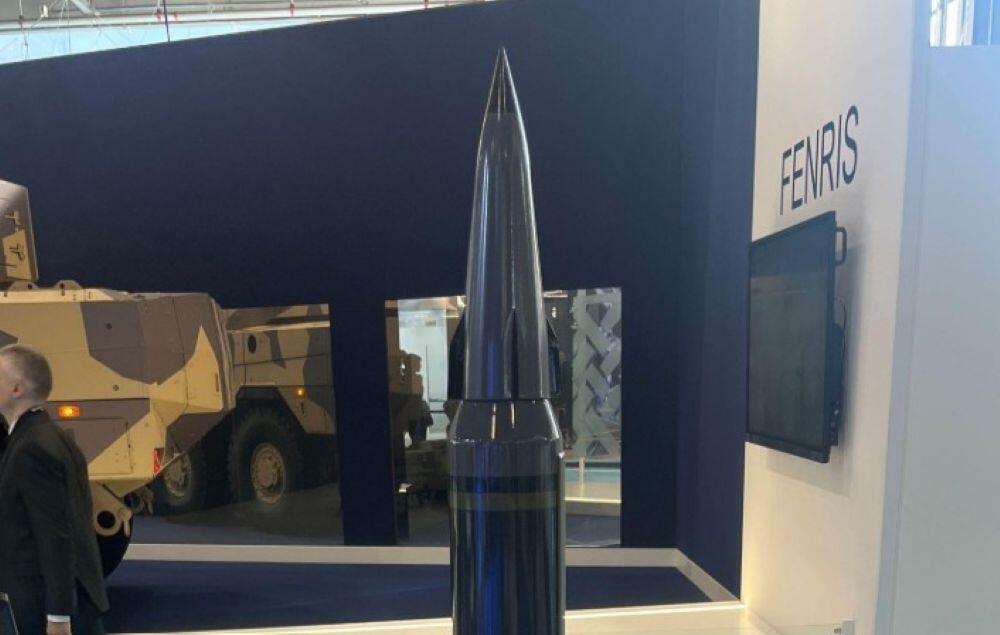
ArianeGroup plans a family of conventionally armed ballistic missiles.
Six European countries that have embarked on a joint effort to meet critical deep strike capability gaps have formalized their plans to embark on eight project initiatives covering suppression of enemy air defense (SEAD), airborne early warning and various missile initiatives.
The June 18 agreement between Germany, France, Italy, Poland, Sweden and the UK around the so-called European Long-Range Strike Approach (ELSA) builds on about two years of work. The countries are now ready to deepen their cooperation after agreeing to common requirements and ways forward in several areas that they refer to as clusters, they said in a joint statement.
Russia’s full-scale attack on Ukraine and that country’s efforts to repel its assailant highlighted to European countries the need to be able to hold targets at risk at extended range.
“Several clusters have now reached a level of maturity which will allow them to continue as standalone ‘ELSA Implementation Groups (EIG),’” the countries said.
The eight EIGs will cover work in airborne early warning, long-range SEAD, air-launched long-range strike, and European multi-missile launcher systems, as well as ground-launched, long-range strike systems with ranges of 300-500 km (186-310 mi.), 500-2,000 km, and above 2,000 km, in addition to low-cost, long-range strike effectors of more than 500-km range.
Each group will have a lead nation to develop and buy the systems.
Several companies in recent weeks have rolled out their ideas to address many of these capabilities, including during the ILA Berlin Air Show and Eurosatory defense expo in Paris, including low-cost cruise missiles, higher-end cruise missiles, hypersonic glide vehicles and ballistic missiles.