This article is published in part of Aviation Week Intelligence Network (AWIN), and is complimentary through Mar 28, 2026. For information on becoming an AWIN Member to access more content like this, click here.
Israel Joins U.S. 'Operation Epic Fury' In New Fighting With Iran
The U.S. and Israel have commenced combat operations against Iran in a massive display of air power that targeted the Iranian regime and killed its leader.
The two countries attacked dozens of military targets in "a broad, coordinated and joint attack against the regime,” the Israel Defense Forces (IDF) said. IDF Chief of the General Staff, Lt. Gen. Eyal Zamir, called it "a significant, decisive, and unprecedented operation" to take down the Iranian regime.
The operation that began on Feb. 28 caused widespread disruption to airline operations across the Middle East.
U.S. President Trump said the forces were targeting Iran's missile production industry and the Iranian navy. Iran was developing long-range missiles that threaten allies in Europe, U.S. troops overseas and could soon reach the U.S., he said, suggesting the operation could take days or weeks.
Later, Trump said Iranian leader Ayatollah Ali Khamenei was dead. "The heavy and pinpoint bombing, however, will continue, uninterrupted through the week, or as long as necessary to achieve our objective," he added.
The combined attack began at 1:15 a.m. ET or 9:45 a.m. in Iran. The raids began in the morning rather than at night to preserve an element of surprise, the IDF said. The war plan has been months in the making, it noted, and is built around intelligence efforts to strike senior Iranian regime targets when those officials convene.
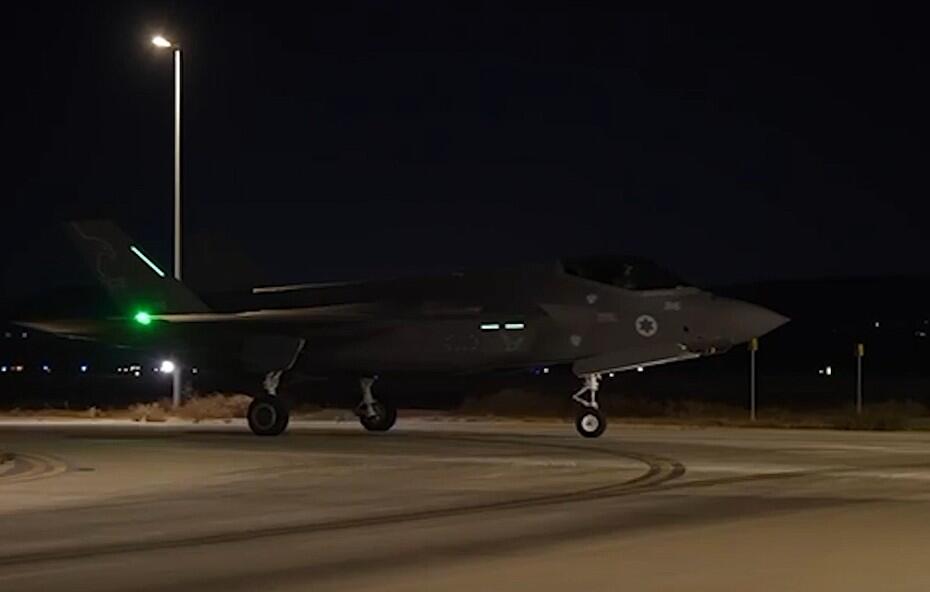
Israel employed Lockheed Martin F-35s and Boeing F-15s, IDF imagery showed. "Israeli Air Force pilots are striking hundreds of targets across Iran," Zamir said.
It was the largest ever Israeli Air Force operation, the IDF said. It involved round 200 fighters, dropping hundreds of munitions on around 500 targets, the IDF said. The raids principally struck targets in western Iran.
The U.S. had deployed Lockheed Martin F-22 and Boeing KC-135 and KC-46 tankers to Israel in advance of the strikes. The Pentagon also had shifted F-35s and support aircraft to the region, including at sea. Two American aircraft carrier strike groups, the USS Gerald R. Ford and USS Abraham Lincoln are deployed to the region.
The Pentagon has named the mission Operation Epic Fury. It is called “Roaring Lion” by Israel.
The IDF said it had built up a large list of targets and potential targets to strike. "Israel is prepared to attack Iran as long as necessary," it added.
"The top security leadership of the Iranian terror regime has been eliminated," Israel said.
U.S. Central Command (Centcom) in a statement said the operation was focused on dismantling Iran’s security apparatus that posed immediate threats. These included Islamic Revolutionary Guard Corps command and control facilities, air defenses, missile and drone launch sites and military airfields.
Initial operations included air, land and sea launched precision munitions, along with the first employment of U.S.-made one-way attack drones, according to the command.
U.S. forces defended against hundreds of missile and drone attacks following the initial wave of strikes. No casualties or combat-related injuries were reported and damage was minimal, Centcom said, calling Operation Epic Fury "the largest regional concentration of American military firepower in a generation.”
The latest operation comes eight months after Israel and Iran engaged in twelve days of fighting in what Israel called Operation Rising Lion. The U.S. also bombed Iranian nuclear infrastructure at that time, using U.S.-based Northrop Grumman B-2 bombers in Operation Midnight Hammer. Trump, at the time, said the Iranian nuclear program had been destroyed.
“Dozens of Israeli Air Force fighter jets completed the opening blow, which included attacking many targets of the terror regime, including military industries, surface-to-surface missiles, command and control targets, and more,” IDF spokesman Brig. Gen. Effi Dafrin said.
In response to U.S. and Israeli strikes, Iran fired missiles and drones throughout the region, with media and government reports showing the countries targeted included Bahrain, Iraq, Israel, Jordan, Kuwait, Qatar, Saudi Arabia and the United Arab Emirates.
Israel said its air defense system was identifying and intercepting threats including ballistic missiles and uncrewed air systems. The UAE, Kuwaiti and Qatari defense ministries also said their air defenses had dealt with ballistic missiles fired by Iran, but that falling debris killed one person on the ground.
Israel was targeting Iranian ballistic missile launchers to suppress those attacks. The Israeli Air Force also intercepted more than 10 drones.
With the fighting underway, many countries in the Middle East closed their airspace, including Kuwait, Iraq, Bahrain, Qatar and Iran itself. Multiple airlines said they have suspended flights to the Middle East.
Emirates said it has “temporarily suspended operations to and from Dubai.” Dubai Airports said that some flights were delayed or cancelled. Qatar Airways, too, said it had to suspend flights because of the closure of Qatari airspace. Flights would resume once airspace is reopened, it added. El Al cancelled flights through March 1.
The Kuwaiti civil aviation authority said a drone struck Kuwait International Airport, causing damage. Hours later, Dubai Airports said a concourse at Dubai International was damaged in an attack.
The European Union Aviation Safety Agency (EASA) issued a Conflict Zone Information Bulletin advising airlines to not operate in the airspace of Bahrain, Iran, Iraq, Israel, Jordan, Kuwait, Lebanon, Oman, Qatar, the UAE and Saudi-Arabia citing a "high risk" to commercial aviation. “Given the ongoing military intervention, retaliatory actions against U.S. and Israeli assets in the region are likely to occur, introducing additional high risks not only to the airspace of Iran but also to that of neighboring states hosting U.S. military bases or otherwise affected by the hostilities and associated military activities, including interceptions,” EASA stated.
“The possession of all-altitude capable air-defense systems, cruise and ballistic missiles and the use of air assets capable to operate at all-altitudes, including interception capability make the entire affected airspace vulnerable to spill-over risks, misidentification, miscalculation and failure of interception procedures," EASA said.
The agency said it would continue to monitor developments with the European Commission and member states and update guidance as required.
In Washington, U.S. lawmakers split in support of the operation along party lines. Sen. Roger Wicker (R-Miss), the chairman of the Senate Armed Services Committee, praised the administration. Sen. Jack Reed (D-RI), the committee's ranking member, said the strikes began without seeking Congressional authority and lacked a clear endgame. Reed said strikes on American bases have already begun with more to be expected, including cyber attacks.