This article is published in Aviation Week & Space Technology and is free to read until Dec 03, 2025. If you want to read more articles from this publication, please click the link to subscribe.
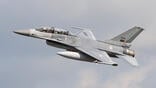
The UAE is preparing to phase out its Dassault Mirage 2000-9s in favor of the Rafale. The first of its 80 Rafales on order is flying in France.
Long-established defense assumptions about the Gulf region are in flux. Buyers are exploring new industrial relationships, conflicts have exposed weaknesses in existing defenses, and military budget growth that often outpaced the wider market has largely flatlined.
Defense spending in the region is set to grow by less than 2% collectively in the coming decade, according to Aviation Week Network Defense Market Analyzer data. One upside for industry: The share going to procurement promises to grow to 16% from 11%.
- Anticipation builds over Saudi Arabia’s fighter decision
- Airlift market heats up
Where that procurement spending will go is increasingly up for grabs. Typically, countries such as Qatar, Saudi Arabia and the United Arab Emirates (UAE) looked to the U.S. or Europe to arm themselves, while Iran turned to Russia, augmenting homegrown weapon systems.
There were some exceptions—Saudi Arabia occasionally bought ballistic missiles or drones from China. But exceptions are becoming more of the norm. The UAE is exploring purchasing South Korean Korea Aerospace Industries KF-21 combat aircraft and fielding Chinese Hongdu L-15 trainers, and Saudi Arabia is investing heavily in Turkish drones.
The shift is not just around hardware. It is touching on wider military issues, as underscored by the security pact Saudi Arabia signed in September with nuclear-armed Pakistan. Islamabad has signaled it could make its nuclear arsenal available to its partner under the mutual defense arrangement.
Iran is also starting to look beyond its traditional supplier after the poor showing of Russian equipment during the 12-day war with Israel in June left Tehran’s air defenses incapacitated and other equipment destroyed.
Iran appears to be further embracing links with China, as Beijing may be able to fill gaps faster than Russia, which is focused on its own needs for its war in Ukraine. The two sides have cooperated before; analysts note that several Iranian ballistic and anti-ship cruise missiles evoke Chinese designs. Chinese equipment may have won further favor after Pakistan appeared to employ several systems against India this year.
“Middle Eastern militaries have been paying close attention to regional conflicts, particularly those involving Israel and those beyond the region,” says Douglas Barrie, senior fellow for military aerospace at the International Institute for Strategic Studies. “Having closely watched how Israel performed against Iran and how it conducted operations over Gaza, they are now asking if they have the right balance of equipment, the necessary magazine depth, and if they have made the right decisions on procurement.”
Even as buyers in the region look farther afield to address their equipment needs, they are maintaining close ties with their established partners. The UAE, for instance, is gearing up for the fleet of Dassault Aviation Rafale fighters it ordered in late 2021. The company this year presented the first of 80 Rafales, now flying at the French flight test center in Istres before their formal handover, slated for late 2026. The aircraft will be in the F4 configuration, with additional weapon integrations, new modes for the RBE2 active, electronically scanned array radar and the Spectra electronic warfare system. Once in service, the Rafale is to replace the UAE’s Dassault Mirage 2000-9 fleet.
Dassault has its eye on a potential Saudi Arabian fighter order as well. The Eurofighter Typhoon and Boeing F-15EX are also in the running to replace Riyadh’s remaining Panavia Tornados.
Last year, Saudi Arabia signaled it was ready to make a decision within months, but nothing has happened. The country has indicated it is looking to combine the purchase with involvement in a next-generation fighter program to build up its domestic industrial capacity. Riyadh has shown significant interest in the Global Combat Air Program (GCAP) involving Italy, Japan and the UK, perhaps with entry through a direct partnership with London. But the country has also been window-shopping elsewhere, looking at the South Korea’s KF-21 and the Turkish Aerospace Industries Kaan.
The UK has indicated Saudi involvement in the GCAP would need to be preceded by another Typhoon order. Those would likely be assembled in-country, beefing up national capabilities that could then support a Saudi industrial role in GCAP.
For the most part, fighter competitions in the region have been somewhat muted after a busy period of buying that included orders from countries including Bahrain, Jordan, Kuwait, Qatar and the UAE. Bahrain is in the process of taking delivery of Lockheed Martin F-16 Block 70s; Jordan also has placed orders for the type. Leonardo is finalizing deliveries of 28 Typhoons ordered by Kuwait, but Boeing F/A-18E/F Super Hornets for that country are now several years behind schedule.
One of the biggest regional fighter force questions is when Lockheed Martin will land its first F-35 order in a Middle East country other than Israel, which used the aircraft extensively during its military operations against Iran. Qatar, Saudi Arabia and the UAE are arguably in the pole position for such a deal, although Morocco may be in line for a smaller order, according to industry officials, as Rabat seeks to counter a possible Algerian acquisition of Russian Sukhoi Su-35s and Su-57Es.
There are also signs of fleet consolidation. Qatar is taking final deliveries of Boeing F-15QAs and Typhoons. Turkish interest in acquiring part of Qatar’s Typhoon fleet may suggest it wants to reduce the complexity of its front-line force or seek more recent versions of the aircraft. Turkish Defense Minister Yasar Güler told reporters after Turkey signed a contract to buy 20 new-build Typhoons that Ankara will take 12 of Qatar’s Eurofighters and all 12 of Oman’s, leaving Muscat with a fleet of F-16 Block 50s.
Perhaps the biggest opportunity in the region is around the so-called airpower enablers of intelligence, surveillance and reconnaissance platforms, tankers and transports.
Saab CEO Micael Johansson says the Middle East offers additional opportunities for the company’s GlobalEye airborne early warning aircraft. The UAE was the launch customer and is the first operator of the Bombardier Global 6000/6500-based system. Saudi Arabia operates a small fleet of the Boeing E-3 Sentry, which other countries have opted to replace with the Boeing E-7. The Royal Saudi Air Force also uses Erieye radar fitted to a Saab 2000 and so may be tempted to examine the Swedish option as well.
Many countries in the Middle East operate aging versions of the Lockheed C-130 Hercules, with minimal replenishment in recent years. Cairo ordered two C-130Js in September 2024. Embraer, with the C-390, and Airbus, with the A400M, are aggressively courting the region, while Lockheed Martin is looking to defend its market share.
Embraer has proposed local assembly of the twin-jet airlifter in conjunction with Saudi Arabian Military Industries (SAMI) to secure a Saudi C-130 replacement order. Airbus is dangling A400M workshare in the UAE as well to win an order there while also keeping an eye on the Saudi market.
Qatar may be in the market for tankers to support its growing fighter fleet. Airbus’ A330 Multi-Role Tanker Transport has had repeat success in Saudi Arabia and the UAE. Israel is modernizing its tanker fleet with the rival Boeing KC-46.
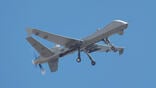
Investments also continue into uncrewed aircraft systems (UAS), with significant recent moves toward Turkish-developed UAS such as the Bayraktar Akinci turboprop-powered medium-altitude, long-endurance system. Deliveries of Akincis to the UAE have begun, and Turkish industry is moving forward on industrial arrangements to allow assembly of the UAS and associated sensors in Saudi Arabia. Qatar and the UAE, meanwhile, are still pursuing the armed U.S. General Atomics MQ-9 Reaper platform.
Air and missile defense systems are also back on the regional shopping list—although they were never really off the agenda. Concerns about Iranian missiles and drone attacks from Yemen have driven large regional investments. Israeli and Iranian strikes on Qatar have highlighted that vulnerabilities persist, despite large-scale spending on defenses against them.
Gulf Cooperation Council members have been trying jointly to develop a more coordinated approach to integrated air and missile defense. Despite their deep pockets, regional politics is an apparent roadblock to the sharing of sensor data that could provide a single recognized air picture across the region. As Israel’s strike against Doha—apparently using air-launched ballistic missiles fired from the Red Sea and over Saudi Arabian airspace—illustrated, threats can come from multiple directions. Much of Doha’s air defenses likely pointed north and east, given the threat posed by Iran.