This article is published in Aviation Week & Space Technology and is free to read until Feb 19, 2026. If you want to read more articles from this publication, please click the link to subscribe.
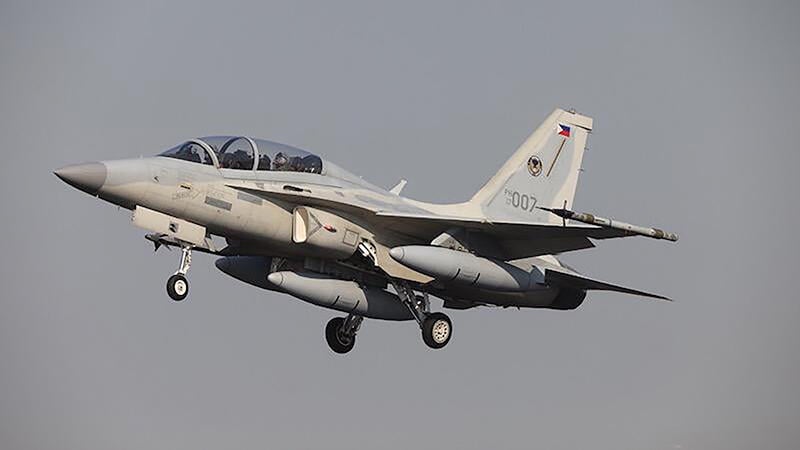
Even as the Philippines eyes a fighter purchase, it is stocking up on more KAI FA-50 light combat aircraft.
“Modernization” has long been a watchword among Southeast Asia’s air forces. For many, discussion has remained the only action. Chronic budget shortages, competing domestic priorities and, more recently, the effects of the COVID-19 pandemic have delayed or diluted recapitalization plans.
While the Republic of Singapore Air Force has maintained a qualitative and quantitative edge through sustained investment, several of its neighbors—including Indonesia, Malaysia, the Philippines and Thailand—have made little progress. However, they are once again ramping up efforts to close long-standing capability gaps amid a deteriorating regional security environment.
- Philippine fighter choice remains pending
- Indonesia is set for first Rafale delivery
For the Philippine Air Force, the challenge has been particularly stark. Despite being one of the region’s oldest air forces, decades of underinvestment mean the service must rebuild its combat aviation fleet from the ground up after retiring its last supersonic fighters in 2005. The return to high-tempo air defense operations has proven slow and costly, but there is a sense of urgency after recent tensions with China and that country’s repeated encroachment into Philippine territory.
Manila’s long-running Multi-Role Fighter program was initially framed as a contest between the Lockheed Martin F-16 Block 70/72 and Saab Gripen E/F. Korea Aerospace Industries (KAI) later entered the competition with the KF-21, followed by Leonardo with the Eurofighter Typhoon.
A decision that at one point was expected in 2025 has slipped. Defense Secretary Gilberto Teodoro, Jr., has opted to roll funding into a broader “full package” approach, seeking to acquire at least two full fighter squadrons alongside critical enablers such as airborne early warning aircraft and aerial refueling tankers.
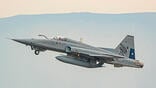
In parallel, the Philippines plans to double its fleet of KAI FA-50 light combat aircraft, acquiring 12 Block 70-standard fighters while upgrading the 11 aircraft already in service.
Indonesia’s modernization approach appears to have embraced a “the more the merrier” attitude, without a clear strategy. Jakarta has firmed up orders for 42 Dassault Aviation Rafales, but under President Prabowo Subianto—a former general and defense minister—the country has pursued multiple other fighter programs, too.
Indonesia has signed preliminary agreements covering up to 48 Turkish Aerospace Industries Kaan fighters while also renegotiating its financial commitment to the KF-21 development program. Jakarta reduced its contribution to 600 billion won ($411 million) in 2025 from 1.6 trillion won. More than two years ago, Jakarta also said it would buy Boeing F-15EX fighters, but that deal has not advanced.
Adding to the confusing picture, Defense Minister Sjafrie Sjamsoeddin has publicly floated the possibility of acquiring Chengdu J-10 fighters from China. The move is driven more by political signaling than operational planning, local officials say.
Despite the proliferation of memoranda of understanding and tentative announcements, Indonesia’s Rafale program is one of the few regional programs to more forward. The first batch of Indonesian pilots completed training in late December, and initial aircraft deliveries are expected in the first quarter of this year.
Thailand also has taken initial steps to execute on its modernization agenda, announcing a phased acquisition of 12 Gripen E/F fighters. Saab edged out the F-16 Block 70/72. Thailand so far has committed to only four aircraft. Bangkok secured a sizable offset package to help support the deal, including technology transfer related to tactical data links and upgrades to its Saab 340 Erieye airborne early warning aircraft.
Recent border clashes with Cambodia—in which the Royal Thai Air Force employed F-16s, Gripen C/Ds and KAI T-50s—have reinforced Bangkok’s determination to modernize.
Thailand also has moved to close a long-standing refueling gap. The country has become the first customer of the new Airbus A330neo-based Multi-Role Tanker Transport Plus. Thailand, which is buying only one of the tankers, will become the region’s second air force to operate a boom-equipped tanker after Singapore, which operates the Airbus A330-based tanker.
Malaysia’s modernization efforts remain the most protracted. The Royal Malaysian Air Force first proposed a Multi-Role Combat Aircraft program in 2010 to replace its Mikoyan MiG-29N fleet. Fifteen years later, the requirement remains unfulfilled, constrained by fiscal pressures.
Under its road map, the service aims to rationalize its fleet by 2055 to two squadrons of the new combat aircraft and three light combat aircraft squadrons. Kuala Lumpur has taken an initial step by selecting the FA-50 for the light combat aircraft role. However, plans to acquire ex-Kuwaiti Boeing F/A-18C fighters to bolster Malaysia’s Hornet fleet have stalled. Delays in Kuwait’s receipt of F/A-18E/F Super Hornets mean the older aircraft will arrive in Kuala Lampur later than anticipated.
Operational urgency is increasing: Malaysia lost an F/A-18D and a Westland Super Lynx Mk. 300 helicopter in separate accidents in 2025, further weakening its already thin force structure.
Uneven funding, shifting political priorities and expanding requirements continue to stretch timelines—leaving many regional air forces chasing capabilities that have long been deemed essential.
Vietnam, traditionally a buyer of Russian equipment, has been delaying its decision about fleet modernization. The U.S. is heavily courting Hanoi to accept Western systems and has made inroads by exporting Textron T-6 Texan II trainers to Vietnam.