On July 14, the U.S. Navy asked companies to submit concepts for carrier-based, uncrewed aircraft systems (UAS) with at least 1,000-nm mission radius and a special interest in vertical-takeoff-and-landing (VTOL) capability.
The request for information (RFI), entitled “Unmanned Carrier-Based Aircraft Solutions,” does not relate to any known Navy requirements, but some aspects appear to align with emerging concepts from the defense industry—including Shield AI’s proposed X-Bat.
“The objective is to evaluate the feasibility of fielding platforms with the extended range and payload capacity, while minimizing deck footprint and integrating with established CVN [aircraft carrier] infrastructure,” states the RFI, which was posted by the Navy’s Portfolio Acquisition Executive for Aviation.
Since the retirement of the Grumman A-6E Intruder nearly 30 years ago, the Navy has lacked a carrier-based aircraft with a deep-strike capability. The proposed F/A-XX, which is scheduled to be awarded later this year, is expected to enter service in the 2030s with 25% more range than the Boeing F/A-18E/F Super Hornet, but that still falls under 750 nm for mission radius.
The Navy experimented with carrier-based uncrewed combat air vehicles (UCAV) in the past, but a series of demonstration and prototyping programs—the Mid-Range Endurance, Navy-Unmanned Combat Air Systems, Joint Unmanned Combat Air Systems, Unmanned Combat Air Systems-Demonstrator, and Unmanned Carrier-Launched Airborne Surveillance and Strike programs—were completed with no path to a production start.
Instead, the Navy decided to acquire an unarmed Carrier-Based Autonomous Refueling System, which the service awarded to the Boeing MQ-25 Stingray in 2018. When the Stingray enters service several years late in 2029, it will be able to refuel other aircraft and perform limited surveillance roles. But the MQ-25 program lacks a requirement to integrate weapons, a Navy spokesperson confirmed to Aviation Week in June.
However, the Navy appears to be returning to the UCAV concepts of the past, but with a new requirement for VTOL capability. The concept would open strike aircraft operations from nuclear-powered aircraft carriers (CVNs), Aegis-equipped destroyers (DDGs), and expeditionary sea bases (ESBs).
“The Navy is interested in novel concepts that can operate from any air-capable platform in addition to the CVN (e.g., DDG, ESB) using (VTOL),” the Navy says in the RFI.
In addition to the 1,000-nm mission-radius requirement, the UCAV concept also must demonstrate that it would be more effective than an equally sized fourth-generation aircraft, such as an F/A-18E/F. The UCAV also must be equipped with mission autonomy capabilities, including dynamic re-tasking, threat evasion, and automated aerial refueling.
The RFI distinguishes the UCAV concept from other uncrewed or autonomous programs, including the MQ-25 and Collaborative Combat Aircraft. The Navy document includes a wide range of potential missions, including the ability to strike targets at sea, on land, or in the air with kinetic or non-kinetic weapons. The RFI also includes mission areas, such as mobility, logistics, and intelligence, surveillance, reconnaissance and targeting.
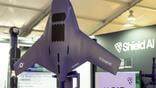
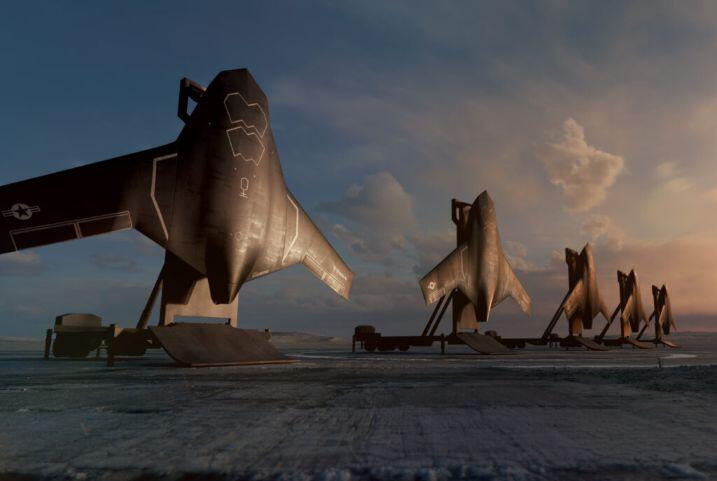
Some industry concepts appear to fit the description of some aspects of the RFI. Shield AI, for example, plans to fly a demonstrator of the VTOL X-Bat uncrewed combat air vehicle later this year. The X-Bat is advertised with a strike capability and a mission radius over 1,000 nm. Shield AI officials have linked the X-Bat concept to naval applications.
“X-BAT operates from an aircraft carrier, an amphibious ship, a destroyer, or a pickleball court anywhere in the world,” wrote J.J. Cummings, Shield AI's senior director for Navy programs, in a January blog post on the company’s website.

Related Content