This article is published in Aerospace Daily & Defense Report part of Aviation Week Intelligence Network (AWIN), and is complimentary through Oct 17, 2026. For information on becoming an AWIN Member to access more content like this, click here.

Debrief: Document Details Demand Bolstering Major F‑15 Contract

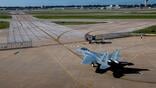
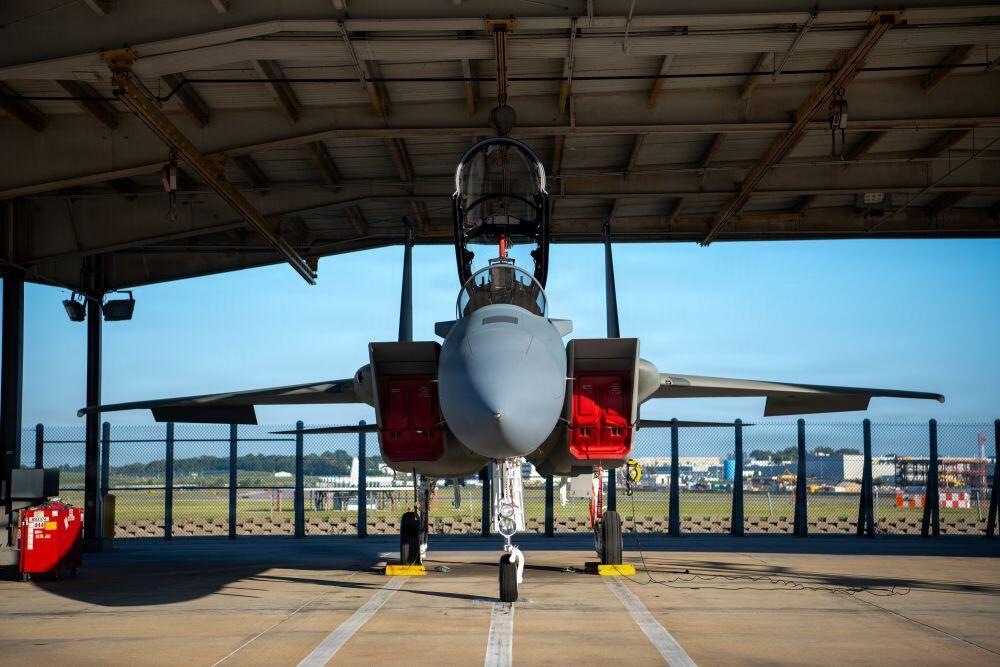
F-15EX

F-15EX

Credit: U.S. Air Force

In January 2026, the acting head of U.S. Air Force acquisition approved a contract with Boeing with a ceiling of $18.28 billion for F-15 procurement and modernization, a major planned investment to streamline spending for both F-15E and F-15EXs.

Three months later, that amount more than doubled to $39.28 billion—just for the U.S. Air Force’s share. This is in addition to the projected $91.95 billion ceiling the Air Force projects for foreign military sales for the F-15. The combined $131.23 billion was announced in an August 2026 contract announcement. The indefinite delivery/indefinite quantity (IDIQ) figure is the projected maximum amount for a contract vehicle that will run through the late 2030s, but represents the significant expected demand for Boeing’s fighter.

Additional details on the contract, known as Eagle Crest, come in a justification and approval document posted by the Air Force on Sept. 9. The contract appears to have been in the works for years, with the first approval signature coming in October 2025.

Eagle Crest brings all F-15 procurement and modernization into one IDIQ vehicle. The goal is to streamline approval for new production of F-15EXs for the U.S. Air Force and other F-15 variants for international customers, along with support for F-15E Strike Eagles, modification kits and other future requirements.

The Air Force had originally planned to field 144 F-15EXs, and the justification and approval document says that up to 200 were authorized at the outset. But in April 2026, as part of the service’s fiscal 2027 request, the Air Force outlined a plan to buy 267 of the fighters.

In a plan submitted to Congress in October 2025, the service outlined a goal to produce 24 of the EXs per year starting in 2027 to help meet a goal of 1,558 total crewed fighters. This is an increase of about 300 more than the current fleet.

The justification documents says the foreign military sales total was based on current demand from Israel and Japan, along with projected buys from Saudi Arabia, South Korea, Singapore, Indonesia and Poland. But the Indonesia deal has fallen through, with Boeing in February saying it is no longer pursuing the campaign. Poland has also disputed its part in the projected sales.

The document outlines some modernization priorities for the F-15 fleet, to include the Mobile User Objective System narrowband satellite communications, the Multifunctional Information Distribution System-Joint Tactical Radio System, M-Code GPS, the Eagle Tether system for data links, development of an active/electronically scanned array 5th/6th channel capabilities for sensor performance and electronic warfare. The document also says there will be further development of the Fixed Wing, Air-Launched, Counter-Unmanned Aircraft System Ordnance (FALCO F) counter uncrewed aircraft system and a previously undisclosed program known as “Starfox.”

Brian Everstine

Brian Everstine is the Pentagon Editor for Aviation Week, based in Washington, D.C.