This article is published in Aerospace Daily & Defense Report part of Aviation Week Intelligence Network (AWIN), and is complimentary through Oct 16, 2026. For information on becoming an AWIN Member to access more content like this, click here.
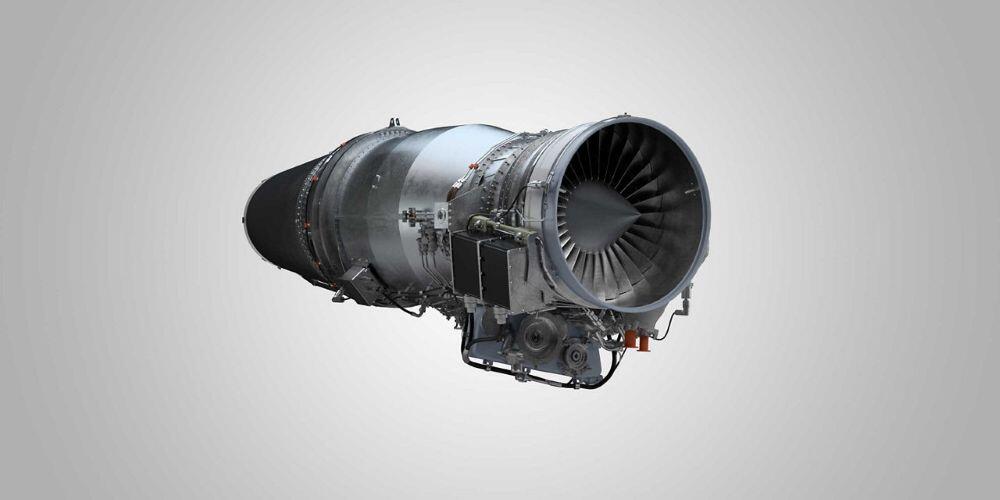
Honeywell argues its F124 is a fit for a higher thrust Collaborative Combat Aircraft.
NATIONAL HARBOR, Maryland—There is a disconnect on propulsion needs for future increments of Collaborative Combat Aircraft (CCA), as the U.S. Air Force is pressing for development in a lower thrust range than some airframers are looking for, a key industry player argues.
Honeywell Aerospace is in the mix on both sides, having been selected to develop the Skyshot 1600 as a small engine for CCA use while also pitching its already available 6,000-lb.-thrust F124. Matt Milas, Honeywell Aerospace’s president of defense and space, tells Aviation Week that there have been shifting requirements for the next increment “so we’re adjusting to what the Air Force is looking for.
“How airframers are going to ultimately incorporate the engine, that’s where things can get interesting,” he said in an interview this week at the Air and Space Forces Association’s Air, Space & Cyber Conference here.
For example, the Air Force’s push through the SOSSEC Inc. consortium for a medium thrust engine targets about 6,000-lb. thrust. This is substantially more than the Williams FJ44 that is in use on the Anduril FQ-44A and General Atomics Aeronautical Systems Inc. FQ-42A.
“There’s a lot of interest from the airframers to get more thrust than what the Air Force is talking about,” he says. “We’re hearing more on the 6-8,000 lb. of thrust, whereas the Air Force is targeting a bit less, and they’re more focused on fuel consumption.
“Whereas you can get thrust that you need to carry the payloads and go the range and just add a little bit more fuel. You can solve that at the airframe level rather than redesigning an engine to meet a target, you know, thrust-specific fuel consumption,” he said.
Developing a new system will obviously take time, and Milas says the airframers are focused on what is reliable and available now to meet an aggressive schedule.
“That’s where I’m seeing a little bit of that disconnect between what the Air Force is doing for Increment 2 versus what the airframers are looking for,” he says.
Milas says international CCA programs are also targeting that higher range of thrust for meaningful payloads and ranges. “I think that’s where ultimately things are going to shake out, but we’ll see on that front. CCAs continue to evolve,” he said.
Honeywell Aerospace, for its part, is working to get more information from prime contractors as well as the Air Force on the ultimate plan, while “playing both parties” with the F124 and Skyshot, plus the existing TPE331 that is in use on the GA-ASI MQ-9 Reaper.

Related Content